
National
Mikel Obi Calls for Immediate Release of Mazi Nnamdi Kanu.

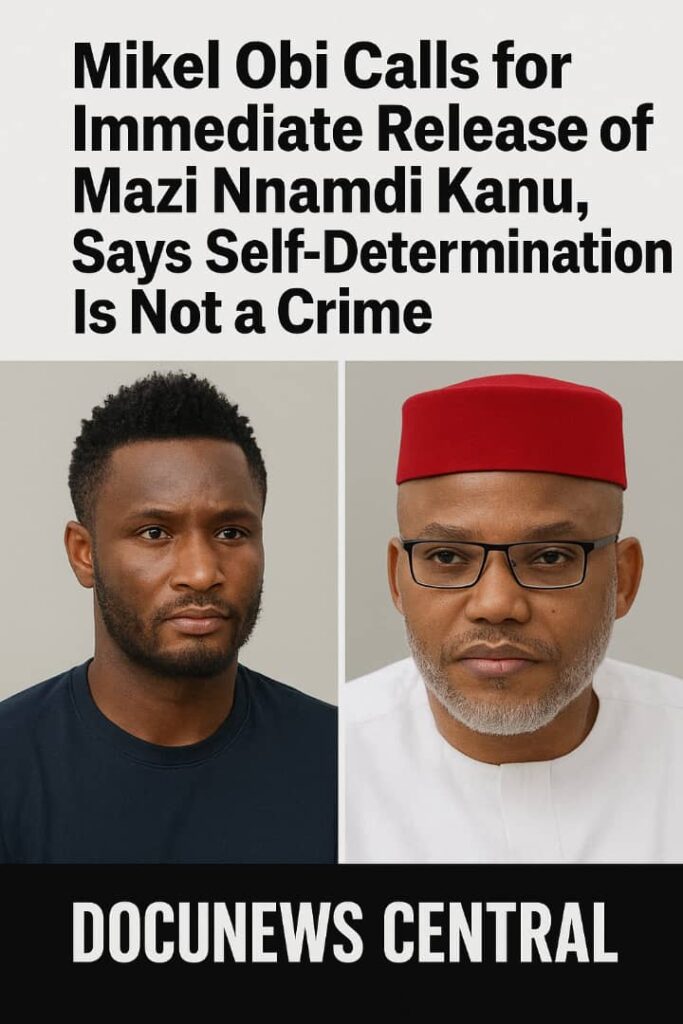
Nigeria woke up to a major development after former Super Eagles captain, Mikel John Obi, publicly demanded the immediate release of the detained leader of the Indigenous People of Biafra (IPOB), Mazi Nnamdi Kanu. His statement created intense national debate, especially because the football icon rarely comments on political matters. Nevertheless, his message was clear and direct, and it instantly spread across the country.
Mikel Obi declared that self-determination is not a crime and emphasized that Nnamdi Kanu remains a strong voice for many who feel unheard in Nigeria. He added a personal note, saying, “I was a Biafran before I became a Nigerian,” a statement that sparked widespread reactions and analysis.
Because of his influence, his comments have ignited a fresh wave of discussion about justice, fairness, and national unity. This article explores the background, reactions, legal issues, implications, and broader national significance of his message.
A Major Voice Enters the National Conversation
Mikel Obi’s career has been defined by professionalism, discipline, and humility. Although widely admired, he usually avoids political topics. Therefore, his decision to speak out shocked many Nigerians. However, his words resonated deeply because they came from someone who understands national pride and global representation.
Many people noted that celebrities rarely address sensitive issues. Yet Mikel chose to do so without hesitation. His tone remained calm, his words were measured, and his intention was clear: seek justice through fairness, not conflict.
Why Nnamdi Kanu Remains a Central Figure
Nnamdi Kanu has remained a major figure in Nigerian public discourse for years. To many, he represents courage, truth-telling, and advocacy for marginalized communities. Supporters argue that he speaks for people who lack political influence.
On the other hand, critics view him from a different perspective. Regardless of opinion, his influence is undeniable. His detention has fueled discussions about constitutional rights, identity, and national restructuring.
Mikel Obi’s intervention places a respected global figure at the center of that conversation, giving the matter a new level of visibility and urgency.
Mikel Obi’s Statement: A Call Rooted in Fairness
According to Mikel, Nigeria must recognize that self-determination is part of international human rights. Although some movements become complicated, the concept itself remains lawful and globally accepted. He insisted that Mazi Nnamdi Kanu has done nothing to warrant life imprisonment or continued detention.
He did not promote division or encourage hostility. Instead, he appealed for dialogue, justice, and lawful resolution. This approach strengthened his credibility and attracted more serious attention to his message.
The National Climate Surrounding the Appeal
Nigeria currently deals with several challenges, ranging from economic pressures to insecurity. Because of these issues, any call for peaceful resolution becomes even more important. Mikel’s message arrives at a moment when many Nigerians feel frustrated, unheard, and uncertain about the future.
Recent news stories highlight these tensions. For example, DocuNews Central published a report discussing major changes within the banking sector: First Bank Parent Company Confirms Sale to New Owners. Although unrelated directly to Kanu, it shows the atmosphere of national change.
Similarly, global concerns covered here: Global Powers on Alert Over Iran’s Laser Nuclear Innovation reflect the intense global climate surrounding security. These broader tensions make internal peace more important than ever.
Reactions Across Social Media
Supportive Responses
Supporters of Kanu applauded Mikel’s courage. Many said he expressed what millions have been afraid to say openly. Because he remains one of Nigeria’s most respected icons, his words carried weight.
Mixed Responses
Some critics argued that celebrities should avoid political statements. They expressed fear that his message might be misunderstood. Yet even among these voices, many respected his right to express an opinion.
Government-Leaning Responses
A few defended government actions, insisting that rule of law must prevail. They argued that national security concerns cannot be ignored, even though dialogue remains important.
International Reactions
Nigerians in the diaspora reacted strongly. Many described Mikel’s comments as refreshing, courageous, and necessary. They believe honest dialogue can reduce tension and bring solutions.
Historical Context Behind the Appeal
The agitation for Biafra carries emotional, political, and historical weight. Although the civil war ended decades ago, many unresolved structural concerns remain. Mikel’s reference to being “Biafran before Nigerian” reflects a shared history and emotional truth for many citizens from the eastern region.
Because of this deep historical background, the call for Kanu’s release is not only about one individual. Instead, it represents wider concerns about fairness, inclusion, and identity.
Legal Questions Surrounding Detention
Legal experts continue to raise questions about the prolonged nature of Kanu’s case. They cite issues surrounding extradition, delays, and trial processes. Some argue that the situation has moved beyond legal matters and into political territory. They insist that a fair, transparent process remains essential.
Mikel’s message aligns with these concerns. He did not reject the legal system; rather, he emphasized fairness and lawful resolution.
Why Mikel Obi’s Background Adds Weight
Mikel Obi is a global sports figure whose reputation extends beyond Nigeria. From Chelsea to the Super Eagles, he displayed professionalism and discipline. Because he rarely gets involved in controversies, his statement became powerful and meaningful.
His calm tone and balanced approach added even more credibility. Many believe that he spoke out of genuine concern rather than political motivation.
National Unity and the Case for Dialogue
Nigeria’s strength comes from its rich cultural diversity. Yet unity cannot flourish when tension, division, or injustice exist. That is why leaders across Nigeria continue to emphasize the importance of peaceful dialogue.
Another recent report illustrates the country’s security challenges: The Ojibara of Bayagan, Alhaji Kamilu Salami, Has Been Kidnapped. Events like this underline the need for stability, peace, and cooperation.
For many, Mikel’s message supports a national push toward productive dialogue and lawful solutions.
What Mikel’s Statement Means for the Government
Governments take notice when respected individuals speak. Although his words may not prompt immediate action, they create pressure for reassessment. Rising public concern could push the government toward:
- Reviewing legal processes
- Opening dialogue channels
- Exploring political solutions
- Reducing regional tension
A peaceful, lawful resolution would help reduce distrust and promote national unity.
Implications for Kanu Supporters
Supporters view Mikel’s statement as a major boost. They believe a respected global figure has validated their long-standing concerns. For them, this is not only about Kanu but also about justice, fairness, and recognition of their identity.
International Image and Global Attention
Nigeria’s global image benefits from transparency and fairness. When influential figures speak, the world pays attention. Mikel’s global reputation means his message may increase diplomatic interest in resolving the issue lawfully.
The Road Ahead
Although the future remains uncertain, Mikel’s statement has reshaped national conversation. His voice broke the silence surrounding celebrity involvement in sensitive matters. This shift has encouraged honest discussion in homes, communities, political circles, and international forums.
Ultimately, his message has renewed hope for dialogue, fairness, and national healing.
Conclusion
Mikel Obi’s call for the immediate release of Mazi Nnamdi Kanu marks a powerful moment in Nigeria’s public discourse. His declaration that self-determination is not a crime and his belief that Kanu does not deserve life imprisonment have reignited nationwide debate.
His statement has:
- Reignited national discussion
- Strengthened calls for lawful resolution
- Shaped public opinion
- Highlighted the need for dialogue and fairness
- Amplified global attention on the matter
As Nigeria continues to face major challenges, unity built on fairness remains essential. Mikel Obi’s message offers a reminder that true peace emerges through justice, not silence. His voice will continue to influence national conversation and inspire calls for meaningful resolution.
