
National
FG Audit Finds Massive N288 Billion Irregularities in INEC Under Mahmoud Yakubu

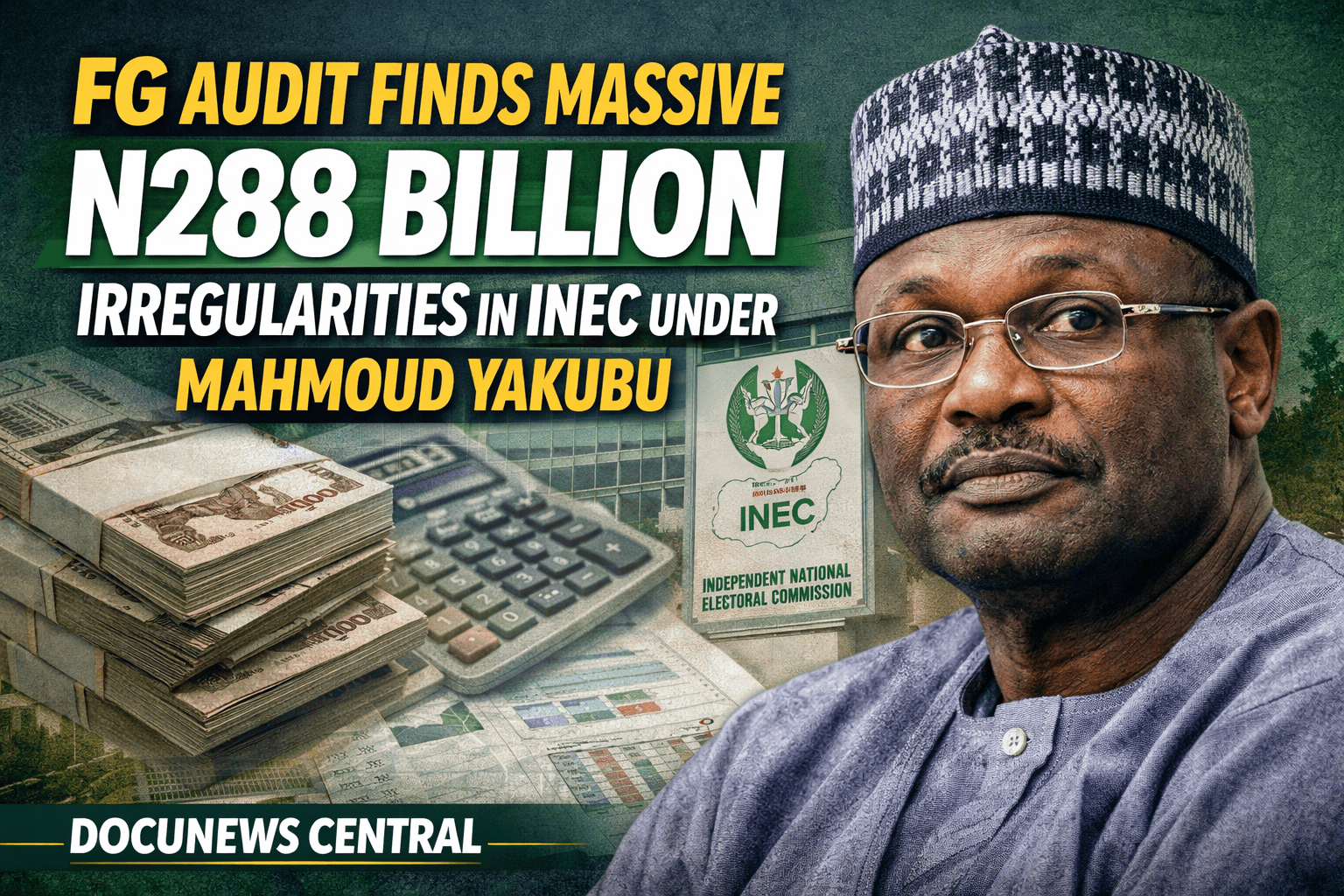
FG Audit Finds Massive N288 Billion Irregularities in INEC Under Mahmoud Yakubu
In a development that has reignited intense national discourse on public accountability, the Federal Government of Nigeria has publicly flagged N288 billion worth of financial irregularities in the finances of the Independent National Electoral Commission (INEC) during the tenure of its former chairman, Professor Mahmood Yakubu. This revelation, published as part of the Auditor-General’s Annual Report on Non‑Compliance and Internal Control Weaknesses in MDAs (2022), has drawn sharp reactions from political stakeholders, civil society groups, and accountability advocates nationwide. (legit.ng)
This article explains the full scope of the findings, contextualizes them within Nigeria’s ongoing anti‑corruption efforts, and points you toward trusted external and internal sources for deeper verification and exploration.
1. What the Audit Discovered
According to the report released by the Auditor‑General of the Federation, N288,188,772,947.06 was flagged in the audited accounts of INEC. The figures spanned several years of financial activity under Prof. Yakubu’s leadership, specifically covering transactions and procurement activities between 2018 and 2019. (legit.ng)
The irregularities identified relate to:
- Questionable procurement processes
- Payments made without sufficient documentary evidence
- Non‑retirement of advances to officials
- Failure to deduct and remit statutory obligations such as stamp duty
- Contracts awarded without statutory approvals
This level of audit findings is unprecedented for an electoral body that is constitutionally mandated to be neutral, transparent, and accountable in its operations. (legit.ng)
2. Key Areas of Concern
A. Smart Card Readers Procurement
One of the audit’s most cited issues involves over N5.3 billion paid for the procurement of Smart Card Readers (SCRs) used in the 2019 general elections.
The Auditor‑General found that:
- The procurement was carried out through a restricted method rather than an open tender
- It lacked the prior approval of the Bureau of Public Procurement (BPP)
- The contract exceeded the approval threshold of the INEC Tender Board and bypassed the Federal Executive Council (FEC) approval process
Instead, INEC relied on a presidential approval under Section 15(2) of the Public Procurement Act. Auditors later said this did not apply to the smart card procurement process, meaning the contract essentially circumvented the legal procurement framework. (legit.ng)
B. Payments Without Evidence of Supply
The audit also flagged N4.5 billion paid as 35% contract sums to six different contractors, yet no documentary evidence showing actual supply existed.
In auditing standards, payments must be supported by verifiable proof of work done or goods supplied, such as delivery notes, receipts, and inspection reports. The absence of such evidence makes financial accountability impossible to establish. (legit.ng)
C. Stamp Duty and Unretired Advances
INEC reportedly paid out N235 billion to contractors without making the mandatory 1% deduction of stamp duty, amounting to a fail-to-remit figure exceeding N2.1 billion. (legit.ng)
Additionally, the audit highlighted non-personal advances totaling N630 million to officials that remained unretired—funds never accounted for or repaid according to financial procedure. (legit.ng)
D. Ballot Printing and Vehicle Procurement Issues
Other areas flagged include:
- Over N41 billion paid for the printing of ballot papers and result sheets without evidence that contractors had the necessary qualifications or experience. (legit.ng)
- The purchase of four Toyota Land Cruiser vehicles for almost N298 million, exceeding prevailing market prices at the time. (legit.ng)
3. INEC’s Response and Auditor-General’s Position
INEC has stated that due process was followed in all its procurements and payments, citing presidential approvals and urgent timelines related to electoral activities. (punchng.com)
However, the Auditor‑General described several responses as unsatisfactory and maintained that the audit findings remained valid until recommendations are fully implemented. Recommendations include:
- Prof. Yakubu should account to the Public Accounts Committees of the National Assembly
- Irregular payments should be recovered and returned to the treasury
- Potential sanctions under the Financial Regulations (2009) if compliance is not observed
4. Political and Public Reactions
Civil Society and Public Opinions
Prominent voices, such as banker and civil society advocate Atedo Peterside, publicly criticized INEC under Prof. Yakubu as a “national disgrace”, citing concerns over the IReV portal and alleged manipulation of result sheets. (thecable.ng)
Legal Proceedings and Contempt Matters
Prof. Yakubu has been involved in legal challenges, including a Federal High Court in Osogbo order for his arrest over alleged failure to comply with a court judgment. (tori.ng)
Political actors, however, claim there is “no contempt judgment” against Yakubu. Courts previously issued contempt service orders, highlighting the complex nature of these proceedings. (thenationonlineng.net)
5. Why This Matters: Financial Oversight and Electoral Credibility
Public Financial Management
The irregularities raise questions about compliance with laws such as the Public Procurement Act and Financial Regulations (2009). Oversight bodies like the Auditor‑General and Public Accounts Committee exist to safeguard public funds. (legit.ng)
Electoral Integrity and Institutional Trust
INEC’s role in conducting elections makes financial accountability inseparable from institutional credibility. Public trust in elections often hinges on the perceived integrity of the institution managing them. (thecable.ng)
6. Recommendations and Oversight Actions
- Recover irregular payments and remit to the Consolidated Revenue Fund
- Apply sanctions to responsible officials if standards are not upheld
- Enhanced oversight by the National Assembly’s Public Accounts Committee
Internal link example: How the Auditor‑General Strengthens Public Accountability
7. Final Reflections: Accountability and Institutional Reform
The audit is more than a financial disclosure; it invites reflection on:
- Improving procurement and compliance frameworks in INEC
- Strengthening oversight and transparency
- Balancing electoral urgency with public financial discipline
8. Outbound Sources for Verification
- Legit.ng: Detailed Audit Report
- PUNCH: Auditor-General’s Coverage
- TheCable: Institutional Performance Opinions
