
Security
Many Feared Dead as Suspected Terrorists Invade Kebbi Village

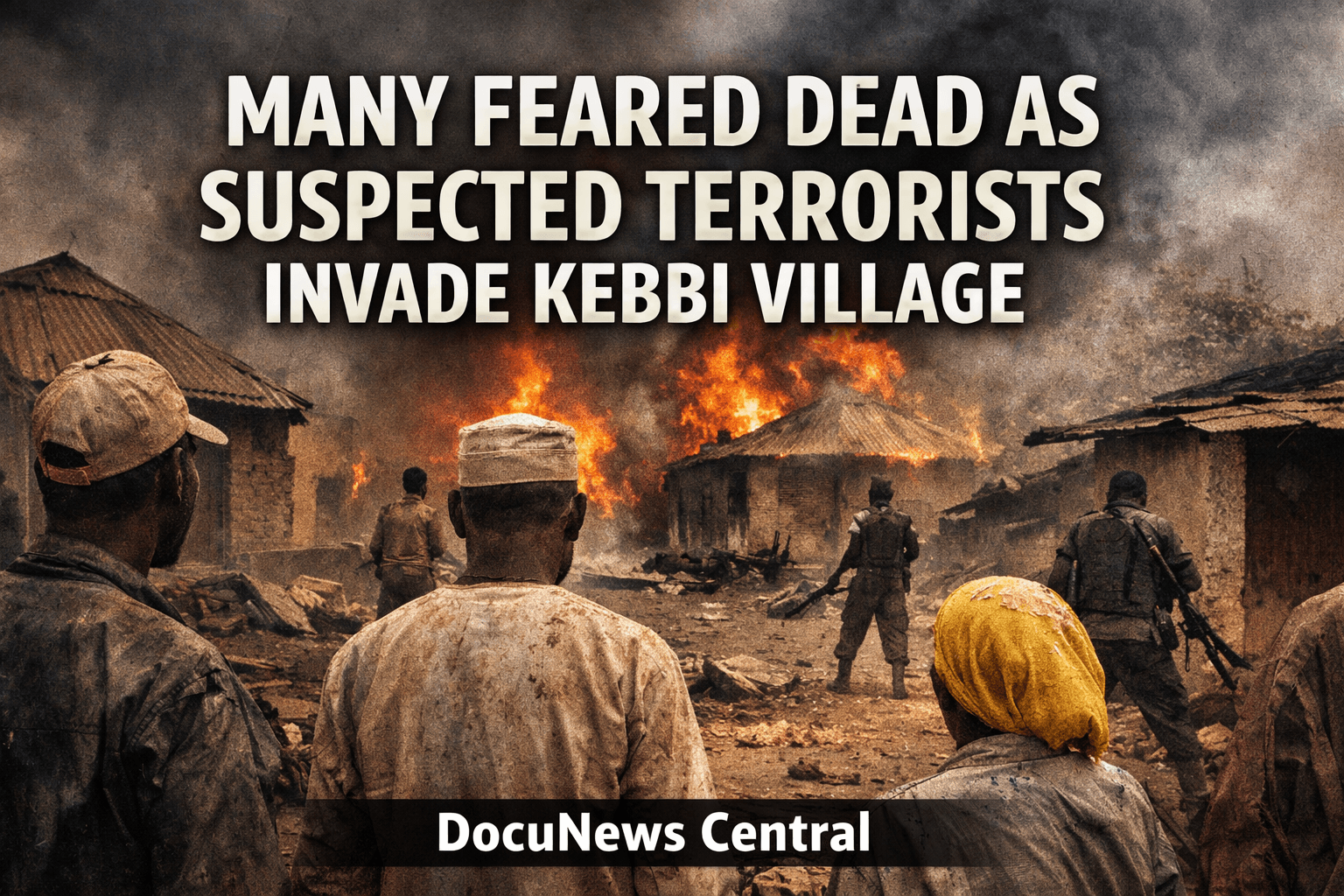
Many Feared Dead as Suspected Terrorists Invade Kebbi Village
In a shocking development that has gripped the nation, many feared dead as suspected terrorists invade Kebbi village. Early reports from local authorities indicate that the attack was sudden and violent, leaving residents in a state of panic. The perpetrators reportedly struck during the early hours of the morning, taking advantage of the quiet and unprepared nature of the community.
Eyewitnesses described scenes of chaos as the attackers moved swiftly through the village, targeting homes and public spaces. Residents fled for safety, with some climbing onto rooftops while others sought refuge in nearby bushes and farmlands. The exact number of casualties remains unclear, but sources suggest that many are feared dead and dozens more injured. Read also about this security updates Heavy Airstrikes Rock Zamfara as Nigerian Military Targets Dogo Sule’s Hideout
Details of the Attack
According to local officials, the attackers appeared heavily armed and operated in groups. They reportedly used motorcycles to navigate through narrow village paths, making escape difficult for residents. Security forces arrived hours after the initial assault, attempting to contain the situation and evacuate survivors. Unfortunately, response time lagged due to the village’s remote location and limited communication infrastructure.
Community leaders confirmed that several homes were completely destroyed during the raid. Essential services such as electricity and water supply were disrupted, further complicating rescue and relief efforts. In interviews, residents described hearing loud explosions and gunfire, with the sound echoing through the village and surrounding areas.
Eyewitness Accounts
One resident, who requested anonymity, shared: “We were asleep when we heard gunshots and shouting. We didn’t know what was happening. By the time we ran outside, we saw people being dragged and homes burning. It was terrifying.”
Another villager recounted helping injured neighbors to a safer location. “We tried to carry as many people as we could. Some did not survive, and we had no medical supplies. It was the worst day of our lives,” he said. Another security updates too US Plans Fresh Airstrikes on Terrorist Hideouts in Nigeria- Riley
Government and Security Response
Authorities condemned the attack and promised swift action to apprehend the perpetrators. The Kebbi State Government issued a statement assuring citizens that military and police units were deployed to the area. A spokesperson from the Nigerian Army confirmed ongoing operations to track down the terrorists and secure the village.
Furthermore, the federal government has reached out to humanitarian organizations to provide immediate relief. Medical teams and emergency responders are on the ground, attending to the injured and coordinating the transport of victims to nearby hospitals. Efforts are also underway to restore essential services and support displaced families.
Impact on the Community
The social and economic effects of the attack are already being felt. Many residents have lost their homes, livestock, and personal belongings. Farming, the primary source of livelihood in the village, has been severely disrupted, creating fear of long-term food insecurity. Schools have temporarily closed, and community centers are being used as makeshift shelters for the displaced.
Psychological trauma is also widespread. Counseling services are being organized to help survivors cope with the loss of family members and the destruction of property. Local NGOs, along with national organizations, have appealed for donations of food, clothing, and medical supplies.
Analysis of Terrorist Tactics
Experts suggest that the attackers aimed to instill fear and destabilize the region. By targeting remote communities, terrorist groups can operate with relative impunity, as response times are delayed and intelligence coverage is limited. Analysts warn that these attacks may be part of a broader strategy to disrupt rural economies and weaken local governance structures.
Security analysts recommend increased surveillance and improved communication networks to detect and prevent similar incidents in the future. Strengthening community vigilance, including local volunteer patrols, is also suggested as an immediate measure to enhance safety. This update might interest you too US Launches Surveillance Operations in Sambisa Forest
Historical Context
Kebbi State and surrounding regions have previously faced security challenges. Attacks by suspected terrorist groups have disrupted trade routes and agricultural activities in the past, though this recent incident is among the most devastating in recent years. The government’s long-term strategy has focused on counter-terrorism, but limited resources and challenging terrain often hinder effective intervention.
Local leaders emphasize the need for continued federal support and improved intelligence sharing to prevent future attacks. “Our community cannot face this alone. We need stronger protection and timely information to safeguard lives,” said a prominent village elder.
Call to Action
Residents and concerned citizens are urged to report suspicious activities to authorities. Community resilience programs are being established, including early warning systems and emergency preparedness training. International humanitarian organizations, such as the United Nations Office for the Coordination of Humanitarian Affairs, have been contacted to provide additional support.
The headline “Many Feared Dead as Suspected Terrorists Invade Kebbi Village” captures the urgency and gravity of the situation. Local news platforms and online media are actively covering developments to ensure residents and stakeholders remain informed.
Preventive Measures and Community Support
Efforts are underway to provide immediate relief to affected families. Donations of food, clothing, and medical supplies are being coordinated by local authorities and civil society groups. Training sessions on emergency response, first aid, and safe evacuation procedures are also planned.
Authorities advise villagers to remain vigilant and maintain communication with neighbors. Residents are encouraged to participate in community safety programs and report any unusual activity to law enforcement agencies.
Looking Ahead
While the immediate focus remains on rescue and relief, attention is turning to long-term recovery. Rebuilding homes, restoring essential services, and supporting livelihoods will require coordinated efforts between government agencies, NGOs, and the community. Experts highlight the importance of addressing both security and humanitarian needs to prevent future tragedies.
The national and international community has expressed solidarity with the people of Kebbi. Relief funds and support programs are being mobilized, and security forces are working to prevent further incidents. Continued media coverage ensures that the plight of the affected residents receives the attention it deserves.
Conclusion
The attack on Kebbi village represents a significant security challenge, emphasizing the need for enhanced vigilance and coordinated response. Many feared dead as suspected terrorists invade Kebbi village, highlighting the devastating impact on human lives and local infrastructure. As authorities, communities, and humanitarian agencies work together, the focus remains on saving lives, restoring safety, and rebuilding the community.
Residents are reminded that despite the challenges, unity and preparedness can help mitigate future risks. The tragic events in Kebbi serve as a sobering reminder of the ongoing threats to rural communities and the importance of proactive security and emergency measures.
For ongoing updates on this story and other security reports in Nigeria, visit Vanguard News and Premium Times.

Jonada Oluikpe
December 30, 2025 at 6:32 am
This is ßo seriously