
Security
Police Seize Truck Carrying Explosives In Oyo.

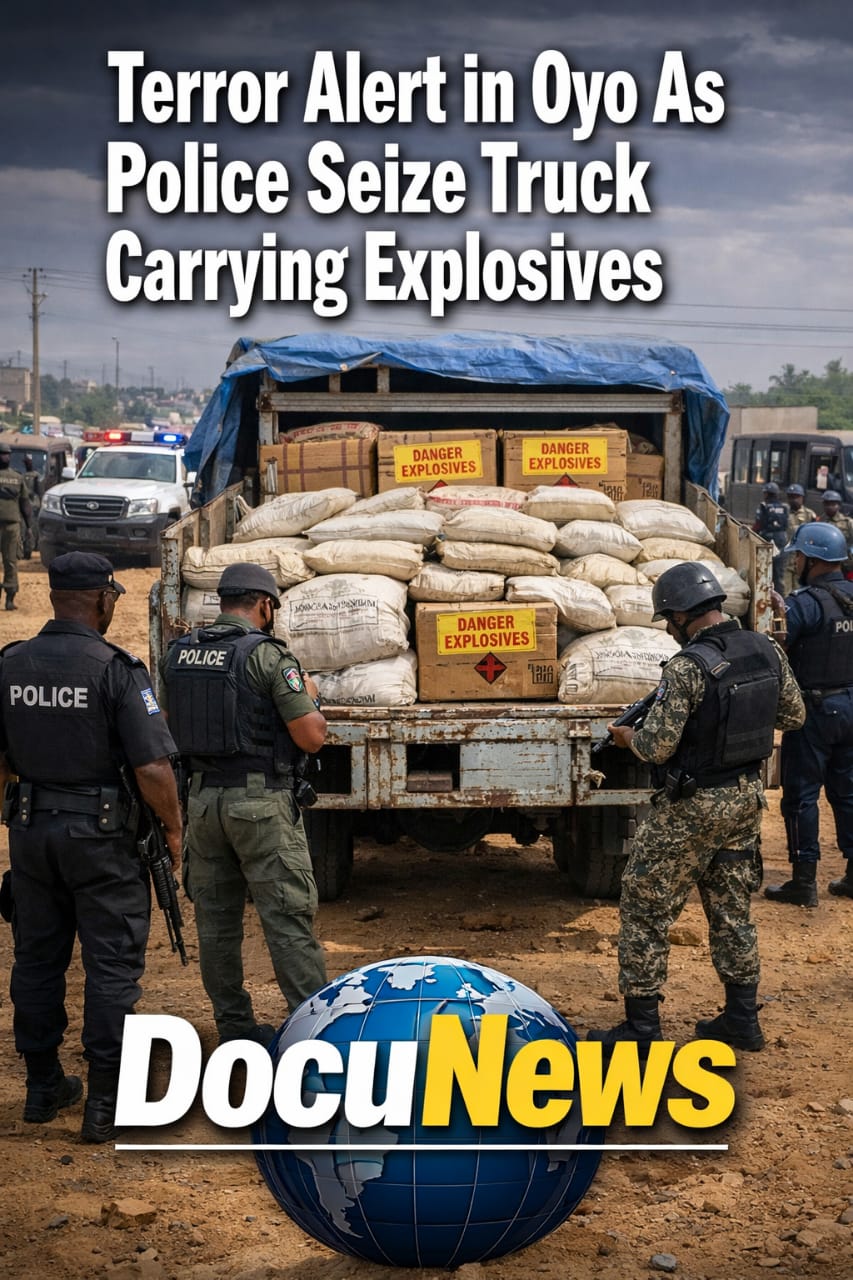
Terror Alert in Oyo: Police Seize Truck Carrying Explosives
When security forces in Oyo State intercepted a truck laden with suspected explosives in the border town of Saki, the move triggered a terror alert that highlighted the growing threat of illicit military‑grade materials moving through Nigeria’s southwest. Police executed the stop based on credible intelligence, seized the materials, and detained the driver, averting what could have been a serious security breach and potential act of violence. This operation showed how effective intelligence‑led policing can be. It also revealed vulnerabilities in transport corridors that connect Nigeria to neighbouring regions. With details now emerging, this incident demands careful analysis and public awareness. Source Source
Before we discuss the timeline, context, and implications of this event in Oyo State, let’s establish the facts with precision.
January 24, 2026 – Saki, Oyo State
On January 24, 2026, at about 11:10 p.m., officers of the Oyo State Police Command stopped a DAF truck with registration number OGUN SGM 765 XB in the Sango area of Saki. The operation was part of a planned stop‑and‑search procedure conducted after security agents received credible tip‑offs about suspicious activity along that route. The driver, later identified as Mutairu Yusuf, a 30‑year‑old man from Atiru Compound in Chikanda, Kwara State, was arrested on the spot when officers uncovered concealed packages that appeared to contain explosive materials. Source
The discovery immediately escalated the situation from an ordinary traffic stop to a full‑scale security incident. Officers secured both the truck and the materials. Then they called specialised units to take over the scene. What followed was a coordinated, methodical, and professional handling of a potentially devastating security threat.
Read also Troops Kill 168 Bandits, Arrest 357 Collaborators, Rescue 1,624 Kidnap Victims in Northwest
Intelligence‑Led Operation: How Police Acted
Police did not stumble onto this find by accident. They acted on intelligence that came through robust security channels. Officers from the Monitoring Unit were tracking suspicious movements when they were alerted to the truck heading toward Saki. They moved quickly. They positioned units along the highway. Their aim was clear: prevent any dangerous materials from moving freely across state lines.
The choice of Saki was significant. It lies near the border with the Republic of Benin and serves as a key transit point for commerce and transport activities. It has long been recognised by security experts as a crucial route in the movement of goods, both legal and illicit. By focusing on this corridor, police increased their chances of intercepting contraband or potentially harmful materials.
Once the truck was in view, officers initiated a stop. The driver complied, though he appeared nervous and inconsistent during preliminary questioning. Soon, a detailed inspection revealed suspiciously shaped bags that did not match the vehicle’s manifest. The search was expanded, and it did not take long for officers to realise that they were dealing with a high‑risk situation involving possible explosives. Source
You may have missed this Nigerian Military Airstrikes on Bandit Camps in Ifelodun and Patigi
Immediate Security Response
Within minutes of the discovery, the Commissioner of Police for Oyo State, Femi Haruna, was notified and ordered a full security lockdown of the area. Haruna has been at the helm of the command’s renewed focus on intelligence‑driven policing, and this moment tested that approach. He did not hesitate to pull in specialised resources to handle the threat.
Personnel from the Explosive Ordnance Disposal (EOD) Unit were mobilised. Officers trained in the handling of dangerous materials arrived on site. At the same time, teams from the Chemical, Biological, Radiological and Nuclear (CBRN) Unit were deployed to ensure the scene posed no immediate danger to neighbouring communities. Their role was to secure and examine the items safely and to assess risks associated with potential contamination or detonation. Source
These teams worked well into the early hours of the morning. Officials cordoned off the entire area around the Saki stop‑and‑search checkpoint. They established exclusion zones to keep civilians at a safe distance. News of the operation was shared with local authorities to prevent rumours or panic. At every step, transitions from one phase of the response to the next were smooth, deliberate, and controlled.
people are reacting to this Bandits Invade Gombe Community, Kill Two Persons, Abduct Four
What Was in the Truck?
Preliminary reports from security sources confirmed that the truck was carrying at least 40 bags of materials suspected to be explosive devices. At this time, investigators have not publicly categorised the contents as military‑grade explosives or industrial compounds. That distinction matters, because each category carries different legal implications and potential uses. The forensic examination, which is ongoing, will determine the exact composition and intended purpose of the materials. Source
The driver told investigators that the load was collected in Ibadan and meant for delivery to Chikanda in Kwara State, a border town that serves as a busy checkpoint for cross‑border commerce with Benin. Whether that statement holds up under scrutiny remains to be seen. Investigators will analyse shipping documents, interview suppliers, and inspect the physical properties of the contents to determine whether the materials are indeed explosive devices or possibly related to mining, construction, or another legal industry.
Despite these unknowns, the fact that the materials were hidden and transported without clear documentation suggests intent to conceal. That fact alone elevates the seriousness of the incident and justifies the heightened procedural response from police and forensic teams.
Driver in Custody: What We Know
Mutairu Yusuf, the truck’s driver, was taken into custody immediately after the discovery. He has been cooperating with investigators, according to official statements from the police. Yusuf’s statements will play a central role in piecing together what happened and why. Understanding whether he acted alone or was part of a broader network is a key investigative objective. Source
Police have not disclosed whether Yusuf has legal permits for transporting hazardous materials. The absence of proper documentation would confirm suspicions that this operation was unauthorised. Investigators will soon determine whether he knowingly misled authorities or simply followed orders from higher‑ups in a shadowy supply chain. Either possibility raises serious security concerns.
For our Images Credit, Visit Disclaimers: Use Of AI Images In Our Newsletters
Forensic Analysis and Ongoing Investigation
Investigators have begun detailed forensic work to analyse the seized materials. Forensic teams are examining chemical composition, packaging methods, and potential explosive signatures. Modern forensic science includes a battery of tests for residues, accelerants, detonators, or composite materials that mimic explosive properties. Analysts will also use spectrometry and chromatography to determine unique chemical markers. The goal is to answer two fundamental questions:
- What exactly are these materials?
- Were they intended for lawful use or harmful purposes?
These questions are vital. The answers will shape legal outcomes and influence public discourse on security policy. If the materials prove to be explosive devices or components for weaponisation, this case may be linked to organised crime, insurgent groups, or black‑market networks. If they are industrial compounds, the case still raises compliance issues and improper handling of hazardous goods during long‑distance transport.
Police have informed the public that they will share findings once forensic analysis is complete, but they have urged patience, as such work takes time and must be accurate.
Public Safety Measures and Communication
Immediately after the interception, the Oyo State Police Command released statements reassuring residents that there was no immediate threat to public safety. Public information campaigns emphasised that the situation was contained and that the police remained in full control of the scene. Officials also advised citizens to remain calm and avoid speculation. Source
During high‑stakes security incidents, effective communication with the public is crucial. It prevents panic, clarifies police intentions, and promotes trust between citizens and law enforcement. Oyo police spokesman Ayanlade Olayinka addressed the media multiple times to provide updates and explain ongoing operations. These actions helped counter misinformation and reassure communities near Saki and across Oyo State.
Context: Security Challenges in Oyo State
Oyo State has faced a range of security issues in recent years. While not as volatile as some northern regions, the state has encountered smuggling, illegal mining activities, banditry, and sporadic violence. For instance, an earlier blast in Ibadan related to explosives being stored for mining caused fatalities and widespread damage in 2024. Source
These incidents underscore the importance of vigilance around materials that can be repurposed for explosive or harmful use. Mining compounds, industrial chemicals, and construction materials are not inherently dangerous — until they fall into irresponsible hands or are moved without oversight. Police and security agencies in Oyo have recognised this fact and enhanced surveillance on key transport nodes like Saki, Ibadan, and border routes.
Broader Regional Implications
Saki’s strategic position near neighbouring republics elevates the regional security implications of this interception. Smugglers and illicit traders often use border towns as entry points for goods that bypass official channels. When those goods include potentially explosive materials, risks multiply. Authorities in neighbouring states and federal security agencies will likely join the ongoing investigation to determine cross‑border links. Such coordination is vital in a globalised threat environment.
Lessons from the Incident
This operation offers critical lessons for law enforcement and the public alike:
- Proactive intelligence saves lives. Police responded because they had credible leads, not random chance.
- Coordination among specialised units matters. EOD and CBRN expertise prevented hazards from escalating.
- Public trust comes from transparency. Clear communication helped avert panic.
- Transport corridors require constant monitoring. Routes like Saki are vital but vulnerable.
Ongoing training and investment in security infrastructure will enhance the ability to intercept illicit materials before harm occurs. The Oyo command’s performance in this case demonstrates forward progress in those areas.
Conclusion: Averted Danger, But Questions Remain
When police in Oyo State intercepted a truck carrying suspected explosives, they did more than seize cargo. They prevented potential disaster. They showed that intelligence‑led policing saves lives. They demonstrated that proactive security measures matter in a world where threats evolve quickly.
Investigations continue. Forensic reports will reveal the true nature of the materials and clarify intentions. Who supplied them? Who ordered their transport? And were there other vehicles involved?
What remains clear today is this: decisive action by law enforcement kept a potentially dangerous situation from becoming a tragedy. Oyo State’s security apparatus acted with precision, professionalism, and resolve. The nation will watch closely as answers emerge in the coming weeks.
Read more about the ongoing investigation as updates become available from official sources like Channels TV, TheCable, and Sahara Reporters.
For All Security Updates In Nigeria Visit Security updates Nigeria

Marvinvax
January 26, 2026 at 11:52 pm
Если интересуетесь аэропортами в разных странах, таких как Филиппины, Дания, или даже Зимбабве, следует понимать, что директ рейсы из таких хабов как Стамбул или Прага заметно ускоряют передвижения по Европе и другим регионам. Допустим, из Еревана можно найти прямые рейсы в Европу, а из Москвы часто можно обнаружить самые бюджетные билеты, с учетом специальные предложения. Для удобства составления путешествия рекомендую глянуть обширный список аэропортов и рейсов на дешевые авиабилеты из лондона , где находится информация по аэропортам США, Польши, ОАЭ и других популярных направлений.
Особо ценно для тех, кто находит маршруты из малопопулярных стандартных точек вылета, допустим, недорогие авиабилеты из Минска, Вроцлава или даже Душанбе. Аэропорты в странах как Албания, Нидерланды или Швеция предлагают обилие вариантов перелетов, а также лоукосты. Кроме того, не пренебрегайте про такие редкие направления, как аэропорты Гренландии, Доминиканы или Багам, которые могут оказаться великолепным вариантом для отпуска. Когда собираетесь определить, по каким маршрутам можно по низкой цене улететь из Москвы или Стамбула, а также о прямых рейсах из Анталии в Европу, обратитесь на сайт и подберите подходящий для вас вариант.