
Security
Seven Soldiers Including Lieutenant Colonel, Killed as Boko Haram Attacks Convoy

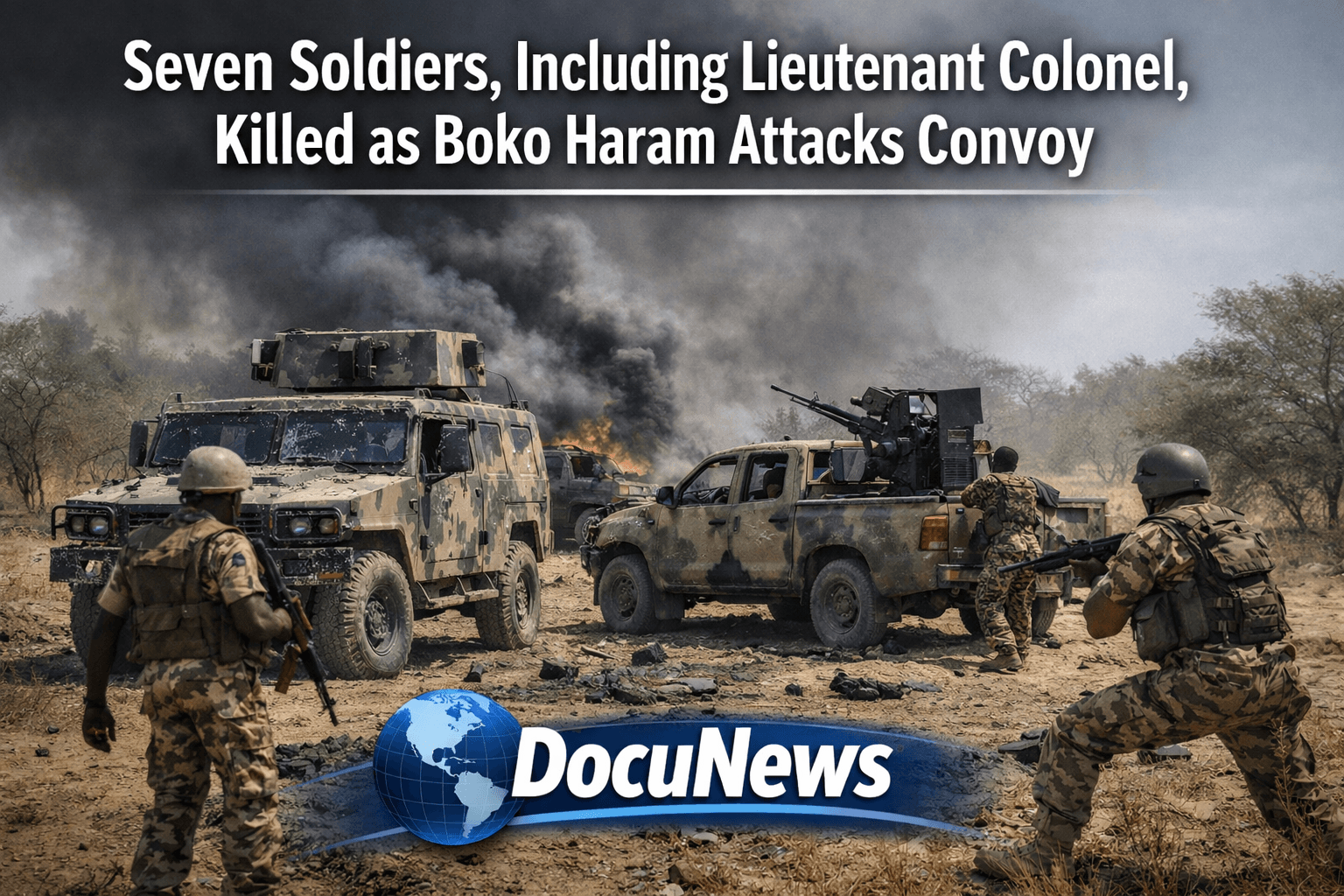
Photo Credit Visit Disclaimers: Use Of AI Images In Our Newsletters
Seven Soldiers, Including Lieutenant Colonel, Killed as Boko Haram Attacks Convoy
One of Nigeria’s deadliest insurgent groups struck again. On a tense road in the northeast of the country, Boko Haram fighters laid a trap that cost the lives of seven courageous military personnel, including a newly promoted Lieutenant Colonel. This brutal strike did not just affect soldiers. It has shaken confidence and raised serious questions about ongoing counter-insurgency operations in Borno State.
On Monday, January 26, 2026, troops were moving from Maiduguri toward Damasak in the Mobbar Local Government Area of Borno State when they encountered an ambush by suspected Boko Haram terrorists. The convoy was hit hard. Seven soldiers died on the scene, and others were wounded. Authorities confirmed that among the dead was a newly promoted Lieutenant Colonel who had only recently reached that rank. His loss reverberated through the ranks and drew attention to the ongoing threat posed by insurgents in northeastern Nigeria.
How the Ambush Unfolded
The convoy was on a routine movement between bases when the ambush occurred. According to military sources, the attackers used explosives to stop the vehicles. They followed up with intense gunfire. Soldiers were caught off-guard but fought back. The battle was fierce and quick. By the time the firing stopped, seven troops had perished. Others were seriously injured, and some were reported missing.
The bodies of the fallen soldiers were taken to the 7 Division Hospital in Maiduguri. Saddened families and colleagues were notified. Military officials also reported that the insurgents took the Lieutenant Colonel’s mobile phone after the attack. Senior officers later called the device. Shockingly, someone believed to be a militant answered.
Who Was the Lieutenant Colonel?
Local reports identified the deceased officer as Lieutenant Colonel Mohammed. He had recently been promoted from the rank of Major. Before this deadly operation, he commanded the unit involved in the patrol. His promotion was a proud moment for his family and fellow servicemen. Now, that honor has been overshadowed by grief.
His role in the convoy was pivotal. He was not just a commander. He was a leader and a mentor to younger officers. Losing him in an ambush affects leadership dynamics in the field. It also raises urgent questions about preparedness and security along key military routes in the region.
Read Also Pregnant Woman Abducted in Ondo as 85-Year-Old Victim Escapes
Why Borno State Remains a Battlefield
Borno State has been the epicenter of Boko Haram violence since the insurgency sprouted more than a decade ago. The group was first formed in 2002 near Maiduguri. It claimed it wanted to fight corruption and reject Western influences. Soon, though, its actions became violent and radical. By 2009, it had declared war on Nigerian security forces and civilians alike.
In 2015, Boko Haram pledged allegiance to the Islamic State of Iraq and the Levant (ISIL), rebranding a faction of itself as the Islamic State West Africa Province, or ISWAP. This splintering created multiple cells. Each one uses ambushes, roadside bombs, suicide attacks, and raids to strike at military and civilian targets across Borno and neighboring states.
Despite major offensives by the Nigerian military and regional forces, Borno remains a volatile zone. Communities endure waves of violence, displacement, and fear. Governments have tried to secure remote and urban centers with mixed success. Reality now shows that insurgents remain both capable and determined.
People are reacting to this Bandits Ambush Police Patrol in Katsina, Four Officers Killed
The Cost of Ongoing Conflict
This ambush is not an isolated event. Boko Haram and related factions have caused tens of thousands of deaths over the years. According to security analysts, the insurgency has killed more than 35,000 people and displaced millions of others. Entire families were forced from their homes. Farms and schools were abandoned as hunger and fear spread.
The actions of Boko Haram have widened the humanitarian crisis in northeast Nigeria. Internally displaced persons (IDP) camps in Maiduguri and beyond are filled with families who lost relatives and property. International aid agencies often struggle to provide consistent support in areas still threatened by attacks like the recent ambush.
Security forces have faced setbacks too. Last year, Boko Haram fighters overran the military base in Malam-Fatori, killing a commander and 18 soldiers. That strike highlighted vulnerabilities in remote areas close to the Niger border.
ISWAP, the Boko Haram faction affiliated with ISIL, has also grown active. In some operations, ISWAP fighters have killed Nigerian soldiers in patrol ambushes. In one such instance, a Major commanding a patrol near Damasak was killed in an explosive and gun attack. Dozens of troops were initially unaccounted for before some returned to base.
How Boko Haram Has Evolved
Boko Haram’s ideology and structure have changed over time. Initially focused on local issues, it has since become a network with multiple branches and foreign ties. Some experts say its affiliation with global extremist organizations enabled training and access to weapons. Its fighters recruit from Nigeria and neighboring countries.
In the early years of its insurgency, the group targeted police stations and government sites. Over time, its attacks spread to schools, markets, and villages. One of the most infamous chapters was the kidnapping of more than 275 schoolgirls in Chibok, Borno State. That event in 2014 drew global outrage.
Even today, Boko Haram and ISWAP remain active in the Lake Chad basin, reaching into parts of Niger, Chad, and Cameroon. This regional presence complicates counter-insurgency efforts, as militants cross porous borders to evade security operations.
You may have missed this Police Nab Armed Robbery Gang; Dismissed Army Officers Are Among The Suspects in Oyo
What the Military Is Doing
The Nigerian military, alongside regional allies and international partners, conducts continuous operations against insurgents. Ground troops carry out patrols, raids, and surveillance missions. Air units provide support in remote areas. In late 2025, the military announced that it had neutralized dozens of fighters during systematic operations in Borno State.
These operations can win tactical victories. Yet, hitting mobile and hidden groups is difficult. Militants often blend into rural landscapes. They exploit forests, marshes, and shifting pathways that stretch for miles. This gives them an edge over convoys moving along predictable routes.
Defense officials have vowed to protect citizens and their own personnel. But every ambush like this one shows how unpredictable the fight remains. Families of fallen soldiers often call for better equipment and quicker reinforcements. These voices echo across military and civilian institutions alike.
Impact on Morale and Strategy
Losing a senior officer in an ambush hurts morale deeply. Younger soldiers look up to leaders like Lieutenant Colonel Mohammed. Their deaths leave gaps in command and experience. Units must regroup and adapt quickly. Sometimes new leaders emerge, but it takes time.
Commanders must rethink routes and tactics after such losses. They analyze how the ambush unfolded. They ask how to protect troops better. These questions shape future operations. They shape lives of every soldier on patrol.
Civilian Life in the Shadow of Conflict
For civilians in Borno State, security incidents are a harsh reality. Many cannot return home due to ongoing threats. Farms remain untended, markets stay quiet, and schools struggle to reopen. Aid agencies often provide food and shelter, but long-term recovery is slow.
Some families have fled into neighboring regions, hoping to escape violence. Others stay near military outposts for protection. Still, uncertainty follows them. Each new attack, like the recent convoy ambush, reminds them that peace is not yet in reach.
International Support and Challenges
Global partners have supported Nigeria’s fight against terrorism with training, equipment, and funding. Yet challenges remain. Militants adapt quickly. They shift routes, form alliances, and recruit new fighters. Many areas are hard to patrol. This makes securing every highway nearly impossible.
Neighboring nations collaborate through joint task forces to stop cross-border attacks. But porous borders allow insurgents to slip away. Regional unity improves defense, yet it does not end the threat. As long as extremist networks find resources and recruits, violence persists.
Voices From the Ground
Eyewitnesses describe the ambush with shock and sorrow. One source said the explosion came without warning. Soldiers scrambled for cover. Gunfire erupted. Within moments, lives were lost. Others ran for safety. These accounts show how fast violence can erupt and how little time there is to react.
Local leaders have condemned the attack. They expressed deep grief for the fallen. They also called for better protection of troops and communities. Their statements emphasize that this conflict is not only a military issue. It is a humanitarian concern as well.
What Comes Next?
After this ambush, military planners will review strategy. They will consider new patrol patterns, faster reinforcements, and stronger intelligence. They will push to protect soldiers and prevent future losses. But they face an enemy that adapts quickly and strikes without warning.
Civilians must find ways to cope while living in conflict zones. International groups will continue to offer services. Local volunteers also assist in rebuilding what violence has broken. This patchwork of support carries communities forward, even in hard times.
Conclusion
This ambush on January 26, 2026 stands as a stark reminder of the ongoing threat in northeastern Nigeria. Seven soldiers, including a newly promoted Lieutenant Colonel, died in a deadly encounter with Boko Haram insurgents. The violence highlights not only the bravery of Nigeria’s military but also the deep challenges that remain in defeating extremist networks. Continued security efforts, regional cooperation, and community support are vital. Only through sustained commitment can peace finally take root in Borno and beyond.
Sources: Sahara Reporters: Boko Haram Terrorists Ambush Military Convoy, Britannica: Boko Haram, CFR: Nigeria’s Battle With Boko Haram

Marvinvax
January 29, 2026 at 6:17 am
Howdy everyone! If you’re seeking to find out what season you are or which colors fit your skin tone best, tools like the color analysis pro app and online quizzes can be a excellent start. For example, if you have a ivory skin tone with yellow undertones or olive skin, exploring palettes like deep summer or light spring color palette might definitely help pinpoint the best colors for you. It’s amazing how seasonal color analysis uses skin tone charts, vein tests, and undertone observations—like blue veins or reddish undertones—to pinpoint flattering color palettes.
For those looking into deep summer color analysis, the palette often includes muted and cool shades which enhance yellow skin tone females or people with an amber skin tone. You can also discover free color analysis and hair color simulators online to play around before committing. If you want to dive deeper into seasonal color palettes and find out what colors work best with pale skin, yellow undertone, or olive skin, view deep summer color palette for thorough charts and tips!
Marvinvax
January 29, 2026 at 6:29 am
Продумывая поездку в Таиланд, очень важно заранее понять с вопросами, сколько стоит поездка в Таиланд и сколько брать финансов в Таиланд на 10 дней. К примеру, отдых в Пхукете зачастую обходится несколько дороже, чем на Самуи, но оба острова дарят отличные пляжи и множество экскурсий. Если вы стремитесь понять, сколько стоит поездка в Таиланд, важно учитывать расходы на трансфер Пхукет — Самуи, заказ байка без прав, а также цены на массаж в Пхукете и экскурсии.
Чтобы не заблудиться по приезду, рекомендуется заранее определить, как найти дорогу в аэропорту Пхукета и где предпочтительнее менять деньги — самый оптимальный обменник на Пхукете преимущественно находится в непосредственной близости к центру. Также предлагаю познакомиться с рынком Патонг и моллами на Патонге, где можно продегустировать экзотические фрукты Таиланда и понять, что продегустировать в Таиланде из блюд и напитков. Более подробно и отзывы можно посмотреть здесь цунами 2004 пхукет — ценный ресурс для туристов.