
National
Iran Warns United States: “Your Warships Will Sink”

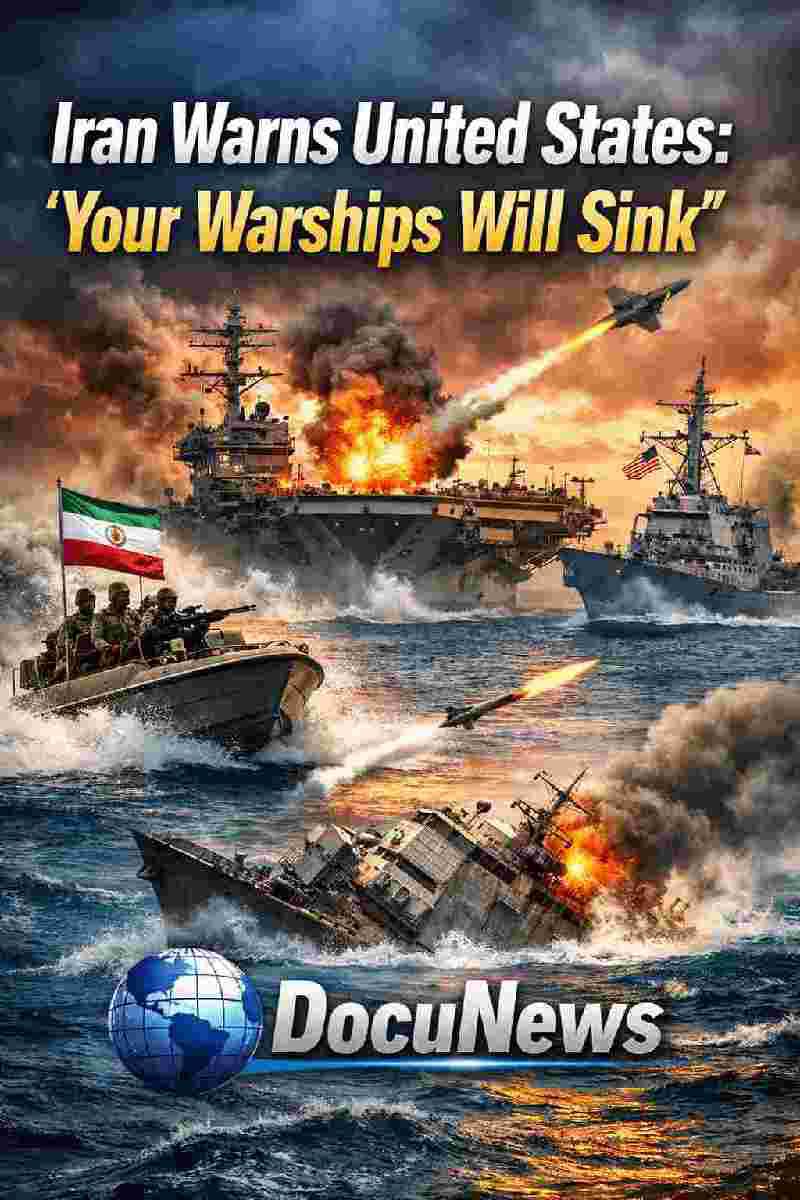
In a bold and disturbing press conference made by Iranian leader he sounded a serious warning to United States of America and and this a strong headline that says “Iran Warns United States: “Your Warships Will Sink” this headline has became a dominant global headline after a powerful warning was delivered by Iranian leader. And it is sending a fresh shockwaves through international diplomatic and security circles. The statement immediately intensified already strained relations between Iran and the US, raising fears that prolonged hostility could eventually spill into open confrontation. As news of the warning spread, governments, investors, and ordinary citizens began closely watching developments in the Middle East, fully aware that any conflict involving these two powers would carry global consequences.
According to DocuNews Central On February 17, 2026, in Tehran, the Iranian leader issued the warning during a nationally broadcast address. The timing of the statement drew immediate attention because it followed weeks of rising military activity across the Persian Gulf. American naval deployments had increased near key shipping corridors, while Iranian forces conducted missile drills and maritime exercises close to their coastline. Together, these developments created an atmosphere of heightened alert, prompting swift reactions from world leaders and financial markets alike.
This latest episode did not appear suddenly. Instead, it emerged from a growing pattern of tension marked by strategic posturing, forceful rhetoric, and repeated shows of military strength. Washington has insisted that its naval presence is necessary to protect international trade routes. Tehran, on the other hand, argues that foreign warships operating near Iranian waters represent a direct threat to its sovereignty. As both sides continued reinforcing their positions, analysts warned that even a minor incident could quickly escalate into something far more serious.
Growing Pressure Across Strategic Waters
According to DocuNews Central, the Persian Gulf holds enormous strategic value, serving as one of the world’s most important maritime corridors. Each day, millions of barrels of crude oil and vast volumes of commercial goods pass through its narrow waterways. Because Iran controls a significant stretch of coastline along these routes and the United States maintains powerful naval assets nearby, every maneuver carries symbolic and practical significance. Consequently, each military exercise or fleet movement is carefully examined by regional governments and international observers.
Following Khamenei’s remarks, global energy markets reacted almost instantly. Oil prices climbed as traders factored in the risk of disruption, while shipping insurers raised premiums for vessels operating in the region. According to Reuters, analysts noted that even the perception of instability can move markets, particularly when critical supply routes are involved. You can read Reuters’ ongoing coverage here: https://www.reuters.com/world/middle-east/.
Meanwhile, BBC correspondents reported increased security preparations across several Gulf states, alongside quiet diplomatic outreach aimed at preventing miscalculation. European governments urged restraint, emphasizing that continued escalation would benefit no one. BBC’s Middle East reporting remains available at https://www.bbc.com/news/world-middle-east.
Inside Iran’s Message to Washington
During his address, Khamenei accused Washington of deliberately fueling instability by positioning warships near Iranian territory. He framed Iran’s posture as defensive, insisting that the country would respond decisively to any hostile action. Iranian state media amplified the remarks, presenting them as a warning rather than a declaration of intent, while supporters portrayed the message as a demonstration of national resolve.
American officials interpreted the comments differently. Pentagon representatives confirmed that U.S. forces in the region remain on full readiness, reiterating commitments to freedom of navigation and protection of international commerce. Naval patrols continued without interruption, signaling that Washington does not intend to retreat under pressure. This exchange reflects a familiar pattern in relations between the two nations, where assertive language often accompanies visible military activity.
Iran relies heavily on asymmetric capabilities, including fast-attack boats, drones, and coastal missile systems, designed to counter the technological advantage of larger naval powers. The United States, meanwhile, deploys aircraft carriers, submarines, destroyers, and advanced surveillance networks. Although both sides understand the devastating cost of full-scale war, their contrasting strategies increase the risk of unintended escalation, particularly in crowded maritime zones.
Economic Shockwaves and Global Anxiety
Beyond military implications, the standoff carries serious economic consequences. Any prolonged disruption in the Persian Gulf would likely drive fuel prices higher and strain already fragile supply chains. Investors reacted nervously to the latest developments, shifting funds toward safer assets while energy-related stocks surged. Governments across Asia and Europe warned that instability in the region could worsen inflation pressures affecting households worldwide.
France and Germany called for immediate de-escalation, stressing the importance of dialogue. Japan highlighted the need to keep shipping lanes open, while China and Russia encouraged both sides to avoid provocative actions. Al Jazeera provided regional insight into how Gulf states are strengthening port security and reviewing emergency plans, available at https://www.aljazeera.com/middle-east/.
CNN also reported on behind-the-scenes diplomatic efforts aimed at preventing a direct clash, noting that several countries are quietly offering mediation. Their coverage can be found at https://www.cnn.com/middleeast.
Public Perception and the Information Battlefield
As the crisis unfolded, social media platforms filled with commentary, speculation, and, in many cases, misinformation. Old videos resurfaced, unverified claims circulated rapidly, and emotionally charged posts gained traction. This digital storm highlighted how modern geopolitical disputes now play out not only through official statements and military deployments but also across online networks, where narratives can spread faster than facts.
Independent journalism has therefore become more important than ever. Balanced reporting helps separate reality from rumor and provides context often missing from viral content. Readers increasingly rely on credible sources to understand what is happening and why it matters.
DocuNews Central and Independent Coverage
Platforms like DocuNews Central continue tracking verified developments, naval movements, and diplomatic responses while avoiding sensationalism. Through consistent reporting, DocuNews Central aims to help readers make sense of complex regional dynamics and global implications. You can follow ongoing updates and in-depth analysis via DocuNews Central’s internal platform at https://docunewscentral.com.
By focusing on confirmed information rather than speculation, DocuNews Central provides readers with clarity during rapidly evolving situations, offering perspectives that extend beyond headlines.
Regional Allies Prepare for Uncertainty
Across the Middle East, governments have reviewed contingency plans, strengthened coastal defenses, and increased surveillance activities. Ports enhanced security measures, while airlines quietly adjusted routes to avoid sensitive airspace. Humanitarian organizations also began preparing for possible displacement scenarios, aware that any military confrontation could quickly affect civilian populations.
Although no direct conflict has erupted, the level of preparation underscores widespread concern. History has shown that prolonged standoffs can suddenly shift, especially when military forces operate in close proximity. For that reason, diplomats continue urging restraint while maintaining communication channels.
Read also Editorial Policy- DocuNews Central
DocuNews Central Opinion
From DocuNews Central’s perspective, this moment reflects a broader failure of sustained diplomacy. Strong rhetoric may resonate with domestic audiences, yet it also narrows space for compromise. Real security comes from dialogue, not intimidation. Both Tehran and Washington must prioritize communication and restraint, because ordinary people always bear the greatest cost when geopolitical rivalries turn violent.
DocuNews Central believes that cooler heads can still prevail if leaders choose engagement over escalation and recognize that cooperation, however difficult, offers a safer path forward.
What Lies Ahead
Several outcomes remain possible. Quiet negotiations could resume through regional mediators. Limited maritime incidents could occur without expanding further. In a worst-case scenario, broader confrontation could unfold, drawing in allies and disrupting global trade. Each path carries serious implications, making the coming weeks critical.
For now, naval fleets remain active, diplomats work behind closed doors, and markets respond to every new signal. Citizens around the world watch developments closely, hoping that restraint will outweigh retaliation. While words alone do not start wars, they shape expectations and influence decisions, reminding everyone how fragile peace can be.
Conclusion
“Iran Warns United States: ‘Your Warships Will Sink’” marks another tense chapter in a long and complicated relationship. The warning has already affected markets, diplomacy, and public sentiment. Whether it leads to renewed dialogue or deeper confrontation depends on choices made in the days ahead. As events continue to unfold, staying informed through reliable outlets such as Reuters, BBC, Al Jazeera, CNN, and DocuNews Central remains essential.
The world now waits, hoping that measured leadership will prevail and that diplomacy will once again take center stage.
For security updates in Nigeria Visit Security updates Nigeria
You may have missed this Troops Destroy Three Bandit Camps, Free Kidnap Victims in Kogi
