
World
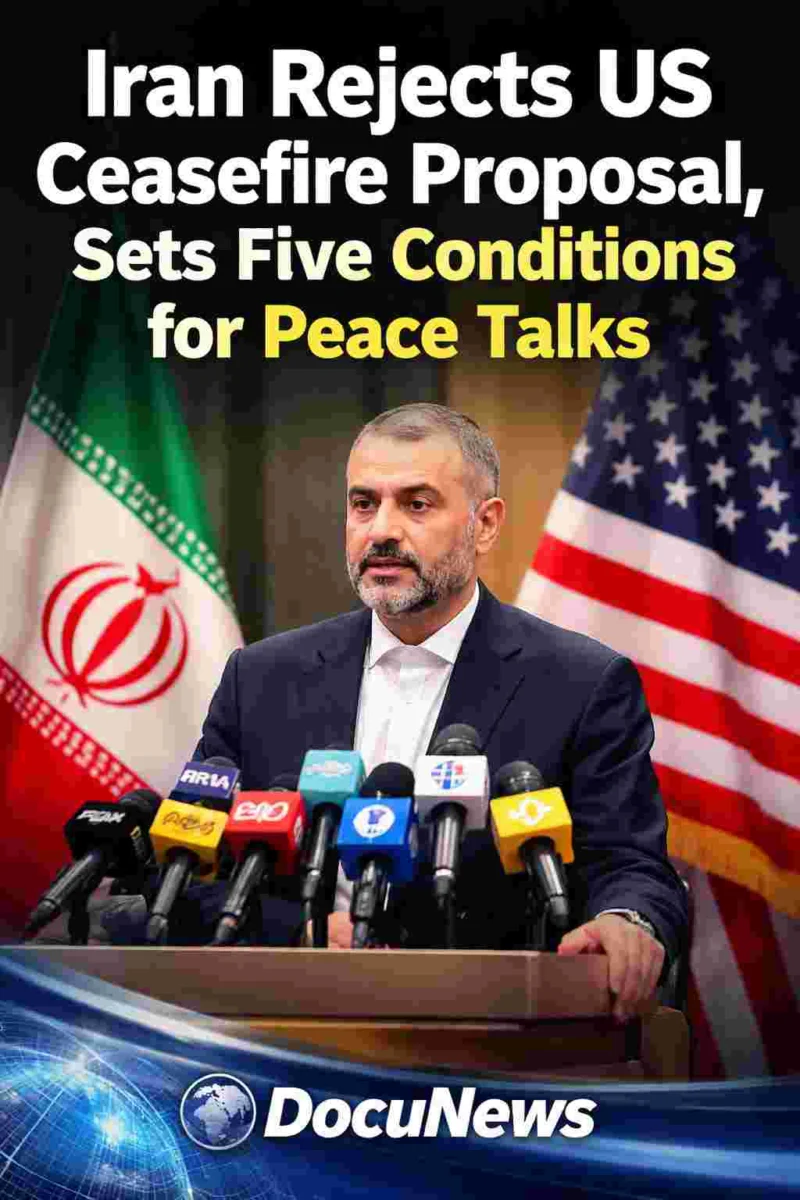
Iran Rejects US Ceasefire Proposal, Sets Five Conditions for Peace

By Jonadab | March 25, 2026 | DocuNews Central
Iran Dismisses US Ceasefire Plan
Iran has rejected a 15-point ceasefire proposal put forward by the United States. A senior official confirmed the decision in remarks to state-run media. The official said Tehran would only accept a truce based on its own terms and timeline.
However, the rejection signals rising tension between both countries. It also highlights the widening gap in diplomatic efforts. Therefore, prospects for an immediate ceasefire remain uncertain.
Also read Iran Fires Cluster Warhead Missiles at Central Israel
Tehran Sets Conditions for Peace Talks
Iran outlined five key conditions that must be met before any agreement can move forward. First, it demands a complete halt to military attacks and targeted assassinations. Second, it calls for firm guarantees that the conflict will not restart.
In addition, Tehran insists on financial reparations for damages caused during the conflict. It also demands recognition of its sovereignty over the Strait of Hormuz. Finally, it calls for an end to attacks on allied groups across the region.
Focus on Strait of Hormuz Sovereignty
The Strait of Hormuz remains a central issue in the dispute. Iran views the strategic waterway as vital to its national security. Therefore, it insists that any agreement must formally recognize its authority in the region.
Meanwhile, global markets closely monitor developments around the strait. The route handles a significant portion of the world’s oil supply. As a result, instability in the area often affects international energy prices.
Regional Security Concerns Intensify
Iran also emphasized the need to stop attacks on allied groups. It argues that continued strikes increase instability across the Middle East. Consequently, Tehran sees this demand as essential for long-term peace.
At the same time, regional actors remain deeply involved in the conflict. Several countries continue to support opposing sides. Therefore, achieving a broad agreement may require wider negotiations.
US Position and Diplomatic Efforts
The United States has not publicly accepted Iran’s conditions. However, officials continue to push for a negotiated settlement. Washington has supported a ceasefire framework aimed at reducing hostilities.
Nevertheless, the gap between both sides remains significant. While the US seeks immediate de-escalation, Iran prioritizes long-term guarantees. As a result, talks may face delays in the coming days.
International Reaction to Iran’s Decision
Global leaders have reacted cautiously to Iran’s rejection. Some governments have urged both sides to return to dialogue. Others have expressed concern over the potential for escalation.
Meanwhile, international organizations continue to monitor the situation. Diplomatic channels remain open, although progress appears slow. Therefore, the international community continues to call for restraint.
Impact on Global Energy and Trade
The situation has raised concerns in global energy markets. The Strait of Hormuz serves as a critical route for oil shipments. Any disruption could affect supply chains worldwide.
As a result, analysts warn of possible price volatility. Shipping companies also remain on alert. Consequently, the economic impact could extend beyond the region.
Outlook for Future Negotiations
Despite the rejection, diplomatic efforts are likely to continue. Both sides have shown interest in avoiding prolonged conflict. However, major differences still block immediate progress.
Therefore, future talks may focus on bridging key disagreements. Negotiators could attempt phased agreements or confidence-building measures. Meanwhile, tensions are expected to remain high in the short term.
Background of the Conflict
The current conflict stems from long-standing tensions between Iran and the United States. Disputes over regional influence and security have fueled repeated confrontations. Over time, both sides have accused each other of aggression.
In recent months, hostilities have intensified. Military actions and retaliatory measures have increased. As a result, international concern has grown significantly.
Calls for De-escalation Continue
Global powers continue to urge restraint from both nations. Diplomatic efforts focus on preventing further escalation. At the same time, humanitarian concerns remain a priority.
Therefore, observers stress the importance of dialogue. They argue that negotiations offer the best path forward. However, progress depends on both sides finding common ground.
Further Information
For more details on global diplomacy and security developments, visit Reuters World News, Al Jazeera Middle East, and BBC Middle East Coverage.
8
