
Security
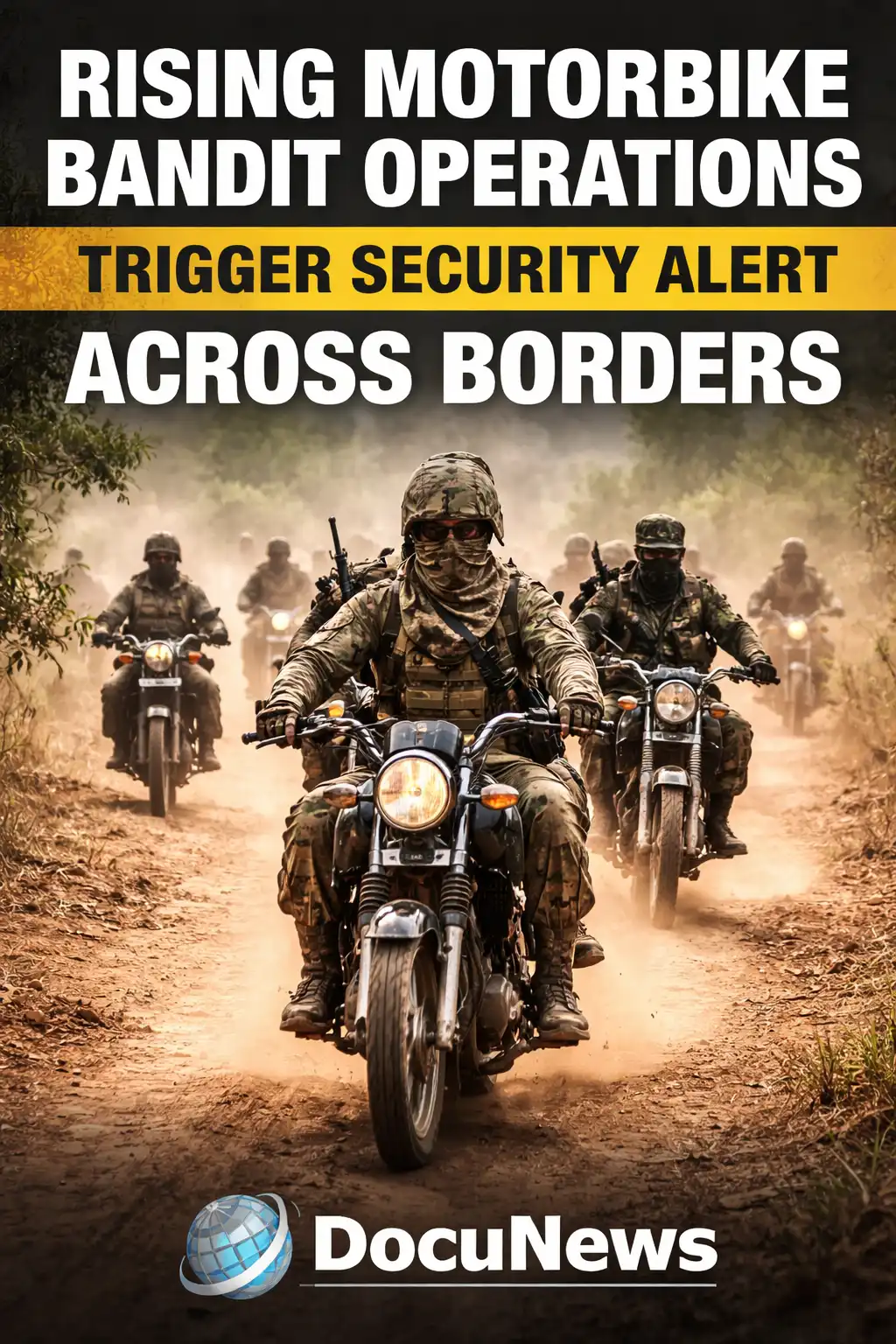
Rising Motorbike Bandit Operations Trigger Security Alert

Author: Jonadab| Date: 2026-04-14 Publisher: DocuNews Central.
Security forces have raised concern over a growing pattern of motorbike-driven movements in cross-border bandit operations. Authorities report that armed groups increasingly rely on motorcycles to navigate difficult terrains and evade surveillance. Furthermore, security agencies link this development to rising attacks along remote border communities in West Africa.
Meanwhile, officials indicate that the mobility advantage of motorcycles allows rapid raids and quick withdrawals. Consequently, security patrols face increased difficulty in tracking and intercepting these groups across forest and rural corridors. In addition, intelligence units continue to map emerging routes used for cross-border infiltration.
Also read Jilli Market Airstrike Allegedly Intentional – Gov Zulum Backs Military
Rising Alert Across Border Regions
On Tuesday, April 14, 2026, security authorities confirmed heightened alerts across border communities spanning northern Nigeria and adjacent frontier zones near the Niger Republic. The alert followed multiple reports of coordinated movements involving motorbikes in remote areas of the Katsina–Zamfara axis and surrounding rural settlements. Furthermore, local security coordinators confirmed increased surveillance operations across identified transit corridors.
Subsequently, security meetings were convened to assess the evolving threat pattern. However, officials emphasized that the use of motorcycles does not only enhance mobility but also complicates aerial and ground tracking operations. Therefore, response strategies now focus on improved intelligence sharing across national boundaries.
How Motorbikes Enhance Bandit Mobility
Motorbikes provide armed groups with fast access to hard-to-reach rural settlements. Moreover, these vehicles operate effectively in terrains where conventional vehicles struggle, especially during seasonal road degradation. In addition, their low fuel requirement allows extended movement without frequent logistical stops.
Furthermore, analysts note that motorbikes enable small, highly mobile units that can split into multiple directions after attacks. Consequently, security forces often encounter difficulty in predicting escape routes. Meanwhile, the lack of fixed patterns reduces the effectiveness of traditional roadblock strategies.
people are reacting to this Local Vigilantes Clash with Bandits in Katsina Forest Corridor
Cross-Border Dynamics and Expanding Routes
Security assessments suggest that cross-border terrain plays a significant role in the expansion of these operations. Additionally, porous borders allow movement between rural settlements across national boundaries with limited checkpoints. As a result, armed groups exploit unmonitored pathways linking Nigeria, Niger, and other Sahelian regions.
Furthermore, regional cooperation frameworks continue to address these challenges through joint patrol initiatives. However, limited infrastructure in remote areas slows down coordinated response efforts. Therefore, authorities are prioritizing improved border surveillance technologies and community-based intelligence systems.
Moreover, experts highlight that criminal groups increasingly adapt to enforcement pressure by changing movement routes frequently. Consequently, border security agencies continue to adjust operational strategies to match these evolving tactics.
Security Response and Intelligence Expansion
Security agencies have expanded intelligence gathering efforts across high-risk border corridors. In addition, aerial reconnaissance and ground patrols now operate in synchronized patterns to track suspected movements. Furthermore, inter-agency coordination has intensified to improve rapid response capability.
Meanwhile, authorities emphasize community participation in reporting suspicious movements. Consequently, local vigilante structures and rural informants play a growing role in early warning systems. However, officials caution that such reports require verification to prevent misinformation.
Impact on Rural Communities
Rural populations across affected border regions continue to experience disruptions linked to insecurity. Moreover, farming activities and local trade suffer delays due to movement restrictions and fear of attacks. In addition, many residents report reduced nighttime travel as a precautionary measure.
Furthermore, humanitarian observers note that repeated incidents contribute to displacement pressures in some communities. Consequently, access to basic services such as healthcare and education becomes increasingly limited in high-risk zones. Therefore, local authorities continue to coordinate with relief agencies to mitigate civilian impact.
Regional and International Cooperation Efforts
Governments across the region continue to strengthen security collaboration frameworks. Additionally, multinational task forces focus on intelligence sharing and coordinated patrols along shared borders. Furthermore, international security partners support capacity-building programs for border enforcement agencies.
For reference, organizations such as the United Nations Office on Drugs and Crime (UNODC) provide research and support on transnational organized crime trends. Meanwhile, regional bodies continue to refine joint operational strategies to address evolving threats. Consequently, long-term solutions emphasize both security enforcement and socioeconomic stabilization.
Analysts Highlight Tactical Evolution
Security analysts observe that armed groups consistently adjust tactics in response to military pressure. Moreover, the increased reliance on motorbikes represents a shift toward decentralized and rapid-strike operations. In addition, analysts stress that mobility remains a key factor in the persistence of rural insecurity.
Furthermore, experts recommend stronger surveillance integration across land borders and improved road network monitoring. Consequently, they argue that early detection systems could significantly reduce response time. However, they also emphasize the importance of addressing underlying socioeconomic drivers of insecurity.
Conclusion
Security forces continue to monitor the rising use of motorbikes in cross-border bandit operations with heightened concern. Meanwhile, coordinated efforts across national and regional agencies aim to disrupt evolving mobility patterns. Therefore, authorities maintain that sustained intelligence cooperation remains critical in addressing the threat.
In addition, stakeholders emphasize that long-term stability will depend on both security enforcement and regional development strategies. Consequently, governments continue to align operational responses with broader peacebuilding frameworks across affected border areas.
