
World
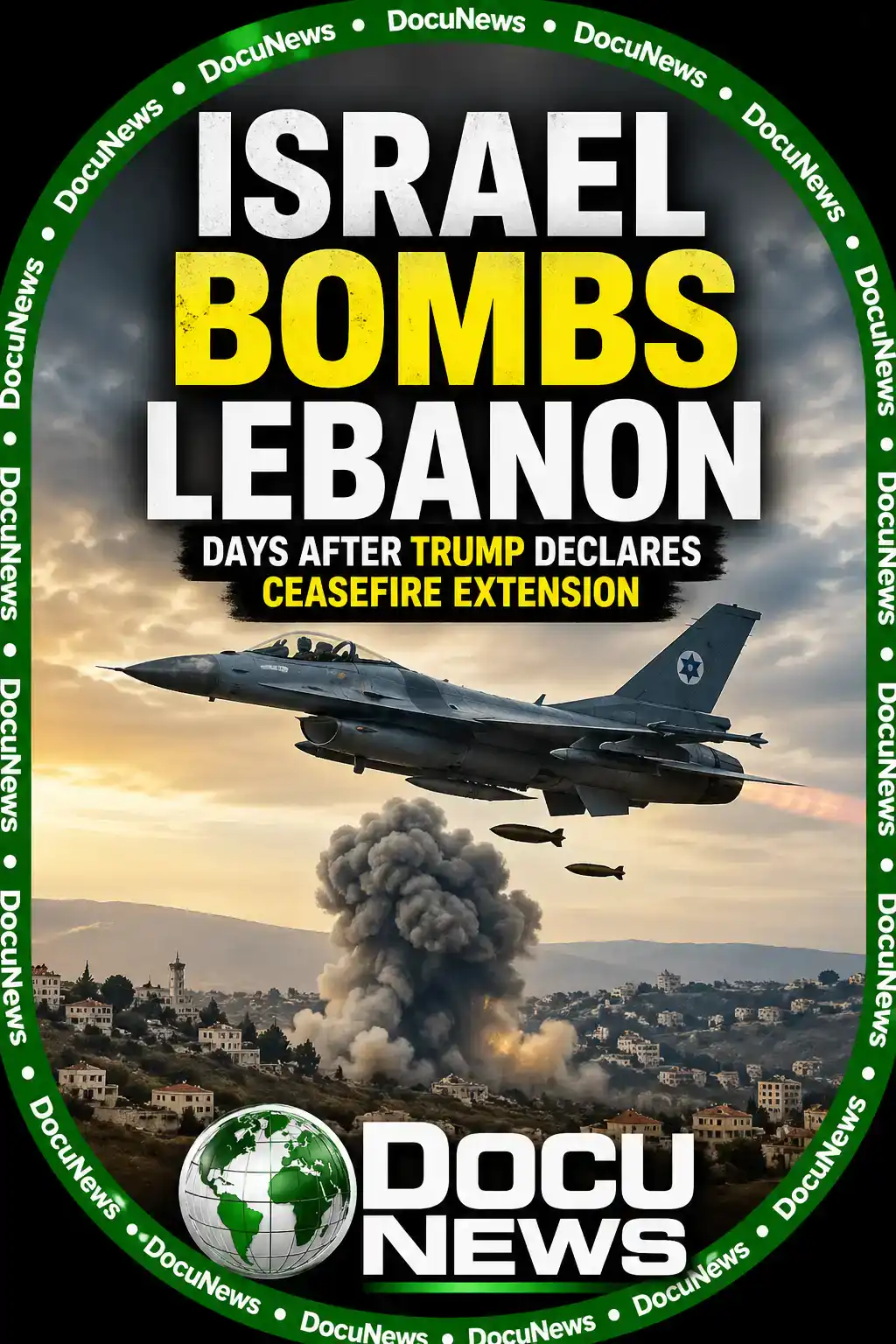
Israel Bombs Lebanon Days After Trump Declares Ceasefire Extension

By Jonadab | April 26, 2026 | DocuNews Central
Israel carried out fresh airstrikes in southern Lebanon, raising new concerns over the fragile ceasefire in the region. The strikes came just days after a ceasefire extension was publicly referenced by former U.S. President Donald Trump. The development has triggered renewed attention on the volatile Israel-Lebanon border.
According to the Israel Defense Forces (IDF), the operation targeted suspected Hezbollah rocket launchers. The military said the strikes aimed to prevent imminent attacks on Israeli territory. However, the escalation has already drawn reactions from regional observers and security analysts.
On April 25, 2026, reports confirmed that the strikes occurred in multiple locations across southern Lebanon. Local sources indicated that the affected areas included border communities known for past military activity. Tension remains high as both sides monitor further developments.
What Happened?
Israeli forces launched coordinated airstrikes in three separate areas in southern Lebanon. The IDF stated that the targets were Hezbollah-operated rocket launch sites. Officials said intelligence reports suggested preparations for possible attacks against Israel.
The military operation followed a period of relative calm. That calm had been linked to ongoing ceasefire efforts. However, the latest strikes signal a shift in the situation on the ground.
While Israel described the strikes as preemptive, there has been no immediate confirmation from Hezbollah regarding the targeted positions. Nonetheless, the action has raised concerns about a possible escalation.
Where Did It Happen?
The strikes took place in southern Lebanon, a region that has long been a flashpoint in the Israel-Hezbollah conflict. The specific locations were not fully disclosed by Israeli authorities. However, reports point to areas near the border zone.
This region has witnessed repeated military exchanges over the years. It serves as a strategic corridor for both defensive and offensive operations. As a result, any military action there often carries broader regional implications.
Local residents reported hearing explosions during the strikes. In addition, movement in nearby towns was briefly disrupted as people sought safety.
Who Is Involved?
The Israeli military confirmed that it carried out the operation. The IDF stated that the targets were linked to Hezbollah, a Lebanon-based armed group and political organization.
Hezbollah has been involved in longstanding tensions with Israel. The group maintains a significant presence in southern Lebanon. It also plays a key role in regional security dynamics.
Meanwhile, the ceasefire extension mentioned earlier was associated with comments made by Donald Trump. Although details of that extension remain unclear, the reference added a political dimension to the unfolding situation.
Also read ISWAP Buries 30 Members After Deadly Nigerian Air Raids in Borno
Israel’s Position on the Strikes
Israeli officials maintained that the strikes were necessary. They emphasized that the operation aimed to neutralize threats before they could materialize. According to the IDF, intelligence indicated active preparations involving rocket systems.
Furthermore, the military stressed its commitment to protecting Israeli civilians. Officials noted that any credible threat would trigger a response. Therefore, the latest action was framed as a defensive measure.
At the same time, Israel reiterated its stance on Hezbollah’s activities. It accused the group of operating within civilian areas, which complicates military responses.
Hezbollah and Regional Response
As of now, Hezbollah has not issued a detailed response to the strikes. However, the group has historically reacted to similar incidents. Observers expect a statement or action in the coming days.
Meanwhile, Lebanese authorities are assessing the situation. Government officials have expressed concern over the violation of national territory. They also called for restraint to avoid further escalation.
Regional actors are closely monitoring developments. The situation has implications beyond Lebanon and Israel, especially given the broader Middle East security landscape.
Ceasefire Tensions and Uncertainty
The strikes occurred shortly after remarks about a ceasefire extension surfaced. That timing has raised questions about the effectiveness of ongoing peace efforts. It also highlights the fragile nature of such agreements.
Although ceasefires aim to reduce hostilities, enforcement often remains a challenge. In this case, the latest developments suggest that underlying tensions persist. As a result, stability remains uncertain.
Diplomatic channels may now come under pressure. Stakeholders could push for renewed dialogue to prevent further conflict.
Impact on Civilians and Local Communities
Residents in southern Lebanon have once again found themselves at the center of conflict. Reports indicate that the strikes caused panic in nearby communities. People temporarily fled their homes as a precaution.
While there are no confirmed casualty figures yet, the situation remains fluid. Humanitarian concerns often arise in such scenarios. Therefore, aid agencies may step in if conditions worsen.
Cross-border tensions also affect daily life. Economic activities and movement in the region can be disrupted. This adds to the broader impact of military actions.
International Attention and Reactions
The international community has begun to take note of the situation. Analysts warn that further escalation could destabilize the region. As a result, diplomatic responses may follow.
Some observers are calling for restraint from both sides. They argue that maintaining calm is essential to avoid a wider conflict. Others stress the importance of addressing the root causes of the tension.
Global attention remains focused on developments in the Middle East. Events in southern Lebanon often influence broader geopolitical dynamics.
Outlook and What Comes Next
The situation remains tense but uncertain. While Israel has completed the reported strikes, the possibility of retaliation cannot be ruled out. Therefore, security agencies are likely to stay on high alert.
Future developments will depend on responses from Hezbollah and diplomatic efforts. If tensions rise, the region could face renewed instability. On the other hand, swift intervention may help contain the situation.
For now, the focus remains on monitoring events. Authorities and observers alike are watching for any signs of escalation or de-escalation.
Additional Context and Background
Southern Lebanon has long been a focal point of conflict between Israel and Hezbollah. Over the years, both sides have engaged in periodic clashes. These incidents often follow patterns linked to security concerns and strategic positioning.
Ceasefire agreements have been introduced at different times. However, maintaining them has proven difficult. Violations and accusations frequently occur on both sides.
The latest strikes fit into this broader context. They reflect ongoing tensions rather than an isolated event. As a result, long-term solutions remain complex.
External Sources
For more background on the Israel-Lebanon conflict, visit: BBC Middle East Coverage.
Additional analysis is available at: Al Jazeera Middle East News.
Official statements and updates can also be accessed through: Israel Defense Forces Official Website.
