
Security
Sheikh Gumi Claims Boko Haram Has Marked Him for Elimination

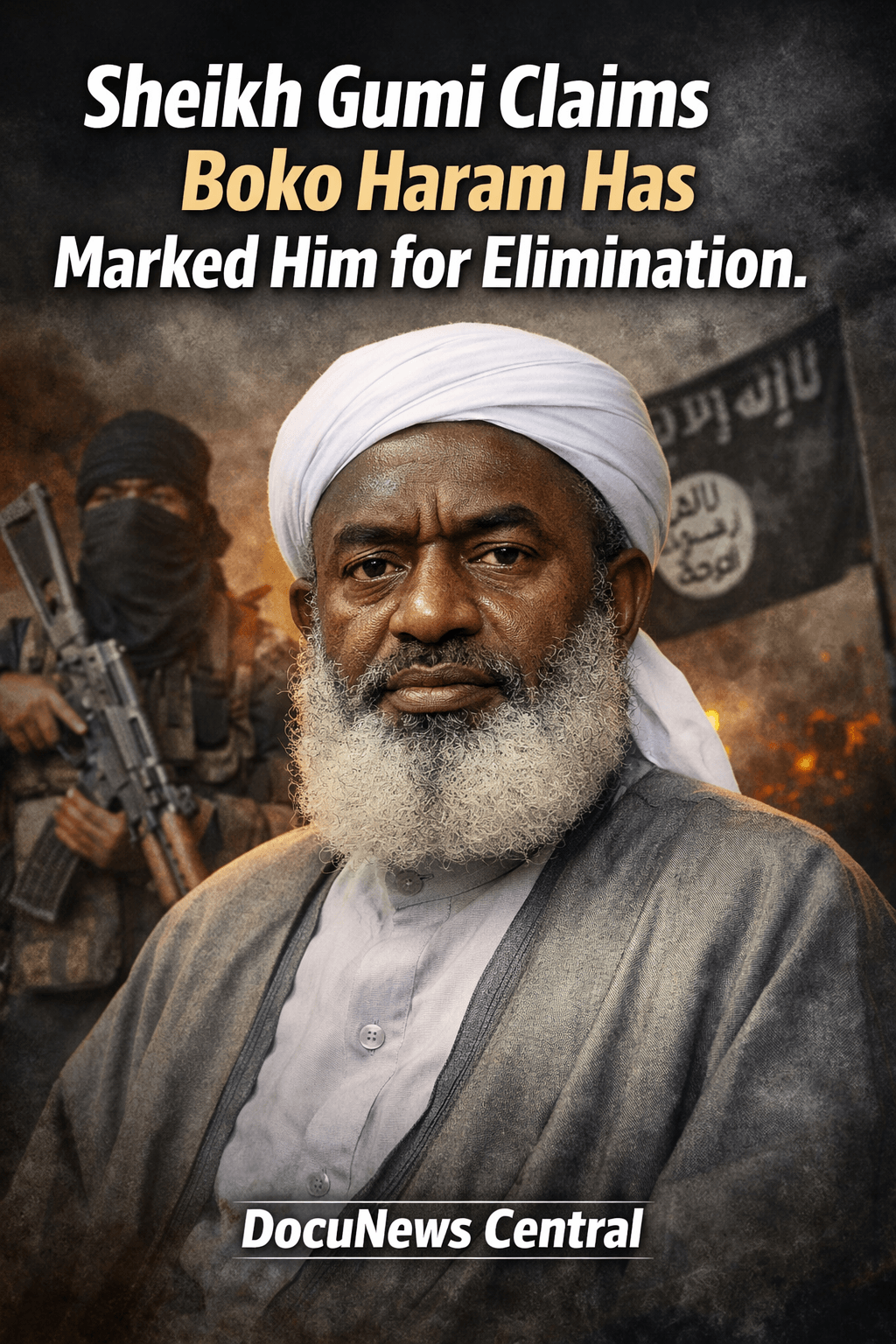
Nigeria’s long struggle with violent extremism took another troubling turn after Islamic cleric Sheikh Ahmad Gumi revealed that security sources warned him of an alleged plan by Boko Haram to eliminate him. The claim, delivered through a widely shared video message, has sparked renewed debate about insecurity, foreign influence, and the deepening crisis facing the country. He Sheikh Gumi Claims Boko Haram Has Marked Him for Elimination.
Rather than speaking in vague terms, the outspoken cleric painted a grim picture of a nation drifting toward further instability. He warned that fear, silence, and internal division continue to weaken Nigeria’s ability to confront growing threats. His remarks, although controversial, have reignited national conversations about accountability, security intelligence, and the forces driving violence across the country.
As the video circulated rapidly across social media platforms, reactions followed almost immediately. Supporters expressed concern over his safety, while critics questioned both the claims and the wider implications. However, regardless of personal opinions, the message struck a sensitive nerve in a country already weary from years of conflict. Read also Deadly Attack on Yola Farm Leaves Three Women Dead
A Viral Message That Reopened Old Wounds
In the video, Sheikh Gumi spoke calmly but firmly. He explained that credible security contacts had informed him of a threat linked to Boko Haram. According to him, the warning did not come from rumors or online chatter, but from sources familiar with intelligence assessments.
The timing of the message added to its impact. Nigeria continues to battle insurgency in the North-East, banditry in the North-West, and rising criminal violence across several regions. As a result, any suggestion that a high-profile cleric faces direct danger immediately attracts public attention.
Moreover, the cleric did not limit his comments to personal safety alone. Instead, he connected the alleged threat to broader national issues. He argued that insecurity thrives when citizens remain divided and when powerful interests benefit from instability.
This framing pushed the conversation beyond one individual and toward systemic challenges that have haunted Nigeria for over a decade. People are reacting to this headline Terrorists Storm Katsina Community, Kidnap 20 Overnight
Sheikh Gumi Claims Boko Haram Has Marked Him for Elimination and Why the Warning Matters
The warning carries weight because of Sheikh Gumi’s public profile and history. Over the years, he has positioned himself as a vocal commentator on security, governance, and religious coexistence. His outreach efforts, especially toward armed groups, have often stirred controversy.
Supporters argue that his engagement approach seeks dialogue over endless bloodshed. Critics, however, accuse him of legitimizing criminal actors. Despite these disagreements, his visibility makes any alleged threat against him a matter of national concern.
When such warnings emerge, they highlight potential gaps in Nigeria’s security architecture. If prominent figures receive credible threats, many Nigerians wonder how ordinary citizens fare in more remote communities where attacks often go unreported.
Furthermore, the claim forces security agencies into the spotlight. While officials rarely comment on intelligence matters, silence can fuel speculation and anxiety. As a result, public trust becomes harder to maintain.
For deeper insight into Nigeria’s ongoing insurgency, read related analysis on Premium Times and The Guardian Nigeria.
Foreign Influence and the Accusation of External Interests
One of the most striking elements of Sheikh Gumi’s message involved his claim that foreign powers contribute to Nigeria’s insecurity. According to him, external interests exploit internal weaknesses to sustain chaos, profit from conflict, or exert influence.
Although he did not name specific countries or actors, the allegation echoes a long-standing narrative within parts of Nigerian society. Many believe arms trafficking, illegal mining, and transnational crime networks fuel violence far beyond local grievances.
Security analysts have previously warned that porous borders allow weapons and fighters to move freely across the Sahel. Reports from the United Nations support concerns about regional instability spilling into Nigeria.
By raising this issue again, Sheikh Gumi tapped into widespread frustration. Many citizens question why insecurity persists despite years of military operations and rising defense budgets.
Still, such claims demand careful examination. Without concrete evidence, accusations risk inflaming tensions or diverting attention from domestic accountability.
Fear, Silence, and Division as Catalysts for Crisis
Beyond threats and foreign influence, the cleric focused heavily on social dynamics. He argued that fear prevents communities from sharing intelligence, while silence enables criminal networks to grow stronger.
In many conflict-affected areas, residents hesitate to cooperate with authorities due to mistrust or fear of retaliation. Consequently, security forces often operate with limited local support, reducing effectiveness.
Division, according to Sheikh Gumi, further worsens the situation. Ethnic, religious, and political fault lines frequently dominate public discourse. As a result, collective action becomes difficult.
Studies from the International Crisis Group emphasize that community engagement and trust-building remain essential for sustainable peace.
Public Reaction and Polarized Responses
Following the video’s release, social media platforms buzzed with debate. Some users expressed sympathy and urged authorities to ensure Sheikh Gumi’s safety. Others questioned the credibility of the claim or criticized his past statements.
Political figures largely avoided direct commentary, possibly due to the sensitivity surrounding security intelligence. However, analysts noted that silence often leaves room for speculation.
Media outlets adopted cautious language, reporting the claim without confirmation from official channels. This approach reflects responsible journalism, especially when dealing with security-related allegations.
Security Agencies and the Question of Transparency
Nigeria’s security institutions face a delicate balancing act. On one hand, intelligence matters require discretion. On the other hand, public confidence depends on transparency and communication.
Experts argue that proactive engagement during periods of heightened tension helps limit misinformation. Coverage by BBC Africa shows how crisis communication affects public trust.
The Broader Context of Nigeria’s Insecurity
The alleged threat fits into a wider pattern of violence affecting multiple regions. Insurgency, banditry, kidnapping, and communal clashes continue to disrupt lives and livelihoods.
Analysts link the persistence of violence to poverty, unemployment, weak governance, and corruption. Climate pressure has also intensified competition over land and resources.
A Nation at a Crossroads
Whether or not authorities confirm the alleged plot, the warning reflects deeper national anxieties. Nigeria stands at a critical point where unity, accountability, and trust may determine its path forward.
Fear and silence weaken resilience. Division distracts from common goals. Meanwhile, insecurity thrives in the shadows.
What Comes Next
Attention now turns to how security agencies respond and how leaders reassure the public. Nigerians continue to demand protection, transparency, and meaningful progress.
The debate sparked by the claim underscores a shared desire for stability and peace across the country.
