
World
Israel Launches Strike on Iran’s Underground Nuclear Facility in Eastern Tehran

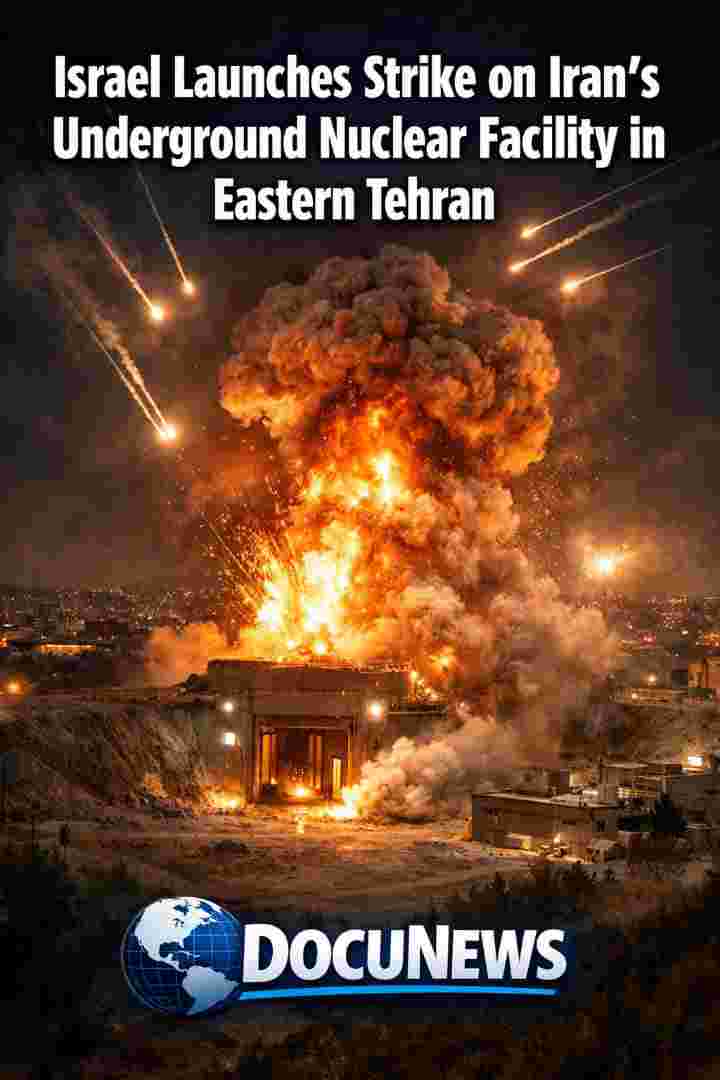
Israel Launches Strike on Iran’s Underground Nuclear Facility in Eastern Tehran. This has sharply escalated tensions in the Middle East, placing the spotlight on Iran’s nuclear infrastructure and Israel’s long-standing security doctrine. The Israeli strike on Iran nuclear facility has triggered urgent diplomatic reactions, intensified security alerts, and renewed global debate over Tehran’s alleged weapons-related activities. As regional anxiety deepens, the Tehran underground nuclear site now stands at the center of international attention.
According to DocuNews Central, On March 3, 2026. The Israeli military confirmed that it carried out a precision operation targeting what it described as an underground nuclear facility in eastern Tehran. Military officials stated that intelligence agencies had tracked the movement of nuclear scientists linked to suspected weapons development at the site. Iranian authorities have yet to release a full damage assessment, but state media acknowledged explosions in the eastern outskirts of the capital.
The strike marks one of the most direct and high-profile actions against Iran’s nuclear infrastructure in recent years. Moreover, it signals a shift from covert disruption tactics to open military engagement. Consequently, global powers have begun assessing the broader implications for regional stability, energy markets, and diplomatic negotiations.
Escalation in the Israel-Iran Conflict
For years, tensions between Israel and Iran have simmered beneath the surface. However, this Israel strike on Tehran nuclear facility has pushed the confrontation into a more visible and volatile phase. Israel has repeatedly warned that it would not allow Iran to acquire nuclear weapons capability. Therefore, military planners have prepared contingency options for direct intervention.
Israeli defense officials insist the operation targeted a strategic underground complex linked to advanced weapons research. They claim intelligence surveillance confirmed the presence of personnel associated with sensitive development programs. As a result, commanders authorized what they described as a limited and precise mission designed to minimize collateral damage.
Iran, on the other hand, denies any active weapons program. Instead, it maintains that its nuclear activities serve peaceful energy and research purposes under international oversight. Yet suspicion has persisted, especially among Western allies and regional rivals.
What Israel Says About the Strike
According to the Israeli military, the underground nuclear facility in eastern Tehran functioned as a concealed development hub. Officials alleged that engineers and scientists conducted advanced experiments related to weapons-grade material processing. Consequently, they argued that the site posed an immediate security threat.
Military spokespeople also emphasized the role of intelligence tracking. They stated that surveillance units monitored the movement of individuals linked to nuclear research. Furthermore, analysts reportedly identified structural reinforcements typical of fortified underground installations.
For background on Israel’s security doctrine and preventive strategies, readers can review official updates from the Israel Defense Forces at https://www.idf.il and international reporting by BBC News at https://www.bbc.com.
Iran’s Response and Regional Reaction
Tehran reacted swiftly. Iranian officials condemned the operation as an act of aggression and vowed a measured but firm response. State media framed the strike as a violation of sovereignty and warned of consequences.
Meanwhile, regional actors closely monitored developments. Gulf states increased military readiness levels. In addition, diplomatic channels intensified behind the scenes to prevent rapid escalation.
The international community also responded. The United Nations called for restraint and urged both parties to avoid further confrontation. Similarly, the International Atomic Energy Agency reiterated its role in verifying nuclear compliance and urged transparency from Tehran.
Readers seeking official nuclear oversight information can visit the IAEA website at https://www.iaea.org.
Strategic Implications of the Tehran Nuclear Strike
This Israeli military attack on Iran nuclear site carries serious strategic consequences. First, it risks triggering retaliatory actions across multiple fronts. Second, it could disrupt ongoing diplomatic efforts related to nuclear compliance and sanctions relief.
Energy markets reacted almost immediately. Oil prices climbed amid fears of supply disruption through the Strait of Hormuz. Investors assessed the likelihood of broader conflict spreading across the region.
Moreover, military analysts suggest that the strike signals a shift toward overt deterrence. Israel appears determined to demonstrate its willingness to act independently if it perceives an existential threat.
Also read Oil Could Reach $200 as Iran Threatens Economic Centres if War Persists
Intelligence and Surveillance: A Decisive Factor
Intelligence gathering reportedly played a decisive role in the operation. Officials claimed that analysts tracked specific scientists connected to advanced enrichment research. Therefore, planners chose timing and targeting with calculated precision.
Advanced monitoring technologies, satellite imagery, and human intelligence sources likely contributed to the assessment. Although details remain classified, experts note that underground facilities require specialized munitions and accurate targeting to achieve impact.
For broader geopolitical analysis, international security think tanks such as the Council on Foreign Relations provide insight at https://www.cfr.org.
Global Diplomatic Fallout
Diplomatic fallout continues to unfold. Western allies face pressure to clarify their positions. Some governments express support for Israel’s security concerns. Others warn that military action could destabilize fragile negotiations.
Meanwhile, Iran may pursue diplomatic complaints at international forums. Consequently, debates over sovereignty, preemptive defense, and nuclear transparency will likely intensify.
In addition, policymakers worry about potential cyber retaliation or proxy confrontations. The Middle East has seen similar patterns before. Thus, observers caution that escalation could expand beyond direct military exchanges.
Many people are reacting to this Iran Confirms 787 Deaths as US-Israeli Airstrikes Devastate Cities
Impact on Nuclear Negotiations
Negotiations regarding Iran’s nuclear activities have faced setbacks in recent years. This Israel strike on Iran underground nuclear facility further complicates diplomatic pathways. Trust between parties remains fragile.
Some analysts argue that the strike could pressure Tehran into greater transparency. Conversely, others believe it may harden positions and accelerate research efforts underground.
The situation remains fluid. Therefore, diplomatic engagement, verification measures, and communication channels will play critical roles in the coming weeks.
DocuNews Central Opinion
At DocuNews Central, we believe that the Israel Launches Strike on Iran’s Underground Nuclear Facility in Eastern Tehran marks a turning point in Middle East security dynamics. While Israel asserts self-defense, the broader region now faces heightened uncertainty. Military action can delay perceived threats. However, sustainable security often requires diplomatic clarity and transparent verification.
We urge global leaders to prioritize de-escalation. Strategic restraint, combined with credible oversight, may prevent wider confrontation. Readers can follow continuing updates and in-depth analysis on our platform at https://www.docunewscentral.com.
Conclusion
The Israeli strike on Iran nuclear facility in eastern Tehran has dramatically reshaped the regional landscape. It underscores Israel’s determination to prevent nuclear weapons development. At the same time, it exposes the fragile balance between deterrence and diplomacy.
As reactions unfold, global powers will monitor Tehran’s next steps. Energy markets, diplomatic forums, and military planners remain on alert. Ultimately, the path chosen in the coming days could determine whether this crisis stabilizes or escalates.
Disclaimer
This report is based on publicly available statements, verified international media sources, and official communications at the time of publication. Developments may evolve rapidly. DocuNews Central provides this content for informational and journalistic purposes only and does not endorse any military action or political position.
For more updates on Israeli Iran US WAR visit Israeli-Iran-U.S War
