
World
Iran Confirms 787 Deaths as US-Israeli Airstrikes Devastate Cities

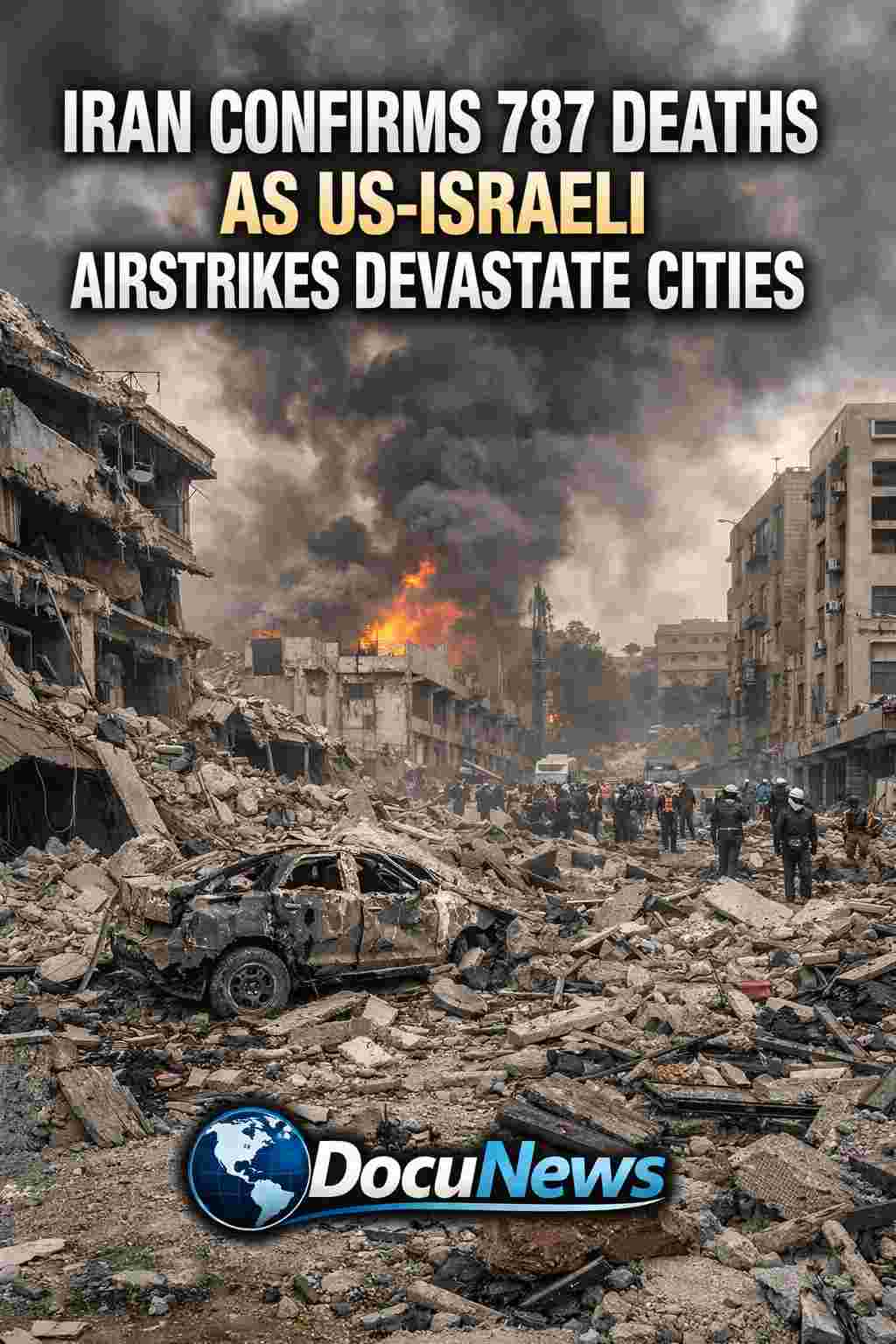
Iran Confirms 787 Deaths as US-Israeli Airstrikes Devastate Cities. The officials released this report after a wave of intense military operations that reshaped regional security discussions and triggered global concern. The report highlights the rising death toll in Iran, the scale of destruction, and the expanding humanitarian impact of the US-Israeli airstrikes. Moreover, the announcement has drawn worldwide attention because it links directly to escalating tensions involving the United States and Israel, while authorities in Iran continue to assess damage across multiple urban centers.
According to DocuNews Central, officials in Iran released the updated casualty figure earlier today March 3 2026. They confirmed that the death count reached 787 following sustained aerial operations attributed to coordinated strikes involving the United States and Israel. Authorities did not specify the exact cities in the initial statement; however, they emphasized that emergency teams continue to document losses and evaluate structural damage. Meanwhile, international observers monitor developments closely as diplomatic channels remain tense.
First, officials reported that the strikes targeted strategic infrastructure, and consequently, several residential districts suffered severe damage. As a result, hospitals in affected regions received a steady flow of injured civilians. In addition, rescue teams worked around the clock to locate survivors beneath collapsed buildings. Furthermore, local authorities mobilized emergency services to stabilize power grids, restore water systems, and secure transportation routes.
Also Read Iran’s New Leader Arafa Says Negotiations With Trump Are Over
Rising Casualties and Expanding Destruction
Government representatives stated that the confirmed fatalities include civilians and other unidentified victims. However, they did not release a detailed demographic breakdown. Instead, they promised transparency once investigations conclude. At the same time, humanitarian groups requested independent access to verify the scale of destruction and coordinate relief efforts.
Subsequently, images circulated through international media showing damaged roads, shattered windows, and disrupted public services. Although officials continue to assess the situation, preliminary reports indicate widespread infrastructure impairment. Therefore, reconstruction may require extensive resources and long-term planning.
Military Context and Regional Tensions
Meanwhile, geopolitical tensions intensified before the strikes. Diplomatic discussions stalled, and rhetoric escalated across multiple platforms. Consequently, analysts linked the airstrikes to broader strategic disputes involving security concerns, policy debates, and regional alliances. Defense commentators described the operations as part of a larger campaign aimed at deterrence and power projection.
Officials in Washington and Jerusalem framed their actions as necessary responses to perceived threats. Nevertheless, authorities in Tehran rejected that justification and described the strikes as violations of sovereignty. Thus, the narrative remains sharply divided between the involved parties.
Humanitarian Impact on Urban Communities
In many cities, families faced sudden displacement. As a result, temporary shelters filled quickly. Additionally, relief workers distributed food, water, and medical supplies. Because transportation networks suffered disruption, aid delivery required alternative routes. Therefore, coordination between local authorities and international partners became essential.
Power outages affected communication systems. Consequently, residents struggled to contact relatives. Meanwhile, hospitals relied on backup generators to sustain critical care units. Although emergency personnel demonstrated resilience, resource shortages created additional pressure.
It also important to read this Americans Take Cover After Two Drones Strike US Embassy in Saudi Arabia
Economic and Infrastructure Consequences
Beyond the immediate casualties, the strikes damaged commercial districts, industrial facilities, and public utilities. Consequently, economic activity slowed in affected areas. Businesses suspended operations, and supply chains encountered disruption. Furthermore, transportation delays impacted daily commerce.
Reconstruction costs may rise significantly. Engineers must evaluate structural integrity before rebuilding begins. Therefore, authorities plan to conduct comprehensive assessments. Simultaneously, financial institutions consider emergency funding measures to support recovery.
International Response and Diplomatic Reactions
Global leaders responded with statements urging restraint. Several governments called for immediate dialogue. In contrast, others expressed support for strategic objectives cited by the involved military coalitions. As a result, international opinion remains divided.
Multilateral institutions emphasized adherence to humanitarian law. They requested transparent casualty reporting and independent verification. Consequently, observers may deploy fact-finding missions if conditions permit.
DocuNews Central Opinion
DocuNews Central emphasizes the importance of verified reporting, humanitarian protection, and diplomatic engagement. Readers can follow updates and related coverage directly at:
Visit DocuNews Central for More Updates
Outlook and Future Developments
Looking ahead, several scenarios may unfold. First, diplomatic engagement could reduce tensions if negotiations resume. Second, continued military operations may intensify the crisis. Third, international mediation might create a framework for ceasefire discussions.
Ultimately, the trajectory will depend on political decisions, security assessments, and global pressure. Meanwhile, humanitarian organizations prepare for expanded response efforts. Recovery will require cooperation, resources, and sustained commitment from domestic leaders and international partners.
Conclusion
The confirmation of 787 deaths underscores the severity of the crisis. Furthermore, the reported devastation highlights the urgent need for de-escalation, humanitarian access, and diplomatic dialogue. Although military operations often aim to achieve strategic objectives, civilian protection must remain central in any conflict scenario. Therefore, international stakeholders continue to call for restraint, transparency, and constructive engagement to prevent further loss of life and additional infrastructure destruction.
