
World
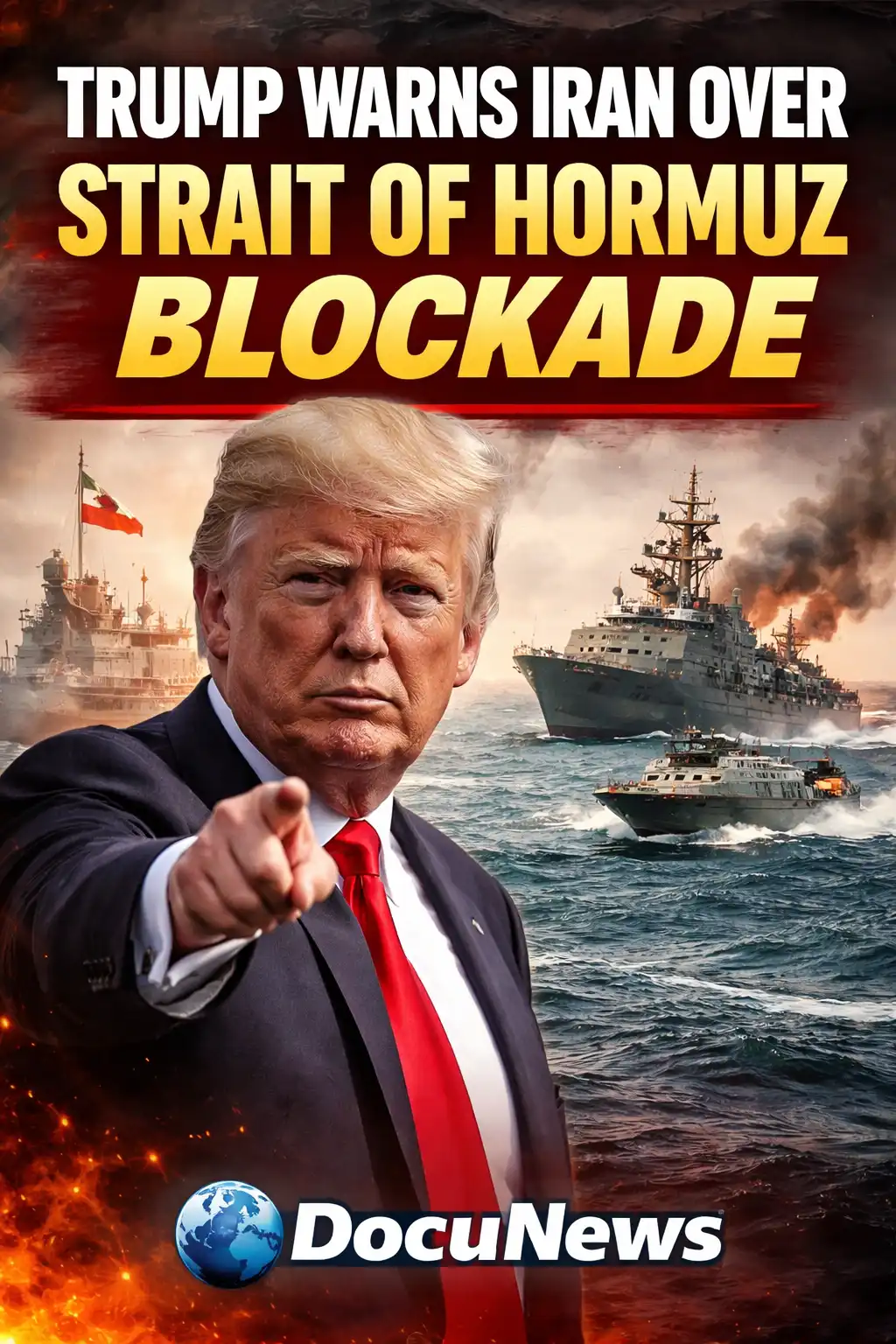
Trump Warns Iran Over Strait of Hormuz Blockade

By Jonadab | April 10, 2026 | DocuNews Central
WASHINGTON, D.C., April 10, 2026 — U.S. President Donald Trump has raised fresh concerns over the fragile ceasefire between the United States and Iran. The warning follows continued restrictions in the Strait of Hormuz, a key global oil route. Officials say the situation remains tense despite earlier agreements.
Although a ceasefire was announced days ago, uncertainty has continued to grow. Maritime traffic has not fully resumed through the strategic waterway. As a result, global markets and security analysts have remained on alert.
According to DocuNews Central, the latest developments were reported on April 9, 2026, in Washington, D.C., where U.S. officials monitored compliance with the ceasefire terms. Meanwhile, shipping activity in the Strait of Hormuz has stayed limited. Several vessels have reportedly delayed passage due to safety concerns.
Strait of Hormuz Remains Strategically Critical
The Strait of Hormuz continues to serve as one of the world’s most important oil transit routes. Nearly a quarter of global oil shipments passes through the narrow channel. Therefore, any disruption quickly affects international energy markets.
In recent days, restricted movement has been observed across the waterway. Shipping companies have exercised caution while awaiting clearer security guarantees. Consequently, global oil prices have shown signs of volatility.
According to international maritime reports, hundreds of vessels have remained on standby. Many operators have chosen to delay transit rather than risk exposure. As a result, supply chains have faced increasing pressure.
Trump Questions Iran’s Commitment to Ceasefire
Donald Trump has publicly questioned whether Iran is complying with the ceasefire agreement. He has emphasized that reopening the Strait of Hormuz remains a key condition. Without it, the agreement may lose credibility.
Furthermore, Trump has warned that continued restrictions could trigger renewed tensions. He has insisted that safe and open navigation must be guaranteed. Therefore, the situation has remained under close international scrutiny.
U.S. officials have also expressed concern over mixed signals from Tehran. While Iranian authorities have indicated partial cooperation, full access has not yet been restored. Consequently, doubts about compliance have persisted.
Also read Boko Haram Kills Senior Nigerian Army General
Iran Maintains Control Over Maritime Movement
Iranian authorities have continued to regulate ship movements through the strait. Military oversight has reportedly increased in the region. As a result, vessels have required additional clearance before passage.
In addition, reports have suggested that certain conditions may be imposed on shipping traffic. These measures have raised concerns among international observers. Therefore, confidence in the ceasefire has weakened.
Despite official statements, operational restrictions have remained in place. Analysts have noted that limited access effectively reduces the strait’s functionality. Consequently, the situation has been described as a partial blockade.
Global Oil Markets React to Ongoing Disruption
Energy markets have responded quickly to the continued uncertainty. Oil prices have experienced fluctuations as traders assess supply risks. Therefore, economic implications have extended beyond the region.
Countries that depend heavily on oil imports have monitored the situation closely. Any prolonged disruption could affect fuel costs and inflation. As a result, governments have begun reviewing contingency plans.
Market analysts have indicated that stability depends on restored shipping access. Until then, volatility may continue. Consequently, investors have remained cautious.
International Community Calls for Stability
Global leaders have urged both sides to uphold the ceasefire agreement. Diplomatic efforts have intensified to prevent further escalation. Therefore, negotiations have remained ongoing.
Several countries have emphasized the importance of keeping the Strait of Hormuz open. The waterway is considered vital for global trade and energy security. As a result, international pressure has increased.
Organizations such as the United Nations have also called for restraint. They have encouraged transparent communication between all parties. Consequently, diplomatic channels have stayed active.
Shipping Industry Faces Continued Uncertainty
The shipping industry has been significantly affected by the ongoing situation. Operators have faced delays, increased insurance costs, and operational risks. Therefore, business confidence has declined.
Some companies have explored alternative routes, although options remain limited. The Strait of Hormuz remains the most efficient passage for many shipments. As a result, rerouting has proven challenging.
Industry experts have warned that prolonged disruption could impact global trade flows. Consequently, supply chains may experience further strain if the situation persists.
Outlook Remains Unclear as Tensions Persist
The future of the ceasefire agreement remains uncertain. While diplomatic efforts continue, key conditions have not yet been fully met. Therefore, tensions have remained high.
Observers have noted that restoring full access to the Strait of Hormuz is critical. Without it, confidence in the agreement may continue to decline. As a result, the risk of renewed conflict cannot be ruled out.
For now, the international community continues to monitor developments closely. Stability in the region remains a priority. Consequently, further updates are expected in the coming days.
External References
Reuters – Global News Coverage
BBC News – Middle East Updates
United Nations – International Peace Efforts
