
World
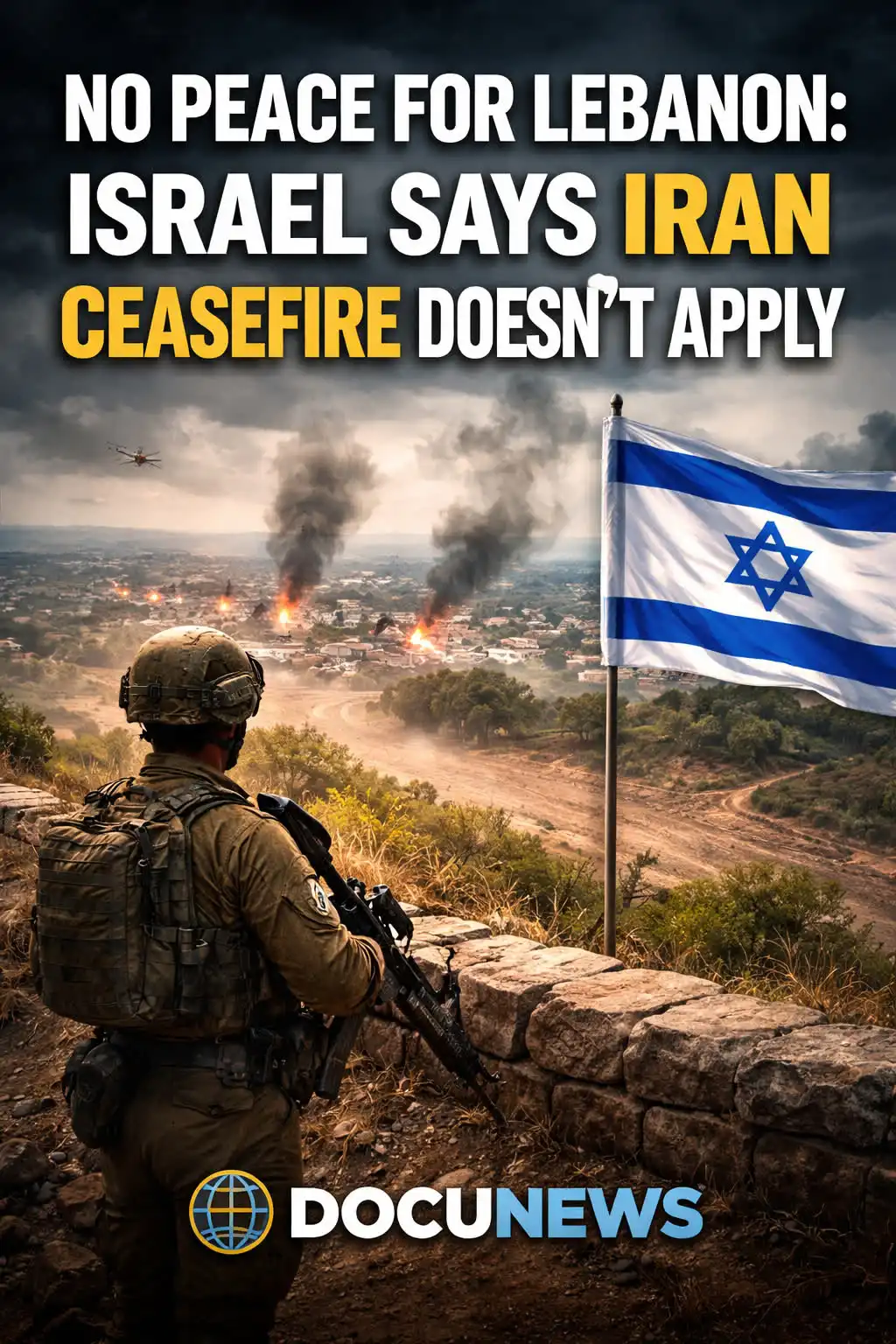
No Peace for Lebanon: Israel Says Iran Ceasefire Doesn’t Apply

By Jonadab | April 8, 2026 | DocuNews Central
Israel has confirmed that its current ceasefire arrangement with Iran does not extend to Lebanon, signaling that military activity along its northern border will continue despite a broader reduction in tensions elsewhere. The clarification comes amid heightened regional focus on whether recent diplomatic efforts could lead to a wider de-escalation across multiple conflict zones in the Middle East. However, Israeli officials have made it clear that the agreement is limited in scope and does not address threats originating from Lebanese territory, which they describe as immediate and ongoing.
While the ceasefire has eased direct confrontation between Israel and Iran, authorities in Israel stress that the situation along the Lebanon border remains volatile and unpredictable. As a result, military operations targeting perceived threats in that region are continuing under existing security policies. Officials argue that separating the Iran ceasefire from the Lebanon situation is necessary due to the distinct nature of the risks involved, particularly those linked to armed groups operating independently of Tehran’s direct command structure.
The announcement was made on April 8, 2026, in Jerusalem, where Israeli defense officials provided further details about the operational boundaries of the ceasefire agreement. During the briefing, authorities emphasized that while diplomatic progress has been achieved in reducing tensions with Iran, the northern front remains active and requires sustained military vigilance. Consequently, troop deployments and surveillance operations have been maintained across key areas near the Lebanese border.
Israel Defines the Boundaries of the Iran Ceasefire
According to Israeli officials, the ceasefire agreement with Iran was carefully negotiated to address direct hostilities between the two countries without extending to broader regional conflicts. This distinction, they say, reflects the complex network of actors involved in Middle Eastern security dynamics, where state and non-state forces often operate under different chains of command. Therefore, while the ceasefire reduces the risk of direct escalation between Israel and Iran, it does not automatically apply to groups based in Lebanon.
Officials further explained that the decision to exclude Lebanon from the agreement was driven by ongoing intelligence assessments indicating continued threats along the northern border. These assessments include monitoring of cross-border activities, weapons movements, and potential launch sites that could pose risks to Israeli territory. As a result, military readiness has not been reduced in those areas, and operational protocols remain fully active.
In addition, Israeli defense authorities noted that maintaining a clear distinction between different conflict zones allows for more targeted and effective responses. By separating the Iran ceasefire from the Lebanon situation, they argue that the military can respond quickly to emerging threats without being constrained by broader diplomatic commitments that do not reflect on-the-ground realities.
Also read Boko Haram Supporters Jailed in Abuja as Court Issues 10–20 Year Sentences.
Persistent Tensions Along the Israel-Lebanon Border
Despite the ceasefire with Iran, tensions along the Israel-Lebanon border have shown little sign of easing. Reports from the region indicate continued military activity, including surveillance flights, troop movements, and occasional exchanges of fire. Although these incidents have remained limited in scale, they contribute to an atmosphere of uncertainty that affects both military planning and civilian life in nearby communities.
In northern Israel, residents have reported increased visibility of security forces, including checkpoints and patrol units positioned along major routes. These measures are intended to enhance security and deter potential threats, yet they also disrupt normal routines and contribute to a sense of prolonged instability. Schools, businesses, and public services have adjusted operations to account for the evolving situation, reflecting the broader impact of ongoing tensions.
On the Lebanese side, local authorities and community leaders have also expressed concern about the risk of escalation. While there has been no large-scale conflict, the continued presence of armed groups and military activity has created a fragile environment. Humanitarian organizations operating in the region warn that even low-level conflict can have significant consequences for vulnerable populations, particularly in areas already facing economic challenges.
Regional Implications of a Limited Ceasefire
The exclusion of Lebanon from the Iran ceasefire highlights the broader challenges facing diplomatic efforts in the Middle East. While agreements between major state actors can reduce certain risks, they often leave other areas of conflict unresolved. In this case, the ceasefire has lowered tensions between Israel and Iran but has not addressed the complex dynamics involving groups operating from Lebanon.
As a result, analysts warn that the region remains at risk of renewed escalation, particularly if incidents along the northern border intensify. The situation underscores the difficulty of achieving comprehensive peace in a region where multiple conflicts overlap and influence one another. Therefore, while the ceasefire represents progress, it also illustrates its own limitations.
Furthermore, international stakeholders have called for broader negotiations that include all relevant actors. However, achieving such an agreement is complicated by differing political priorities, security concerns, and levels of trust between parties. Consequently, efforts to expand the ceasefire into a more inclusive framework have so far produced limited results.
Military Strategy and Security Calculations
Israel maintains that its ongoing operations in Lebanon are based on defensive strategy and are intended to neutralize specific threats before they escalate. Officials emphasize that these actions are not aimed at widening the conflict but rather at preventing attacks on civilian areas. This approach reflects a broader military doctrine focused on preemptive measures and rapid response capabilities.
At the same time, military analysts note that the continued activity along the border requires careful management to avoid unintended escalation. Even minor incidents can quickly develop into larger confrontations if not contained. Therefore, both military planning and communication channels play a critical role in maintaining stability.
In addition, the presence of multiple armed actors in the region complicates strategic calculations. Each group operates with its own objectives and level of coordination, making it difficult to predict how situations may evolve. As a result, security forces remain on high alert, prepared to respond to a range of possible scenarios.
International Response and Diplomatic Pressure
The international community has responded cautiously to the developments, acknowledging the reduction in tensions between Israel and Iran while expressing concern about the ongoing situation in Lebanon. Governments and international organizations have urged restraint on all sides, emphasizing the importance of preventing further escalation and protecting civilian populations.
Diplomatic efforts are continuing behind the scenes, with several countries seeking to expand the scope of the ceasefire to include other areas of conflict. However, progress has been slow due to the complexity of the issues involved and the need to balance competing interests. As a result, the current situation remains fluid, with outcomes dependent on both diplomatic negotiations and developments on the ground.
Humanitarian agencies have also highlighted the need for increased support in affected areas, particularly for communities facing economic hardship and limited access to essential services. Continued instability can strain already fragile systems, making it more difficult to deliver aid and maintain basic living conditions.
Impact on Civilian Life and Local Economies
For civilians living near the Israel-Lebanon border, the ongoing tensions have created a challenging environment marked by uncertainty and disruption. While large-scale conflict has been avoided, the persistent threat of escalation affects daily life, influencing decisions related to work, education, and travel. Residents often rely on official updates and security alerts to guide their activities, reflecting the level of caution required in such conditions.
In northern Israel, businesses have adjusted operating hours, and some sectors have experienced reduced activity due to security concerns. Tourism, in particular, has been affected, as visitors may avoid areas perceived as unstable. Meanwhile, local authorities continue to coordinate emergency preparedness efforts, ensuring that response systems remain ready in case of sudden developments.
On the Lebanese side, economic pressures have been compounded by the ongoing instability. Trade routes and local markets face disruptions, while employment opportunities remain limited in affected regions. As a result, many residents face increasing financial strain, highlighting the broader socio-economic impact of prolonged conflict.
Outlook for Regional Stability
Looking ahead, the situation remains uncertain as both diplomatic and military factors continue to shape developments. The ceasefire between Israel and Iran represents a step toward de-escalation, yet it does not resolve all underlying issues. Therefore, the potential for further tensions, particularly along the Lebanon border, remains a key concern for regional and international observers.
Experts suggest that achieving lasting stability will require a more comprehensive approach that addresses multiple layers of conflict simultaneously. This includes not only state-level agreements but also mechanisms for managing the activities of non-state actors. However, implementing such solutions will require sustained effort, coordination, and a willingness to engage in complex negotiations.
In the meantime, security forces on all sides are likely to maintain a high level of readiness, while diplomatic channels remain active in seeking further progress. The balance between these approaches will play a crucial role in determining whether the current situation stabilizes or shifts toward renewed escalation.
Also read Nigerian Political War Moved to Washington By A.D.C. Why?
Israel’s confirmation that the Iran ceasefire does not apply to Lebanon underscores the fragmented nature of conflict resolution in the Middle East. While the agreement has reduced tensions in one area, it leaves other fronts active and unresolved. This reality highlights the challenges of achieving comprehensive peace in a region characterized by overlapping conflicts and diverse actors.
As developments continue, attention will remain focused on both diplomatic efforts and on-the-ground conditions. The path forward will depend on the ability of stakeholders to navigate complex security concerns while working toward broader agreements. Until then, the situation along the Israel-Lebanon border is expected to remain a central point of concern in regional stability.
For further updates and global coverage, visit Al Jazeera, BBC News, and Reuters.
