
Security
Nigerian Military Reviews New Technology for Counter-Bandit.

Date: Saturday, July 18, 2026
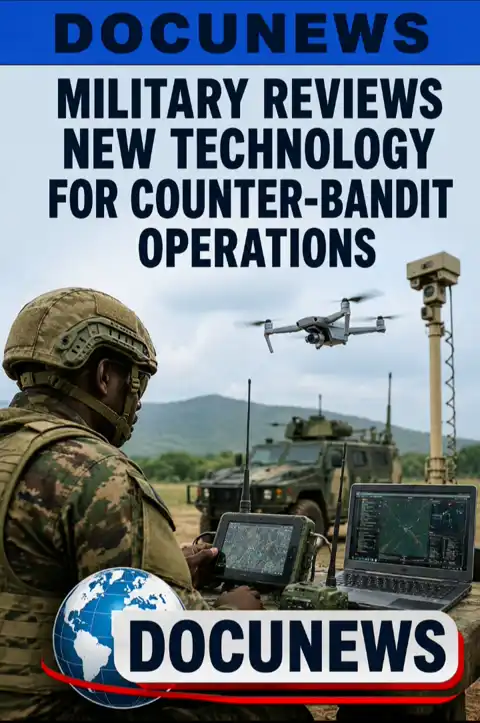
Nigeria’s security conversation continues to evolve, and Military Reviews New Technology for Counter-Bandit Operations remains one of the developments attracting growing public attention as defence authorities examine ways to strengthen ongoing security efforts. According to DocuNews Central, the discussions focus on expanding intelligence capabilities, surveillance systems, and technology-driven operations that could improve responses against armed groups operating in different parts of the country.
ABUJA, Nigeria — Defence authorities are continuing high-level discussions on the possible expansion of intelligence, surveillance, and technology-based operations as part of broader efforts to improve Nigeria’s response to banditry and other security threats. Although officials have not announced any final policy decision, security experts believe that greater investment in modern technology could strengthen existing military operations and enhance situational awareness across affected regions.
Also read Fresh Military Raids Target Bandit Hideouts in North-West.
According to DocuNews Central, the ongoing review reflects the military’s determination to evaluate modern tools capable of supporting troops in difficult operational environments. Rather than relying solely on conventional tactics, defence planners are reportedly assessing how advanced surveillance systems, improved intelligence gathering, and digital technologies can complement current security strategies.
Furthermore, intelligence remains one of the most important elements of modern military operations. Accurate information allows security personnel to identify threats early, monitor criminal activities, and respond before attacks occur. Consequently, many analysts believe that strengthening intelligence capabilities could significantly improve operational efficiency while reducing unnecessary risks to both civilians and security personnel.
At the same time, surveillance technology has become increasingly important in combating criminal networks. Modern surveillance systems can provide continuous monitoring of remote areas, support reconnaissance missions, and help commanders make informed operational decisions. As a result, military planners continue examining various technological options that may improve coordination during future operations.
Moreover, technology-driven operations extend beyond surveillance alone. They also include better communication systems, advanced mapping capabilities, data analysis platforms, and integrated intelligence networks. Together, these capabilities enable security agencies to process information faster and coordinate responses more effectively whenever threats emerge.
Security observers note that criminal groups frequently adapt their tactics. Therefore, authorities must also continue improving operational methods to remain effective. In many cases, criminals exploit difficult terrain, remote forests, and limited communication infrastructure. Consequently, advanced technology could assist security forces by providing better visibility across challenging environments.
In addition, intelligence-led operations often depend on combining information from multiple sources. Field reports, aerial observations, digital monitoring, and community-based intelligence all contribute to building a clearer operational picture. Therefore, expanding technological support could improve the speed and accuracy of decision-making throughout military operations.
Military analysts also argue that surveillance technologies may help reduce operational uncertainty. Instead of relying exclusively on ground patrols, commanders could receive real-time information that supports strategic planning. Consequently, troops may be able to deploy resources more efficiently while maintaining operational flexibility.
Meanwhile, discussions surrounding technological improvements continue as Nigeria confronts persistent security challenges in several regions. Although military operations have achieved successes against armed groups in recent months, security experts generally agree that continuous innovation remains essential because criminal networks frequently adjust their methods.
Furthermore, many countries around the world increasingly rely on technology to support national security operations. Intelligence fusion centers, surveillance platforms, secure communication systems, and data-driven operational planning have become common features of modern defence strategies. Therefore, Nigerian defence authorities continue examining international best practices while considering approaches suitable for local operational realities.
Another important consideration involves improving coordination among various security agencies. Effective intelligence sharing often strengthens national security by allowing different agencies to respond quickly to emerging threats. Consequently, improved technological infrastructure may also support better collaboration between military units and other security organizations.
You may also like this Congratulations to Spain. The world cup champion 2026
According to security observers, successful counter-bandit operations require both proactive planning and reliable intelligence. Therefore, investments in surveillance and analytical capabilities could enhance early warning systems while supporting faster operational responses whenever credible threats are identified.
Equally important, technological improvements require appropriate training. Personnel must understand how to operate advanced systems effectively and integrate them into existing operational procedures. As discussions continue, experts emphasize that technology delivers the greatest benefits when supported by skilled operators, clear operational guidelines, and continuous evaluation.
Moreover, maintaining secure communication remains essential during complex operations. Reliable communication networks enable commanders to coordinate multiple units simultaneously while responding to changing conditions. Consequently, defence planners continue considering technologies that strengthen secure and uninterrupted operational communications.
Several security experts also emphasize that community cooperation remains valuable regardless of technological advancements. Local information often provides essential context that complements technical intelligence. Therefore, effective security operations generally combine modern technology with community engagement and professional intelligence analysis.
Meanwhile, residents across affected communities continue hoping that stronger security measures will improve safety and reduce criminal activities. Although discussions remain ongoing, many citizens expect continued efforts aimed at strengthening national security through both operational improvements and strategic planning.
According to DocuNews Central, the current discussions demonstrate the military’s continued focus on evaluating options that may enhance operational effectiveness against armed groups. Nevertheless, authorities have not announced any specific procurement decisions or deployment timelines associated with the ongoing review.
As security challenges continue evolving, defence planners are expected to keep assessing available technologies that can improve intelligence collection, surveillance coverage, and operational coordination. Ultimately, any future decisions will likely depend on operational requirements, available resources, and broader national security priorities.
For now, the review process remains part of wider efforts to strengthen Nigeria’s counter-bandit strategy through careful assessment of intelligence, surveillance, and technology-driven capabilities. Consequently, security stakeholders will continue monitoring future announcements from defence authorities regarding any confirmed policy decisions or operational developments.
According to DocuNews Central, the military’s review highlights the growing importance of innovation in contemporary security operations. While discussions continue, observers expect authorities to remain focused on identifying practical solutions that enhance operational effectiveness, improve intelligence capabilities, and strengthen responses against armed groups across affected areas.
For more Security Updates please visit Security updates Nigeria or www.saharareporters.com