
Politices
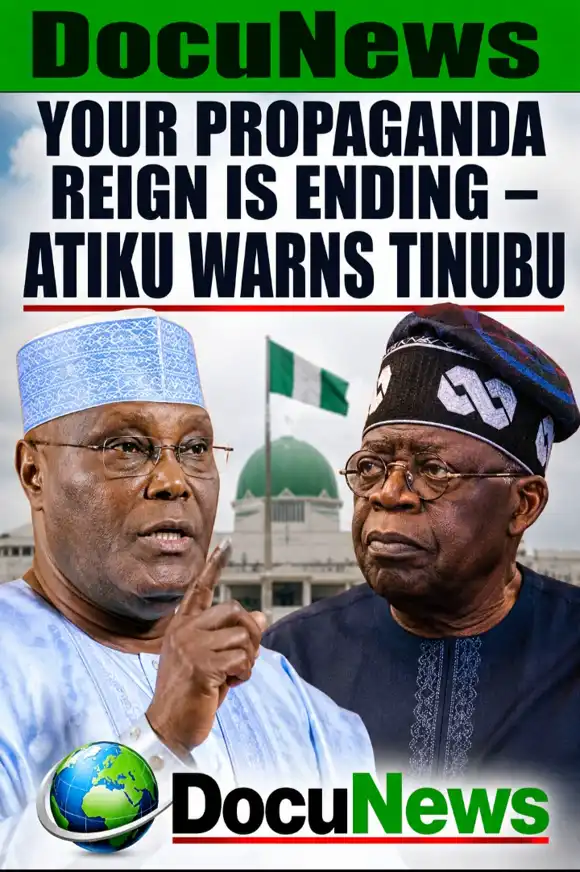
Your Propaganda Reign Is Ending – Atiku Warns Tinubu.

Author: Jonadab
Publisher: DocuNews Central
Date: May 29, 2026
Former Vice President Atiku Abubakar has criticized President Bola Tinubu’s administration, saying what he described as a period of propaganda in governance is coming to an end. The statement emerged as political debates intensified across Nigeria following renewed discussions about the country’s economic conditions, security challenges, and preparations for the 2027 general elections.
Atiku’s remarks added a new dimension to the growing exchange between opposition figures and the federal government. The former presidential candidate argued that Nigerians are increasingly demanding accountability and measurable results from public officials. Consequently, his comments quickly attracted reactions from supporters, political analysts, and members of various political parties.
The statement was reported on May 29, 2026, in Abuja, Nigeria, during discussions surrounding the performance of the federal government. Atiku, a leading opposition figure, directed his criticism toward President Bola Tinubu and key members of the administration. As a result, the comments became a major topic of national political conversation.
Also read Nigeria Budgeting for Ransom? Atiku Reacts
What Happened?
Atiku accused the administration of relying on propaganda rather than tangible achievements. According to his position, government officials should focus on addressing economic hardship, insecurity, inflation, and other challenges affecting Nigerians.
Furthermore, he argued that citizens are becoming more concerned about practical outcomes than political messaging. He maintained that voters will ultimately evaluate leaders based on performance rather than public relations campaigns.
The comments came at a time when political activities across the country continue to gain momentum. Although the next general election remains some distance away, political stakeholders have already begun positioning themselves for future contests.
Who Is Involved?
The key figures involved include former Vice President Atiku Abubakar and President Bola Tinubu. Both men remain influential actors within Nigeria’s political landscape and continue to command significant public attention.
In addition, political parties, civil society groups, analysts, and citizens have joined the conversation. Consequently, the exchange has extended beyond party structures and entered broader public discourse.
Several political observers noted that statements from leading opposition figures often attract substantial attention because they provide alternative perspectives on national issues. Therefore, Atiku’s remarks quickly became widely discussed across traditional and digital media platforms.
Where Did It Happen?
The political debate largely unfolded in Abuja, the Federal Capital Territory, where major government institutions and national political organizations are based. However, the discussion spread nationwide through media reports, public commentary, and online conversations.
Political reactions emerged from different parts of the country. As a result, the statement became part of broader national discussions concerning governance, development, and public accountability.
Economic Issues Remain at the Center of Debate
Economic conditions continue to dominate conversations among policymakers and citizens. Inflation, exchange rate fluctuations, unemployment concerns, and the cost of living remain major issues raised by political stakeholders.
Atiku referenced these concerns while criticizing the administration. According to his position, government performance should be measured by improvements in citizens’ daily lives. Therefore, he argued that economic outcomes should remain the primary focus of public evaluation.
Supporters of the government, however, have consistently argued that reforms implemented by the administration require time to produce long-term benefits. They maintain that difficult decisions are necessary to achieve sustainable economic growth.
Consequently, economic policy continues to serve as one of the most contested areas in Nigeria’s political environment. Both government officials and opposition figures frequently cite economic indicators to support their respective arguments.
Security Challenges Continue to Generate Concern
Security remains another major subject in national discussions. Various stakeholders have continued to call for stronger measures against criminal activities and violent threats in different regions.
Atiku included security concerns among the issues requiring urgent attention. According to his argument, citizens expect concrete improvements in safety and protection across the country.
Meanwhile, government officials have repeatedly highlighted ongoing military and security operations. They argue that security agencies continue to make progress in addressing threats and restoring stability in affected communities.
Nevertheless, security developments remain a key factor in public assessments of government performance. Therefore, the issue continues to influence political debates at both national and local levels.
Political Tensions Ahead of 2027
Although the next presidential election is still ahead, political conversations increasingly reflect future electoral calculations. Major political figures are positioning themselves and their parties for upcoming contests.
Consequently, statements from leading politicians are receiving heightened scrutiny. Analysts note that public messaging is becoming increasingly important as parties seek to strengthen their support bases.
Atiku’s comments are widely viewed within this broader political context. His criticism of the administration reflects ongoing competition between opposition groups and the ruling party.
At the same time, supporters of the government continue to defend the administration’s policies and record. Therefore, political exchanges are expected to remain intense in the months ahead.
Reactions from Political Observers
Several political analysts observed that strong criticism from opposition leaders is a common feature of democratic systems. They noted that opposition parties often seek to highlight perceived shortcomings while presenting alternative visions for governance.
Furthermore, observers stated that public debate can contribute to accountability when discussions remain focused on policy issues. Consequently, many analysts encouraged political actors to prioritize evidence-based arguments and constructive engagement.
Some commentators argued that citizens ultimately benefit when competing political perspectives are openly debated. As a result, public scrutiny of government performance remains an important aspect of democratic governance.
Others emphasized that voters are increasingly interested in practical outcomes rather than political rhetoric. Therefore, future political contests may depend heavily on perceptions of performance and effectiveness.
Public Response Across Media Platforms
Reactions to Atiku’s statement quickly appeared across various media platforms. Supporters praised the remarks, arguing that opposition leaders have a responsibility to challenge government policies.
Meanwhile, critics dismissed the comments as politically motivated. They argued that opposition figures frequently use strong language to attract public attention and mobilize supporters.
Consequently, the debate generated extensive discussion among citizens, political groups, and commentators. Social media platforms, in particular, became active spaces for exchanging views on the issue.
Despite differing opinions, many participants agreed that economic conditions and security concerns remain among the country’s most important priorities. Therefore, discussions often returned to these core issues regardless of political affiliation.
Government Supporters Defend Administration
Supporters of President Tinubu rejected allegations that the administration relies on propaganda. Instead, they argued that government policies are designed to address long-standing structural challenges.
They further maintained that reforms require patience and sustained implementation. According to this view, meaningful progress cannot always be achieved immediately.
Consequently, government supporters called for evaluations based on long-term outcomes rather than short-term political criticism. They argued that future assessments should consider both achievements and challenges.
The exchange highlights the sharp divisions that often characterize political debates. Nevertheless, both supporters and critics continue to focus attention on governance and national development.
According to DocuNews Central
According to DocuNews Central, the latest exchange between Atiku Abubakar and President Bola Tinubu reflects the increasingly competitive political environment ahead of future electoral contests. The debate also demonstrates how economic performance, security conditions, and public accountability continue to shape national conversations.
Furthermore, political observers expect similar exchanges to continue as parties seek to influence public opinion. Consequently, statements from major political figures are likely to remain important indicators of evolving political strategies.
Regardless of political affiliation, many Nigerians continue to prioritize issues directly affecting daily life. Therefore, discussions surrounding governance, economic stability, and national security are expected to remain central themes in public discourse.
Looking Ahead
The significance of Atiku’s remarks extends beyond a single political statement. Instead, the comments form part of a broader debate about leadership, governance, and accountability in Nigeria.
As political activities continue, both the administration and opposition figures are expected to intensify efforts to communicate their respective positions. Consequently, public discussions will likely remain focused on policy outcomes and future expectations.
For now, Atiku’s warning that a supposed era of propaganda is ending has added another chapter to the country’s evolving political narrative. Meanwhile, government supporters continue to defend the administration’s record and policy direction.
The coming months may provide additional opportunities for both sides to present their arguments. Therefore, citizens, analysts, and political stakeholders will continue monitoring developments closely.
For more Verified News. Visit www.docunewscentral.com and Legit.ng