
World
Five U.S. Aerial Refueling Jets Destroyed in Saudi Strike

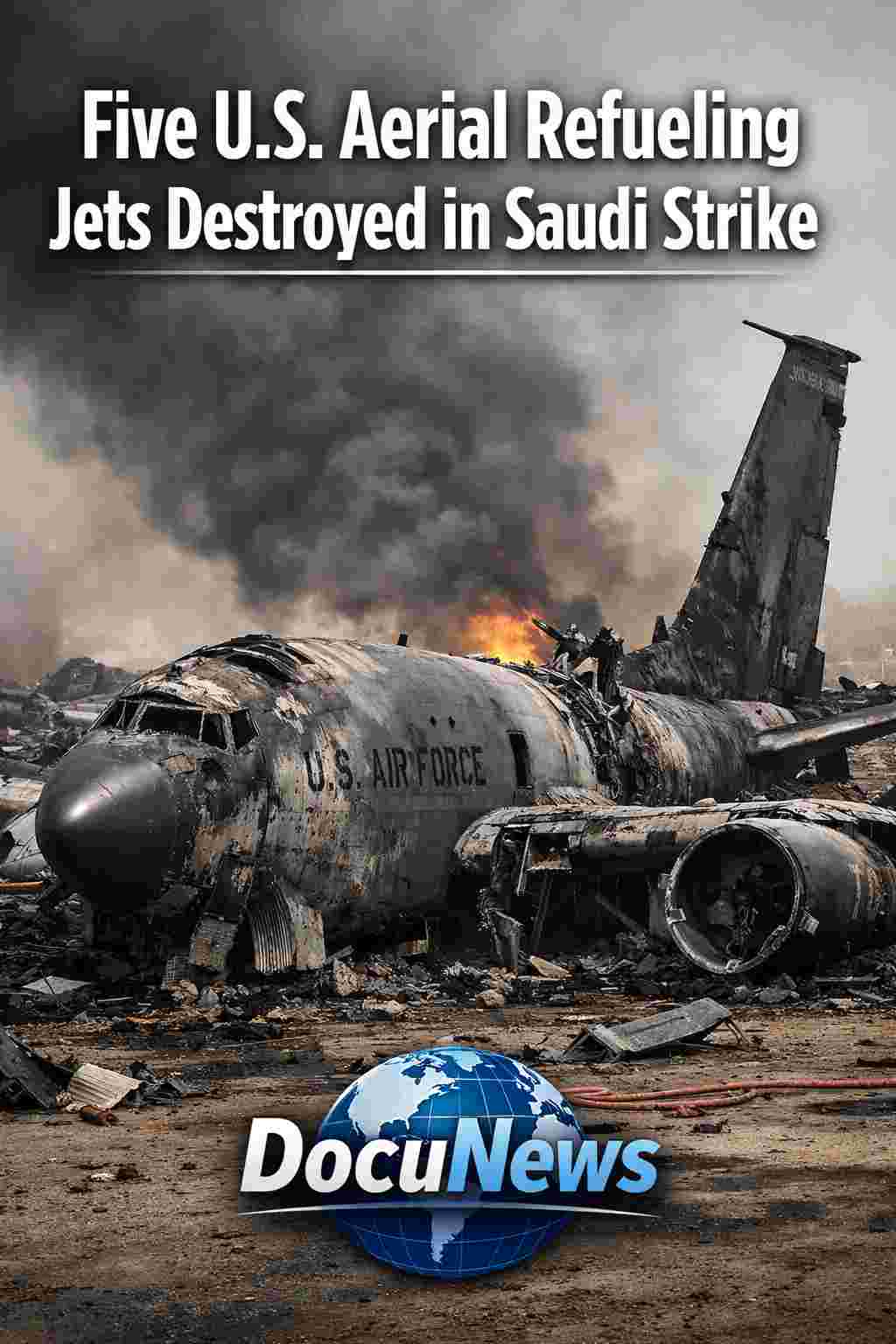
Five U.S. Aerial Refueling Jets Destroyed in Saudi Strike
Author: Jonadab| Publisher: DocuNews Central| Date: March 15, 2026
Five U.S. aerial refueling jets were destroyed during a strike on a military target in Saudi Arabia, according to reports released by Iranian state media. The aircraft served a critical role in extending the operational range of fighter jets and bombers during combat missions. As a result, military analysts view the loss as strategically significant.
Meanwhile, officials in Washington and Riyadh have not yet released full details about the incident. However, regional security observers say the reported strike highlights rising tensions around military infrastructure in the Middle East. Investigations into the damage and operational impact continue.
Strategic Role of Aerial Refueling Aircraft
Aerial refueling aircraft play a vital role in modern military operations. They allow combat aircraft to stay airborne longer and travel greater distances without landing. Therefore, military planners depend on tanker aircraft for long-range strike capability and sustained air patrol missions.
The United States Air Force operates several tanker platforms designed for this mission. These aircraft often support multinational operations across the Middle East and other regions. Because of their strategic importance, they often operate from carefully protected bases.
Furthermore, refueling aircraft support both fighter jets and heavy bombers. During complex missions, tankers meet combat aircraft midair and transfer fuel through specialized boom or hose systems. Consequently, air forces can conduct operations far from home bases.
Details Reported About the Saudi Strike
Iranian state media claimed the strike destroyed five American aerial refueling aircraft at a military installation in Saudi Arabia. According to the reports, the aircraft were stationed at the facility to support regional air operations. However, the exact location of the base has not been officially confirmed.
In addition, early reports did not provide casualty figures or infrastructure damage estimates. Defense observers say verification may take time because military bases often restrict operational information. Nevertheless, satellite imagery and intelligence assessments may clarify the situation soon.
At the same time, regional governments have increased monitoring of military installations and airspace activity. Analysts say the reported attack could influence operational planning across allied bases in the region.
Also read Washington Offers $10M for Information on Khamenei
Impact on U.S. Air Operations
The destruction of multiple tanker aircraft could affect operational flexibility. Tankers enable fighter jets to travel long distances and maintain extended patrols. Therefore, any loss of these aircraft can reduce the tempo of sustained air missions.
However, the United States maintains a large tanker fleet and frequently rotates aircraft between bases. Because of that capacity, defense officials may deploy replacement aircraft to maintain operational coverage. Military planners often design contingency plans for such scenarios.
Moreover, allied nations also operate aerial refueling aircraft that support joint missions. NATO and coalition partners frequently share logistical support during multinational operations. As a result, cooperative refueling networks often help maintain mission readiness.
Regional Security Tensions
The reported strike comes during a period of heightened geopolitical tension in the Middle East. Military infrastructure in the region often supports operations connected to regional security partnerships. Consequently, attacks on these facilities can quickly attract international attention.
Saudi Arabia hosts several strategic bases used for training, logistics, and air operations. These facilities often support coalition activities aimed at maintaining regional stability. Therefore, any reported strike against such infrastructure raises security concerns.
Meanwhile, regional defense analysts continue to monitor developments closely. They also examine how the incident might influence diplomatic and military responses. Governments typically evaluate both security risks and political consequences after such events.
Verification and Ongoing Investigation
Independent verification of battlefield claims remains essential in fast-moving security situations. Military statements, satellite imagery, and international monitoring groups often provide additional confirmation. Therefore, analysts expect further information to emerge in the coming days.
In addition, defense agencies frequently conduct damage assessments after reported attacks. These evaluations examine aircraft losses, infrastructure damage, and operational readiness. Such reviews help military planners determine the next steps.
Furthermore, international observers emphasize the importance of transparency during regional security incidents. Reliable information can reduce speculation and support diplomatic communication between governments.
Global Military Logistics and Airpower
Aerial refueling technology remains one of the most important capabilities in modern airpower. It allows aircraft to travel across continents and sustain long missions. Consequently, global military operations rely heavily on tanker fleets.
The United States has invested heavily in tanker modernization programs. For example, the U.S. Air Force recently introduced newer platforms designed to improve efficiency and range. More information about tanker aircraft development is available from the U.S. Air Force official website.
Additionally, international security organizations regularly analyze global airpower trends. Reports from groups such as the International Institute for Strategic Studies provide detailed assessments of military capabilities and operational strategy.
Because of these strategic roles, tanker aircraft remain high-value military assets. Therefore, any reported destruction of such aircraft quickly becomes a major defense and geopolitical story.
As investigations continue, defense officials and regional governments will likely release additional information. Observers expect further updates about the operational impact and security response. Until then, analysts continue to assess the broader implications for military logistics and regional stability.
