
World
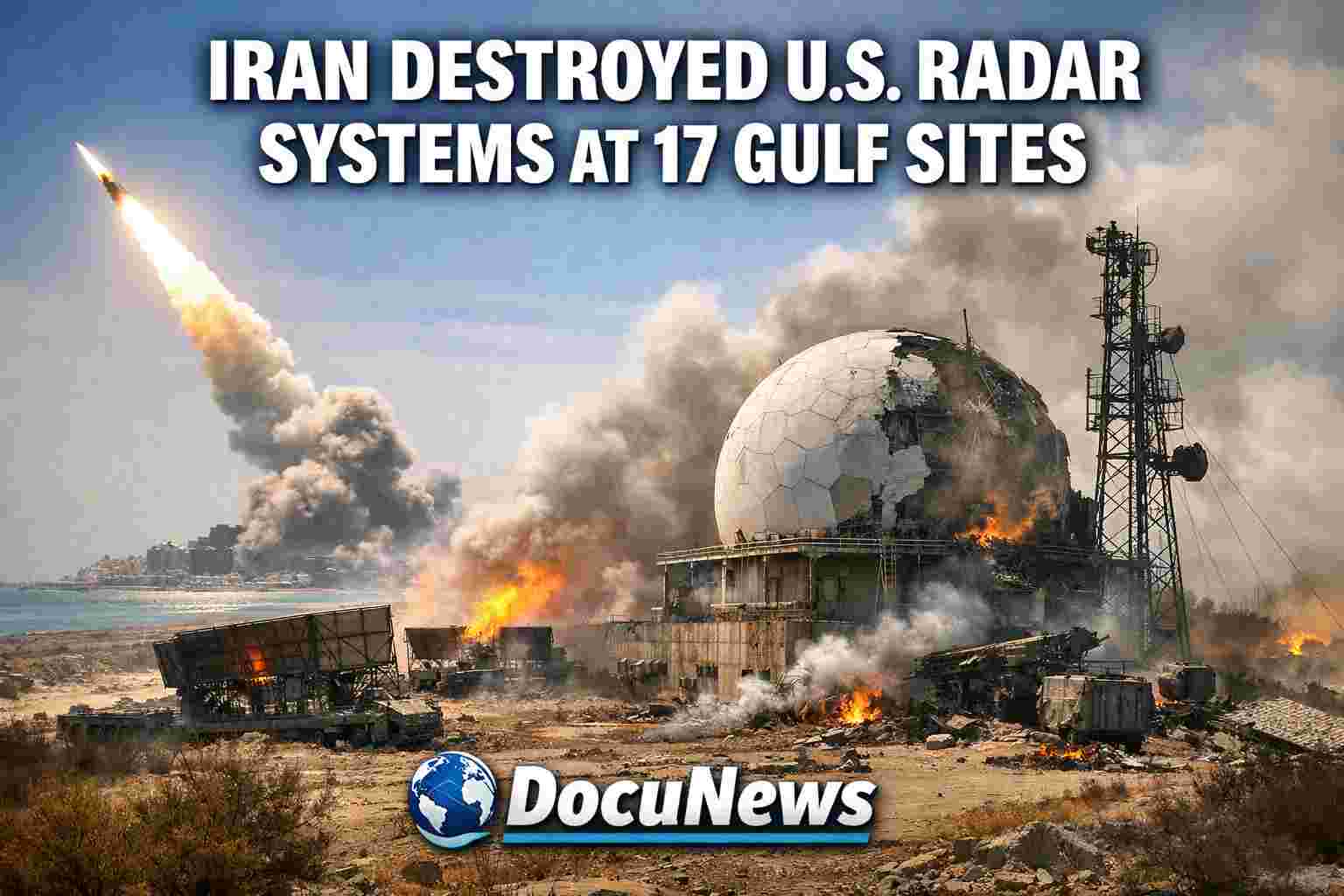
Iran Destroyed U.S. Radar Systems at 17 Gulf Sites

Author: Jonadab | Publisher: DocuNews. Date: March 13, 2026.
Iran destroyed U.S. radar systems at 17 sites across the Gulf region, according to multiple verified reports released From DocuNews Central this week. The strikes targeted radar and communications infrastructure linked to American military operations. Satellite images and verified videos confirmed extensive damage at several locations. Analysts say the attacks mark a major escalation in the ongoing regional conflict.
Moreover, intelligence assessments indicate that the strikes focused on surveillance systems used to monitor air and naval activity. These systems support early warning networks across key strategic waterways. Therefore, damage to the infrastructure could disrupt monitoring operations in the area. Military officials continue to review the full scale of the impact.
Satellite Imagery Confirms Damage to Radar Installations
Satellite imagery played a key role in confirming the strikes. Analysts reviewed high-resolution images taken before and after the attacks. As a result, investigators identified structural damage at radar stations and communications towers. Several facilities showed clear signs of explosions and equipment destruction.
Furthermore, verified videos circulating online helped confirm the locations of several incidents. Investigators matched landmarks and terrain features to known military sites. Consequently, analysts concluded that the strikes targeted radar installations connected to U.S. defense networks. Independent experts continue to review additional imagery.
Reports published by The New York Times and regional monitoring groups also support the findings. These investigations rely on satellite data and open-source intelligence. Therefore, analysts believe the evidence provides a reliable picture of the attacks. However, officials still examine new information as it emerges.
Also read Trump Calls Iran a Nation of Terror and Hate
Strategic Importance of U.S. Radar Systems in the Gulf
U.S. radar systems in the Gulf region support surveillance across key shipping routes. These systems track aircraft, missiles, and maritime activity. Consequently, they help maintain early warning capabilities for U.S. forces and allied partners. Damage to the infrastructure could weaken monitoring coverage in some areas.
In addition, radar installations form part of a wider defense network that includes communications and command systems. These networks share real-time data between military bases and naval vessels. Therefore, radar disruptions may slow response times during security incidents. Military planners often rely on these systems for rapid coordination.
Security analysts say radar networks also support protection for commercial shipping routes. The Gulf region contains some of the world’s most critical energy transport corridors. As a result, disruptions to surveillance infrastructure could affect regional stability. Officials continue to assess operational risks.
Evidence Based on Verified Videos and Official Statements
Investigators relied on several forms of evidence to confirm the strikes. Satellite imagery provided visual proof of damaged installations. Meanwhile, verified videos recorded explosions and smoke rising from several sites. Analysts compared the footage with geographic data to confirm the locations.
Official statements also helped support the findings. Military and government officials acknowledged damage to several facilities in the region. However, authorities did not release detailed operational information. Therefore, analysts continue to rely on independent verification.
Organizations that specialize in open-source intelligence reviewed the available material. For example, researchers from The Center for Strategic and International Studies frequently analyze satellite imagery and defense infrastructure. Their assessments often help confirm developments during international conflicts. Consequently, analysts rely on such research to understand the broader security situation.
Regional Security Concerns Continue to Grow
Regional security concerns have grown since reports of the attacks emerged. Military analysts warn that targeting radar networks could affect defense coordination across the Gulf. Therefore, officials now monitor the situation closely. Governments across the region continue to evaluate possible responses.
Furthermore, the attacks highlight the importance of military infrastructure in modern conflicts. Radar and communications systems allow rapid coordination between air and naval forces. Consequently, these systems often become key targets during military operations. Security experts say protecting such infrastructure remains a top priority.
Meanwhile, diplomatic discussions continue among international partners. Governments seek to reduce tensions while maintaining regional security. As a result, officials emphasize the need for careful monitoring and communication. Diplomatic channels remain active as leaders assess the situation.
Ongoing Analysis of the Gulf Conflict
Defense analysts continue to study the scale of the damage. Satellite monitoring groups plan additional image reviews in the coming days. Therefore, more information may emerge as investigators compare new data. Analysts expect further assessments of infrastructure damage across the Gulf.
At the same time, researchers track developments through open-source intelligence platforms. These groups often publish detailed breakdowns of military infrastructure and strike locations. For example, monitoring projects connected to The International Institute for Strategic Studies frequently analyze security developments in the region. Their work helps explain how conflicts affect strategic assets.
In conclusion, the reported destruction of U.S. radar systems at 17 Gulf sites marks a significant development in the current conflict. Verified satellite images, videos, and official statements support the findings. Nevertheless, analysts continue to examine new evidence. Further reports may clarify the full impact on regional security and military operations.
For more News details visit Israeli-Iran-U.S War
