World
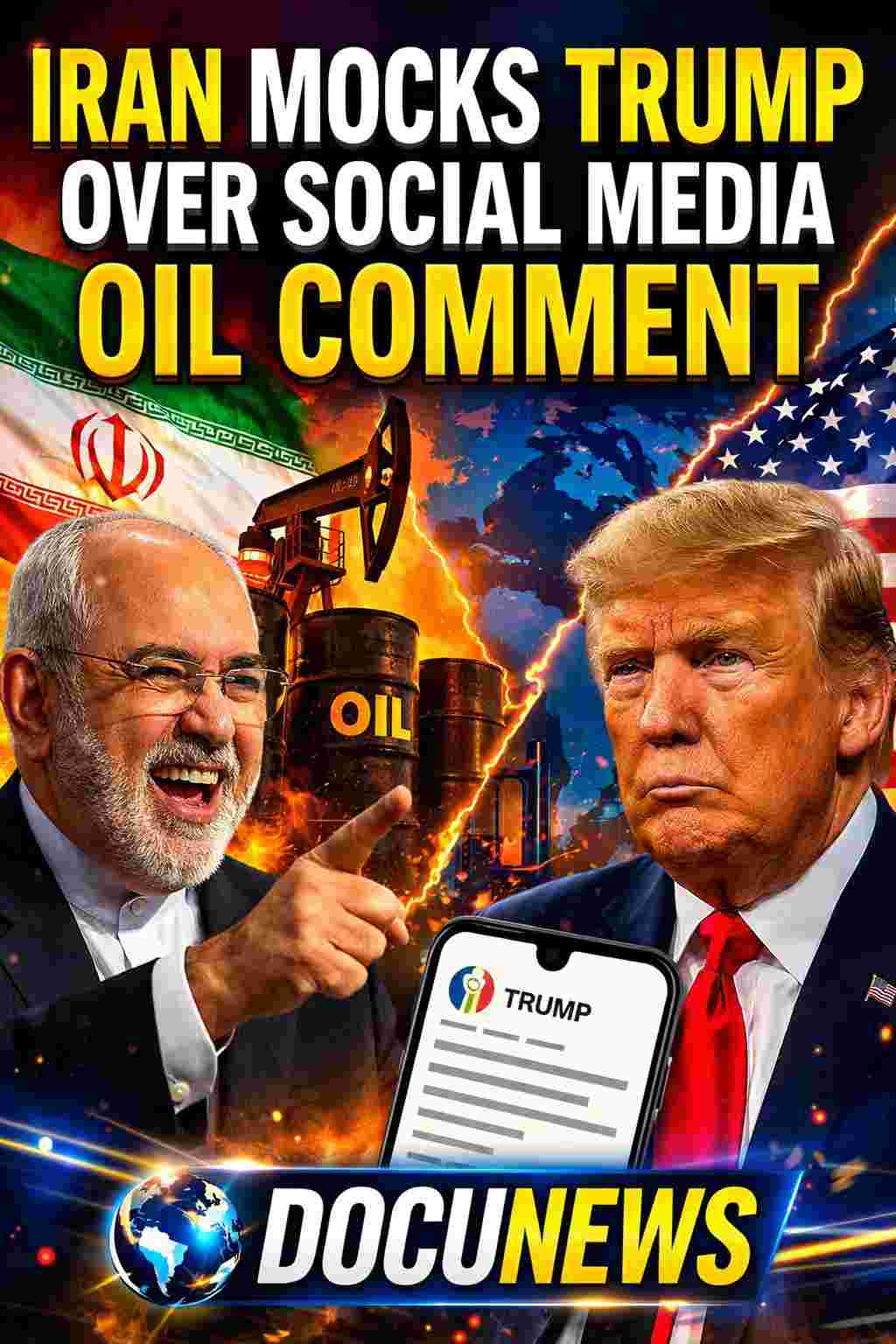
Iran Mocks Trump Over Social Media Oil Comment

Author: Jonadab| Publisher: DocuNews. Date: March 12, 2026.
Global political tensions are rising again as energy markets closely watch developments between the United States and Iran. A recent online exchange drew widespread attention and sparked debate on social media, diplomacy, and the global oil market. In fact, the headline Iran Mocks Trump Over Social Media Oil Comment quickly became trending across international news platforms, as analysts explored its implications for U.S.–Iran relations and energy policy worldwide.
According to DocuNews Central, On March 12, 2026 From Tehran, Iran. Iran’s foreign minister publicly responded to a social media post from U.S. president Donald Trump regarding oil and energy policy. The post questioned global oil stability and suggested that prior U.S. energy policies had strengthened the domestic market. Iran’s response used sharp sarcasm to challenge Trump’s claims, quickly circulating online. International news outlets began covering the story extensively, highlighting the intersection of political rhetoric and energy diplomacy.
This exchange occurred amid growing concerns over energy security in the Middle East. Iran sits near critical oil routes, including the Strait of Hormuz, through which nearly 20% of the world’s petroleum passes. Statements about oil from influential leaders can influence global markets instantly. Consequently, both the political and financial communities monitored this online clash closely.
Trump’s Social Media Comment Sparks Debate
The controversy began when Trump posted a social media message discussing oil production and global energy trends. He suggested that tensions in the Middle East would eventually push oil prices in new directions and claimed that his previous policies ensured supply security. Supporters praised the message as a reminder of America’s energy independence. Critics quickly challenged the accuracy of his statements, noting that international energy markets involve complex factors beyond U.S. policy.
The post circulated rapidly among political analysts, journalists, and the public. Social media users debated the implications for energy security, economic stability, and regional politics. Analysts emphasized that remarks from high-profile figures can affect investor sentiment and influence perceptions about global oil supply.
Shortly after the post gained traction, Iran’s foreign minister delivered a direct response via social media. Unlike traditional diplomatic language, the message carried sarcasm and mockery, criticizing Trump’s claims and highlighting U.S. sanctions against Iran’s energy sector.
Iran’s Foreign Minister Delivers a Sharp Response
The Iranian diplomat’s message spread quickly across online platforms. Major media organizations quoted the statement, noting the unusual tone for formal diplomacy. Observers described the message as both mocking and pointed, reflecting long-standing frustration with U.S. sanctions that limit Iran’s oil exports.
Iran has previously argued that sanctions distort the global oil market and negatively impact energy trade flows. Meanwhile, the U.S. maintains that sanctions are necessary to curb nuclear threats and influence regional stability. The clash highlights how digital communication now shapes international political discourse in real time.
By responding online, Tehran signaled that social media can be a platform for diplomatic messaging. Analysts note that the trend emphasizes the growing role of digital platforms in shaping public perception and political debate.
Why Oil Remains Central to U.S.–Iran Tensions
Oil has always been at the center of U.S.–Iran relations. Iran possesses vast petroleum reserves, making it a significant player in the international energy market. Any disruption in Iranian oil supply can impact global prices and energy security.
The United States has repeatedly imposed sanctions targeting Iranian oil exports. These restrictions affected shipping networks, banking channels, and energy companies, sharply reducing Iran’s export capabilities. Even so, alternative trading routes have emerged, allowing limited exports to continue.
Experts highlight that geopolitical events involving Iran often affect energy market stability. When political tensions escalate, traders anticipate possible disruptions, which can cause fluctuations in crude prices and related commodities.
Social Media’s Growing Influence on Diplomacy
Social media has transformed how leaders communicate with global audiences. Statements that once required press briefings now appear online instantly, reaching millions worldwide. The Iran–Trump exchange demonstrates this trend clearly.
Trump frequently used social media during his presidency to discuss foreign policy and energy strategies. Supporters praised his direct communication, while critics argued it sometimes complicated delicate diplomatic negotiations. Iranian officials now also employ social platforms to present their narrative and respond to global developments.
Digital diplomacy allows governments to influence public opinion directly. It also ensures that responses to statements occur in the public eye, increasing both scrutiny and engagement.
Energy Markets React to Political Statements
Energy analysts monitor geopolitical statements closely, especially from influential leaders. Even short remarks can trigger investor speculation about supply security, pricing, and trade disruptions. The Strait of Hormuz, through which a significant portion of global petroleum travels, makes Iran a key focus of energy market monitoring.
Organizations like the International Energy Agency track these developments carefully, providing reports on supply risks and market trends. Such analyses help governments and businesses make informed decisions in uncertain geopolitical climates.
Financial markets may react to perceived risks even before actual disruptions occur. Consequently, commentary about oil from political leaders has tangible effects on investor behavior and commodity trading.
Also read Iran’s New Supreme Leader Mojtaba Khamenei Broke His Silence
International Reactions
Global analysts offered varied interpretations of Iran’s response. Some viewed the mocking tone as a demonstration of Tehran’s frustration with long-term sanctions. Others suggested the exchange was largely symbolic, aimed at reinforcing domestic political narratives while signaling defiance on an international stage.
Journalists emphasized the unusual directness of the online exchange. Public debates on social media reflected similar divisions, with supporters and critics of both sides sharing commentary and analysis. The situation illustrates how digital platforms amplify diplomatic disputes rapidly and widely.
Despite differing perspectives, the incident underscores the complexity of U.S.–Iran relations. Political rhetoric, even online, can escalate international attention and shape energy market perception.
Historical Context of the Oil Dispute
Tensions between the U.S. and Iran date back decades, intensifying after the 1979 Iranian Revolution. Since then, disputes over nuclear development, regional influence, and sanctions have repeatedly surfaced. Oil has remained central to these conflicts because of its economic and geopolitical significance.
International bodies, such as the United Nations Security Council, have frequently addressed sanctions and regional security. However, negotiations often face challenges due to conflicting national interests.
Analysts emphasize that oil continues to shape the strategic calculus of both Tehran and Washington. Political statements, trade policies, and sanctions all influence global energy stability.
Media Coverage and Public Opinion
News organizations worldwide reported the online exchange between Iran’s foreign minister and Trump. Headlines highlighted the sarcastic tone and its broader implications for U.S.–Iran relations and global oil markets.
Social media users offered diverse reactions. Some supported Iran’s criticism of U.S. sanctions. Others defended Trump’s policies, highlighting America’s energy independence achievements. The discussion demonstrates how political discourse now thrives online, generating rapid public engagement.
Experts suggest that while online debates capture attention, sustained diplomatic engagement remains crucial for resolving deeper energy and security issues.
The Importance of Energy Diplomacy
Energy diplomacy helps maintain global economic and political stability. Governments negotiate agreements to ensure reliable oil supply and mitigate market disruptions. Cooperation among major producers and consumers plays a key role in stabilizing global markets.
The U.S. encourages domestic production and diversification of supply sources. Iran, despite sanctions, seeks to expand export opportunities and assert its role in global energy trade.
Experts agree that while political rhetoric is impactful, effective long-term solutions require negotiation, dialogue, and collaboration between governments.
DocuNews Central Coverage
Readers looking for ongoing updates can follow DocuNews Central. The platform provides comprehensive coverage of global conflicts, energy markets, and diplomatic developments, including the headline Iran Mocks Trump Over Social Media Oil Comment.
DocuNews Central offers analysis of political statements, market impacts, and regional tensions. The publication aims to provide context and clarity for readers seeking accurate information on complex geopolitical issues.
Conclusion
The story of Iran Mocks Trump Over Social Media Oil Comment demonstrates the growing impact of digital diplomacy on global politics and energy markets. A brief social media exchange escalated into an international debate about sanctions, oil trade, and strategic relations. As political communication continues to evolve online, similar exchanges will remain an essential feature of international news and analysis.
Disclaimer: This article is for informational purposes only. The content summarizes publicly available statements, commentary, and analysis at the time of publication. It does not represent official positions of any government or organization. Readers should consult multiple sources for a comprehensive understanding of global political developments.
