
Security
Nigerian Army Claims IDPs Harbor Boko Haram.

By Jonadab | April 16, 2026 | DocuNews Central
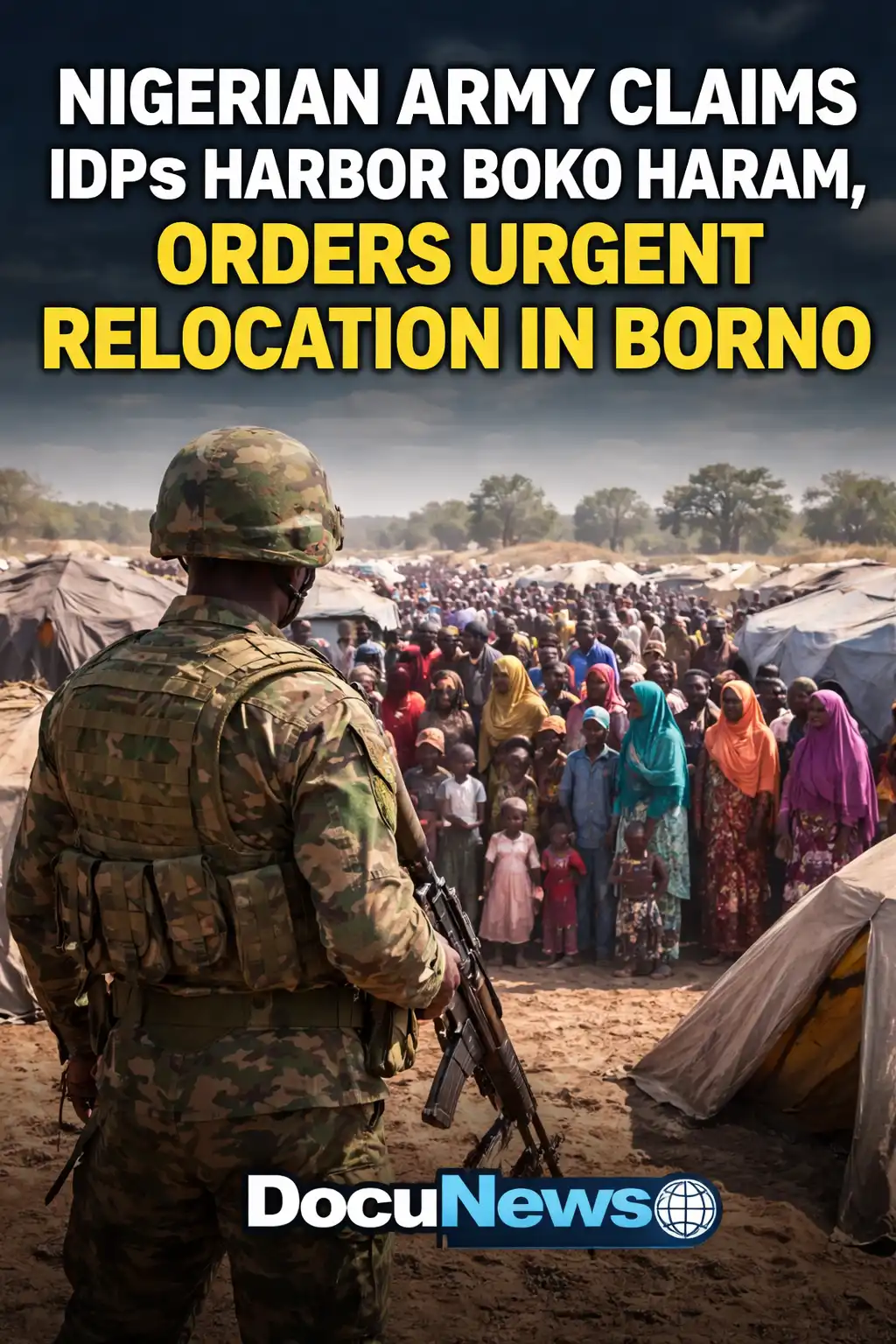
The Nigerian Army Claim that IDPs Harbor Boko Haram. For that reason, Nigerian Army has announced plans to relocate thousands of internally displaced persons (IDPs) in Borno State. The move follows allegations that some camps are being used to shelter members of Boko Haram. Authorities said the decision was taken after intelligence reports raised serious security concerns.
Military officials explained that the relocation is aimed at preventing insurgents from blending with civilian populations. They added that the operation will strengthen ongoing counterterrorism efforts in the region. Meanwhile, residents in affected camps have expressed uncertainty about their future.
The development was reported on April 16, 2026, in Borno State, a region that has remained the epicenter of insurgency in northeastern Nigeria. Over the years, the area has witnessed repeated attacks and mass displacements. As a result, millions have depended on government-managed camps for safety and support.
Also read Bandits Strike Zamfara Villages in Deadly Midnight Operation
Army Raises Security Concerns in IDP Camps
The Nigerian Army stated that recent intelligence findings indicated the presence of suspected insurgents within IDP settlements. According to officials, these individuals may be using the camps as cover to evade detection. Therefore, authorities believe urgent action is required to prevent further infiltration.
Security sources noted that insurgents often exploit crowded environments to hide their identities. In addition, they may gather information or plan attacks from within such locations. Consequently, the military said the relocation will reduce vulnerabilities within the camps.
Officials emphasized that the operation is not targeted at innocent civilians. Instead, it is designed to separate potential threats from vulnerable populations. They also assured that proper screening measures will be implemented during the relocation process.
Relocation Plan and Implementation Strategy
The relocation process is expected to affect several IDP camps across Borno State. Authorities revealed that selected camps will be moved to newly designated secure locations. These areas have reportedly been prepared with improved surveillance and tighter security controls.
In addition, military personnel and humanitarian agencies are expected to coordinate the movement of displaced persons. Transportation arrangements are being planned to ensure a smooth transition. Officials also stated that basic services will be provided at the new sites.
However, concerns have been raised about the capacity of the new camps. Some humanitarian workers warned that overcrowding could create additional challenges. Nevertheless, the government has pledged to address these issues as the process unfolds.
Reactions from IDPs and Local Communities
Many displaced persons have reacted with mixed feelings to the relocation order. While some acknowledged the need for improved security, others expressed fear of further displacement. For many families, repeated movements have disrupted their lives and livelihoods.
Residents also raised concerns about access to food, healthcare, and education in the new camps. Several individuals said they have already struggled to rebuild their lives after fleeing violence. As a result, uncertainty about the relocation has increased anxiety among affected populations.
Community leaders have called for transparency and proper communication from authorities. They urged the government to involve IDPs in decision-making processes. Furthermore, they emphasized the need to protect the rights and dignity of displaced persons.
Humanitarian Implications of the Relocation
Humanitarian organizations have highlighted the potential impact of the relocation on vulnerable populations. According to aid groups, sudden movements can disrupt essential services. Therefore, careful planning is required to avoid worsening the humanitarian situation.
Relief agencies have also stressed the importance of maintaining access to food and medical care. In many camps, residents depend entirely on external assistance. Consequently, any interruption in support could have serious consequences.
Experts have recommended a phased relocation approach. This method would allow authorities to manage the process more effectively. In addition, it would reduce pressure on receiving camps and ensure adequate resource allocation.
Ongoing Counterinsurgency Efforts in Borno
The relocation order comes amid intensified military operations against Boko Haram in northeastern Nigeria. Security forces have continued to carry out raids and surveillance missions across affected areas. These efforts aim to dismantle insurgent networks and restore stability.
Over the years, the Nigerian government has implemented various strategies to combat insurgency. These include military offensives, intelligence gathering, and community engagement programs. However, challenges persist due to the complex nature of the conflict.
Authorities believe that addressing security gaps in IDP camps is a critical step. By reducing infiltration risks, they hope to strengthen overall counterterrorism efforts. As a result, the relocation initiative is seen as part of a broader security strategy.
Government Assurances and Next Steps
The Nigerian government has assured that the relocation will be conducted in a humane and orderly manner. Officials stated that the safety and welfare of IDPs remain a priority. They also promised to work closely with humanitarian partners throughout the process.
In addition, authorities said measures will be taken to ensure transparency. Regular updates are expected to be provided to the public and affected communities. This approach aims to build trust and reduce misinformation.
Furthermore, the government has reiterated its commitment to ending insurgency in the region. Officials emphasized that all necessary steps will be taken to protect civilians. Therefore, the relocation is being presented as a necessary security measure.
Calls for Oversight and Accountability
Stakeholders have called for independent monitoring of the relocation process. Civil society groups stressed the need for accountability and adherence to international standards. They argued that the rights of displaced persons must be respected at all times.
Legal experts also highlighted the importance of due process. They noted that accusations of harboring insurgents should be handled carefully. As a result, proper screening and verification procedures have been recommended.
Observers believe that transparency will be key to maintaining public confidence. By ensuring accountability, authorities can address concerns and prevent potential abuses. Consequently, oversight mechanisms are expected to play a crucial role.
Regional and International Perspectives
The situation in Borno has attracted attention from regional and international organizations. Several groups have emphasized the need for coordinated responses to the crisis. They have also called for increased support for displaced populations.
International partners have continued to provide humanitarian assistance to Nigeria. These efforts include funding, logistics, and technical support. However, challenges remain due to the scale of displacement in the region.
Experts have noted that long-term solutions will require a combination of security and development strategies. Addressing root causes of conflict is considered essential. Therefore, both national and international stakeholders are expected to remain engaged.
Conclusion
The Nigerian Army’s decision to relocate IDPs in Borno reflects ongoing security concerns in the region. While authorities aim to prevent insurgent infiltration, the move has raised humanitarian and social questions. As the process begins, attention will focus on how effectively it is managed.
Balancing security needs with the rights of displaced persons remains a critical challenge. Therefore, careful implementation and continuous monitoring will be essential. The coming weeks are expected to determine the impact of the relocation on both security and humanitarian conditions.
For further updates on security developments in Nigeria, visit Nigerian Ministry of Defence and ReliefWeb.
