
Security
Plateau Ambush Kills Nigerian Security Forces in Middle Belt

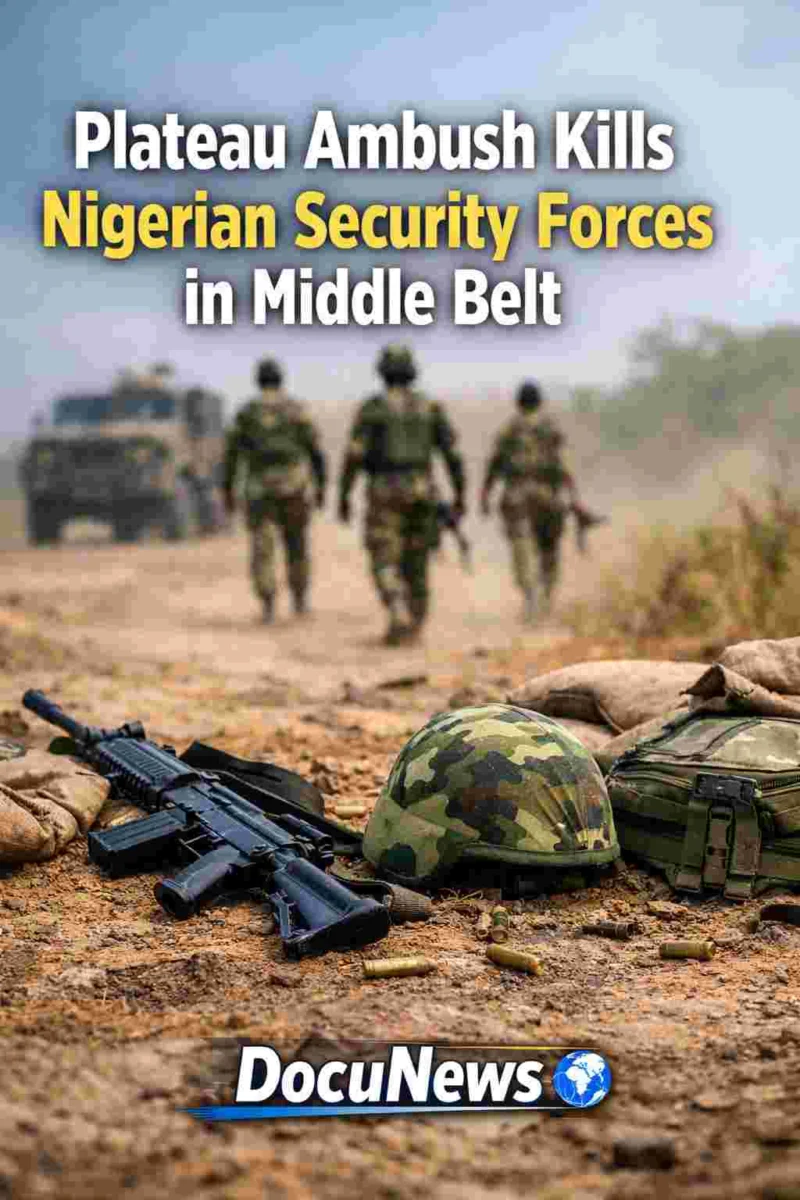
Author: Jonadab | Date: March 22, 2026 | Publisher: DocuNews Central
Deadly Attack Shocks Plateau State
A coordinated ambush struck Nigerian security forces in Plateau State on Thursday, resulting in numerous casualties. Local authorities described the incident as one of the most severe attacks on personnel in the Middle Belt in recent weeks. Witnesses said gunmen blocked a military convoy along a rural highway before opening fire.
The attackers reportedly used small arms and improvised tactics to overwhelm the convoy. Security forces were caught off guard, emphasizing the challenges of maintaining safety in remote areas. The ambush occurred near several local communities that have previously reported sporadic attacks.
According to preliminary reports, both police officers and paramilitary personnel were among the casualties. Emergency response teams were dispatched quickly, but rough terrain delayed access. Residents said they heard prolonged gunfire and explosions during the attack.
Also read Terrorists Hold Eid Prayer in Lake Chad After Borno Attacks
Immediate Response by Security Agencies
The Nigerian military and police immediately initiated an operation to contain the attackers. Commanders ordered reinforcements from neighboring towns to secure the area. Helicopters and armored vehicles were deployed to prevent further escalation, though initial reports indicate that some officers were left stranded due to blocked routes.
Authorities confirmed that a full casualty assessment is ongoing. Hospitals in Plateau State received injured personnel, and emergency medical teams worked around the clock. Families of affected officers were notified as soon as officials identified the victims. The Ministry of Defence emphasized that every possible measure is being taken to recover and protect personnel.
Casualties and Losses
While the official death toll remains unconfirmed, eyewitnesses reported dozens of fatalities. Some survivors managed to escape, providing crucial information about the ambush. Local security sources described scenes of chaos and panic along the highway.
Officials indicated that the attack represents a significant operational challenge for the Nigerian security apparatus. In response, high-level security meetings have been convened to review convoy procedures and intelligence protocols. Analysts suggest that such attacks reflect the growing capabilities of armed groups in the Middle Belt.
Middle Belt Security Context
Plateau State is located at the heart of Nigeria’s Middle Belt, a region that has seen rising violence between armed groups, bandits, and security forces. Experts note that the area’s geography—marked by forests, hills, and poorly maintained roads—provides strategic advantages for attackers.
For historical context, the Nigeria Security Watch highlights recurring ambushes and raids in Plateau and neighboring states. These incidents have significantly impacted local communities and disrupted trade and transportation routes.
Recent months saw increased security patrols, but ambushes continue to pose serious risks. Analysts warn that without enhanced intelligence gathering and rapid response capabilities, similar incidents are likely to recur.
Government Statement and Military Measures
The Nigerian Defence Headquarters released a statement condemning the attack and vowing decisive action against perpetrators. “Those responsible will be held accountable,” the statement read. Military authorities confirmed that security operations are being intensified across Plateau and adjoining states.
Commanders have reviewed convoy movement protocols and communication channels to minimize vulnerabilities. Rapid response units are now tasked with escorting high-risk convoys and conducting intelligence-led patrols. The government also emphasized collaboration with local communities to identify suspicious movements and prevent further attacks.
Impact on Local Communities
Residents near the ambush site reported fear and uncertainty. Many businesses and markets temporarily closed, while schools suspended operations for safety. Movement along major roads remains restricted as authorities clear the area and conduct security sweeps.
Local humanitarian organizations are monitoring potential displacement due to heightened insecurity. According to UN OCHA Nigeria, escalating attacks could worsen vulnerabilities for civilians, particularly in rural communities lacking emergency services.
Economic and Transportation Disruptions
The ambush has caused delays in transportation and trade, with some commercial vehicles avoiding affected routes. Security experts note that consistent ambush threats can have lasting economic consequences, including higher transportation costs and disrupted supply chains.
Authorities are working to reopen blocked highways while providing protection for commercial traffic. They also advise residents to report suspicious activity promptly, emphasizing the importance of community cooperation in maintaining security.
Analysis of Armed Group Capabilities
Security analysts suggest the attack highlights increased coordination among armed groups in the Middle Belt. The ability to execute ambushes against well-trained security personnel demonstrates tactical planning and intelligence gathering on the part of attackers.
Experts recommend a combination of technology-driven surveillance, community engagement, and strengthened rapid response teams to counter future attacks. For additional insights, see Africa Center for Strategic Studies, which tracks regional security dynamics.
Investigations and Intelligence Efforts
Investigations into the ambush are ongoing. Security agencies are reviewing convoy routes, operational procedures, and personnel deployment. Officials have urged residents to cooperate with authorities while remaining cautious.
The Defence Ministry has pledged transparency in releasing casualty figures and progress reports. Families of affected officers are receiving support, including counselling and relief assistance. This approach aims to maintain morale among personnel and strengthen trust between communities and security agencies.
National and International Attention
The ambush has drawn both national and international scrutiny. Regional partners have expressed concern over escalating Middle Belt violence and offered technical support for counterterrorism measures. International organizations continue to monitor the situation to ensure humanitarian assistance is available if required.
Security specialists recommend combining intelligence sharing, rapid deployment, and preventive patrols to mitigate future risks. Strengthening local cooperation and investing in early-warning systems are seen as critical for reducing vulnerabilities in Plateau State.
Outlook and Recommendations
Authorities emphasize the importance of vigilance, proactive security measures, and community engagement. Analysts caution that without systemic improvements, attacks on security personnel could intensify, disrupting social stability and economic activities in Plateau and neighboring states.
Efforts to strengthen communication networks, enforce convoy safety protocols, and monitor high-risk areas are ongoing. Experts continue to call for regional collaboration to address the root causes of violence while supporting affected communities.
© 2026 DocuNews Central. All rights reserved.
