
Security
Plateau Killings: What Really Happened That Night

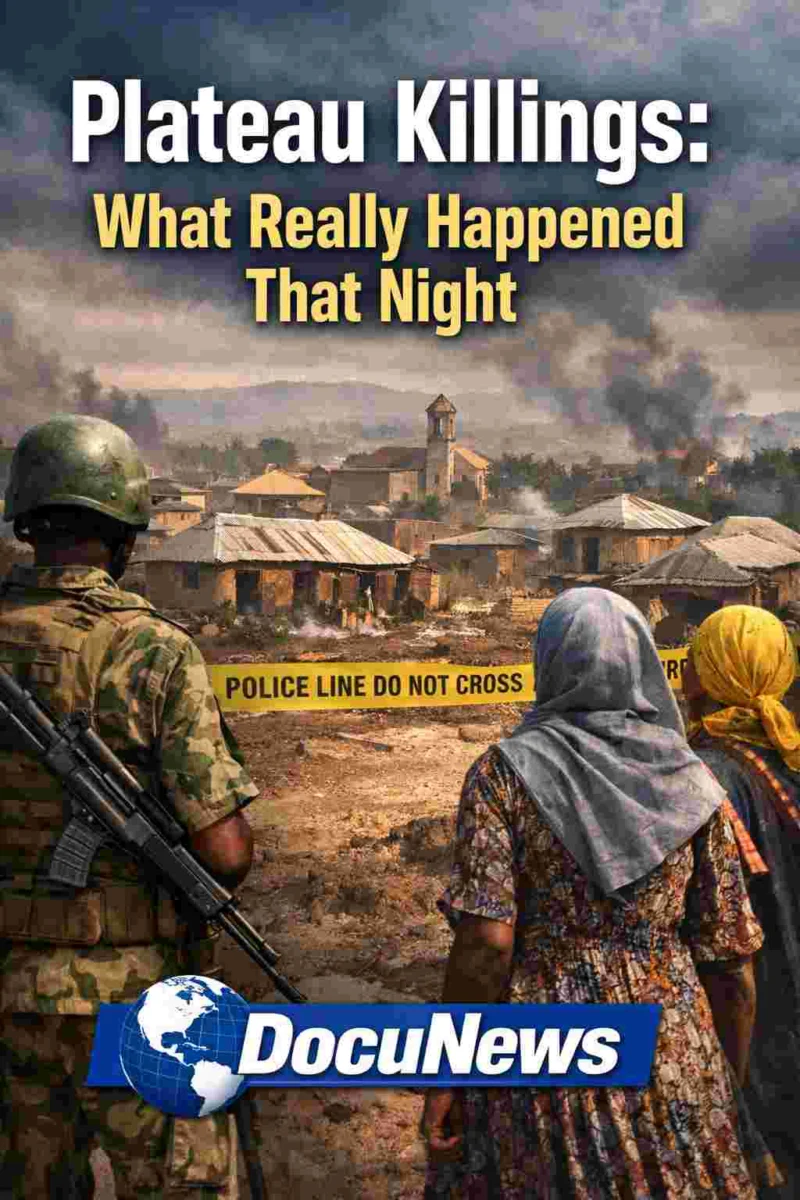
By Jonadab | April 4, 2026 | Publisher: DocuNews Central
This question is generating serious reaction because people want to know exactly what really happend. Plateau Killings: What Really Happened That Night. Hundreds of residents in Nigeria’s central Plateau State have suffered repeated deadly attacks that culminated in a violent assault on the night of March 29, 2026. Gunmen on motorcycles struck densely populated communities, firing indiscriminately and leaving dozens of civilians dead. The violence has drawn national and international concern as government and civil society call for urgent action to protect vulnerable citizens. Authorities imposed security measures, including curfews and deployment of police and military units, yet attacks persisted into early April. Reuters
Sequence of Events on the Night
According to DocuNews Central, On Sunday evening, March 29, in and around Angwan Rukuba and Gari Ya Waye communities in Jos North Local Government Area, residents reported hearing sustained gunfire. Multiple witnesses described gunmen arriving on motorcycles shortly after dusk. The assailants, unidentified in official statements, began shooting at homes and groups of people gathering for evening activities. Local officials confirmed that at least 28 people were killed and many others wounded before security forces could respond. Reuters
The attack occurred amid rising tensions and a broader pattern of violence across Plateau State. Earlier in the year, smaller but deadly incidents had been reported, including coordinated night raids that killed at least 10 residents in Barkin Ladi and Riyom, and an ambush that left traders dead on the road to Pankshin. This Day Live
Date and Location Details
According to DocuNews Central, the pivotal night of violence was on March 29, 2026, with the majority of fatalities recorded after dark in Angwan Rukuba and neighbouring Gari Ya Waye communities within Jos North Local Government Area, Plateau State, Nigeria. In the days that followed, security forces imposed a 48‑hour curfew to limit further movement and violence. AP News
Casualty Figures and Immediate Aftermath
State officials and local leaders released preliminary figures that place the confirmed death toll near 28 people, though community representatives and residents have suggested the true number may be higher. Many survivors were treated at local clinics for gunshot wounds, while others were transported to larger hospitals in Jos for emergency care. Reports noted that homes and small businesses in the affected villages suffered damage during the attack. Reuters
Following the carnage, security agencies enforced a curfew and intensified patrols. In some areas, however, fresh violence erupted. A separate attack in early April in Nyango Gyel, Jos South Local Government Area, claimed at least three additional lives, underscoring the fragility of peace even after state intervention. Premium Times
Government Response and Leadership Visits
President Bola Tinubu visited Jos days after the March 29 killings to commiserate with bereaved families and assure residents of federal government support. During the visit, he pledged efforts to bring perpetrators to justice and ordered security agencies to step up intelligence and patrols across volatile regions. Telegraph Nigeria
Despite these assurances, there was public criticism of the government’s handling of the crisis. Some Nigerians expressed frustration over perceived gaps between official statements and tangible improvements on the ground. Clerics and civic groups urged decisive measures to end the cycle of violence and bring lasting security to Plateau and other parts of the Middle Belt. Nigeria Info FM
Legislative and Security Institution Actions
The Nigerian Senate directed the Inspector‑General of Police, Olatunji Disu, to investigate the Plateau killings thoroughly. Lawmakers resolved to visit affected communities to assess needs and call for accountability. The Senate President emphasised that identifying and prosecuting those responsible was vital to restoring public trust. Channels TV
In coordination with the police, the Army and other security agencies increased deployments across troubled areas. Tactical teams and mobile police units were tasked with intelligence gathering, perimeter control, and protecting key population centres in Plateau State. Vanguard
Broader Context of Insecurity in Plateau
Plateau State’s history of violence predates the March 2026 attacks. The region has witnessed recurring clashes involving farmers, herders, bandits, and communal militias. Past episodes, such as the late‑December 2023 massacres that left scores dead in multiple communities, reveal deep‑seated tensions and complex causes. Wikipedia
State Governor Caleb Mutfwang described the patterns of violence as increasingly systemic, with periodic spikes in attacks that displace families, disrupt agriculture, and erode community cohesion. He noted that investigations have yet to conclusively identify all groups involved in recent operations, complicating efforts to craft enduring solutions. Information Nigeria
Political and Civil Pressure for Action
Former national leaders and opposition figures condemned the Plateau violence. Some described the killings as a symptom of broader governance and security failures nationwide, urging the federal government to adopt a more strategic approach to prevention and response. Politics Nigeria
Faith-based organisations, including the Christian Association of Nigeria, have explicitly demanded prosecution of attackers and stronger protective measures for citizens. Their statements reflect widespread frustration with ongoing insecurity and calls for reforms that deliver measurable improvements in public safety. Channels TV
Impact on Communities and Humanitarian Needs
The killings have compounded humanitarian needs in Plateau State. Families that lost breadwinners now face economic hardship alongside trauma. Local markets and farms have suffered interruptions, and displaced residents require shelter and food assistance. Relief efforts are ongoing, with community groups mobilising support for those affected. Researchers and rights advocates stress that without effective security, these vulnerabilities will persist. Punch Nigeria
Also read Inside Nigeria’s Kidnapping Business: How Victims Are Tracked
Outlook and Prospects for Peace
Security analysts argue that resolving the Plateau crisis demands sustained engagement beyond reactive measures. Strengthening intelligence, community policing, conflict mediation, and resource allocation reforms are cited among necessary steps to reduce violence in the long term. Observers highlight that improving governance and local economic resilience may help address root causes of recurring conflict. Punch Nigeria
For more reporting on security developments in Nigeria, visit Security updates Nigeria Reuters Africa and AP News Africa.
