
Security
Terrorists Kill DPO, CSP Sagir in Katsina Forest Ambush-Full details

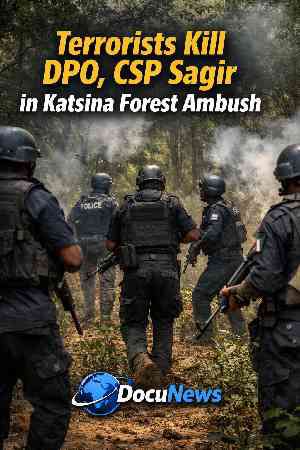
Katsina Forest has became a dead trap to security personals. our gallant men who work hard to secure the innocent citizens sometimes met their end in Kastina Forest. and we at Docunews Central morn them. and our hearth goes to the families they left behind. this has been one of the most disturbing news since this year. Security personals has been killed in the cause of carrying out their duties. Our hearts goes to the families of the falling Heroes. Just Imagine Terrorists Kill DPO, CSP Sagir in Katsina Forest Ambush and this has become one of Nigeria’s most disturbing security headlines after armed attackers launched a deadly surprise assault on a police patrol, killing a Divisional Police Officer and senior officer CSP Sagir during a forest operation. Here at DocuNews Central we murn them. This incident has shaken communities across the northwest side of Nigeria and renewed national concern over the growing reach of terrorist networks that’s operating from remote forest corridors.
According to DocuNews Central, their sources confirmed that CSP Sagir personally led the operation into the forest. Residents near the attack zone described hearing heavy gunfire echo through surrounding villages. As this news unfold, families of the victims struggled to process the sudden loss of loved ones who left home on duty and never returned.
According to DocuNews Central, The ambush occurred on February 13, 2026, inside forest areas of Katsina. Security sources said the officers entered the forest as part of a routine clearance mission aimed at dismantling terrorist camps and disrupting criminal movement. However, the attackers had already tracked the patrol route and prepared their strike.
Read Also Armed Bandits Attend Friday Prayers in Zamfara, move Freely
How the Katsina Forest Ambush Happened
According to eyewitness accounts that disclosed the information to DocuNews Central, and preliminary security briefings, CSP Sagir and his team moved into the forest early in the morning, hoping to surprise armed groups hiding in remote locations. Unfortunately, the terrorists anticipated the operation and positioned themselves along narrow paths surrounded by thick vegetation.
As the police patrol advanced, gunmen opened fire from multiple directions. Officers responded immediately, engaging the attackers in a fierce exchange that lasted several minutes. Despite their resistance, the terrorists controlled higher ground and used the terrain to their advantage. CSP Sagir and the DPO sustained fatal injuries during the confrontation, while other officers managed to retreat with wounds.
After the attack, the assailants fled deeper into the forest, abandoning damaged vehicles and scattered equipment behind. Reinforcements later arrived to evacuate the injured and recover the bodies of the fallen officers. Local vigilantes assisted in securing nearby villages as residents sheltered indoors.
This pattern mirrors previous attacks across northern Nigeria, where armed groups increasingly rely on forest hideouts, rapid strikes, and quick withdrawals. Security agencies often struggle to track these movements due to poor road access, limited aerial surveillance, and fear among local informants.
Many people are reacting to this Bandit Attack Today In Nigeria: Security Fears In North.
Growing Terrorist Threat Across Northern Nigeria
Over the past decade, terrorism and banditry have expanded across large parts of northern Nigeria. Forest belts stretching through Katsina, Zamfara, Kaduna, and Niger states now serve as operational bases for criminal networks involved in kidnappings, village raids, and extortion.
International media outlets such as BBC News (https://www.bbc.com/news/world-africa) and Reuters (https://www.reuters.com/world/africa/) have repeatedly reported on Nigeria’s struggle to contain armed groups that exploit weak border controls and difficult terrain.
Despite repeated military deployments and joint task force operations, terrorists continue to adapt their tactics. They now target security personnel directly, aiming to weaken morale and seize weapons. Each fallen officer represents both a personal tragedy and a serious setback to national security efforts.
Who Was CSP Sagir?
Colleagues described CSP Sagir as a disciplined and fearless officer who preferred to lead from the front. Rather than supervise operations from afar, he consistently joined patrols on difficult missions. Officers who worked closely with him said he believed visibility inspired confidence among junior ranks.
His death has left a deep void within the force and among family members who depended on him. Friends confirmed that he leaves behind loved ones now facing an uncertain future, while fellow officers mourn a leader known for courage and professionalism.
Communities React With Fear and Anger
News of the ambush spread rapidly across Katsina communities, triggering fear and frustration. Farmers abandoned fields close to forest edges, traders closed shops early, and parents kept children indoors. Some community leaders questioned why such attacks continue despite ongoing security operations.
Others urged residents to cooperate with authorities by sharing intelligence, stressing that community involvement remains critical to defeating terrorism. However, fear of retaliation often silences potential witnesses, making it difficult for security agencies to gather actionable information.
Social media platforms filled with tributes to CSP Sagir and demands for decisive action, as Nigerians expressed growing exhaustion over recurring violence and official condolences that rarely translate into lasting solutions.
Experts Call for Tactical Changes
Security analysts responding to the Katsina ambush emphasized the urgent need for tactical reforms. They recommended expanded drone surveillance, intelligence-driven patrols, and better communication equipment for officers operating in hostile environments.
Experts also highlighted the importance of community policing, arguing that residents often possess valuable information about forest movements. Building trust between security agencies and locals could significantly improve early warning systems and reduce ambush risks.
Additionally, analysts called for increased funding for protective gear, armored vehicles, and real-time tracking systems, stressing that modern threats require modern responses.
Government Response and Ongoing Operations
Following the attack, state authorities ordered fresh deployments into affected forest areas. Joint teams involving police, military units, and local vigilantes launched follow-up raids aimed at flushing out the perpetrators. Officials promised to track down those responsible and restore calm.
However, many citizens remain skeptical, noting that similar promises followed past attacks with limited long-term results. Civil society groups continue to demand transparency regarding security spending and operational outcomes, insisting that Nigerians deserve measurable progress.
Economic Impact of Persistent Insecurity
Beyond the tragic loss of life, terrorism has severely disrupted local economies. Farmers avoid fertile lands near forests, transporters reroute journeys, and markets operate below capacity. As a result, food prices rise while household incomes shrink.
Katsina, once known for vibrant agricultural trade, now struggles under constant threats. Investors hesitate to enter high-risk zones, youth unemployment grows, and desperation pushes some young people toward criminal networks, fueling a dangerous cycle of poverty and violence.
The Role of Independent Media
Accurate reporting plays a vital role during security crises. Independent platforms such as DocuNews Central continue to document developments, amplify victims’ voices, and demand accountability from leaders.
International outlets like Al Jazeera (https://www.aljazeera.com/africa/) also track Nigeria’s security challenges, offering global perspectives on local struggles.
Families of Fallen Officers Need More Than Praise
While public tributes matter, families of slain officers require concrete support. They need timely compensation, educational assistance for children, and long-term welfare packages. Sadly, many families complain about delayed benefits and bureaucratic hurdles.
Advocacy groups now urge authorities to establish faster response frameworks for bereaved households, stressing that officers who risk everything for national safety deserve meaningful care for their loved ones.
DocuNews Central Opinion
The killing of the DPO and CSP Sagir exposes deep structural weaknesses in Nigeria’s security approach. Courage alone cannot defeat organized terror networks operating with sophisticated tactics and cross-border connections.
DocuNews Central believes authorities must prioritize intelligence gathering, technological upgrades, and stronger inter-agency coordination. Forest operations should rely on aerial surveillance, real-time mapping, and community-based tips.
Government leaders must also address root causes such as rural poverty, youth unemployment, and uncontrolled arms trafficking. Partnerships with international bodies like the United Nations Office on Drugs and Crime (https://www.unodc.org/) could help strengthen capacity and improve regional cooperation.
Conclusion
The tragedy headlined as Terrorists Kill DPO, CSP Sagir in Katsina Forest Ambush stands as another painful reminder of Nigeria’s ongoing battle against armed violence. CSP Sagir and his colleague died while serving their country, and their sacrifice demands more than sympathy.
Nigeria must strengthen intelligence systems, equip frontline officers, support affected communities, and hold leaders accountable for results. Until comprehensive reforms take root, forests will remain battlegrounds, families will keep grieving, and citizens will continue asking when safety will finally return.
DocuNews Central will keep monitoring developments and providing verified updates as this story evolves.
For More Security Updates In Nigeria Visit Security updates Nigeria
Photo Credit Visit Disclaimers: Use Of AI Images In Our Newsletters
