
Security
Army Major Killed as Boko Haram attack Military Base in Borno State-Full Details

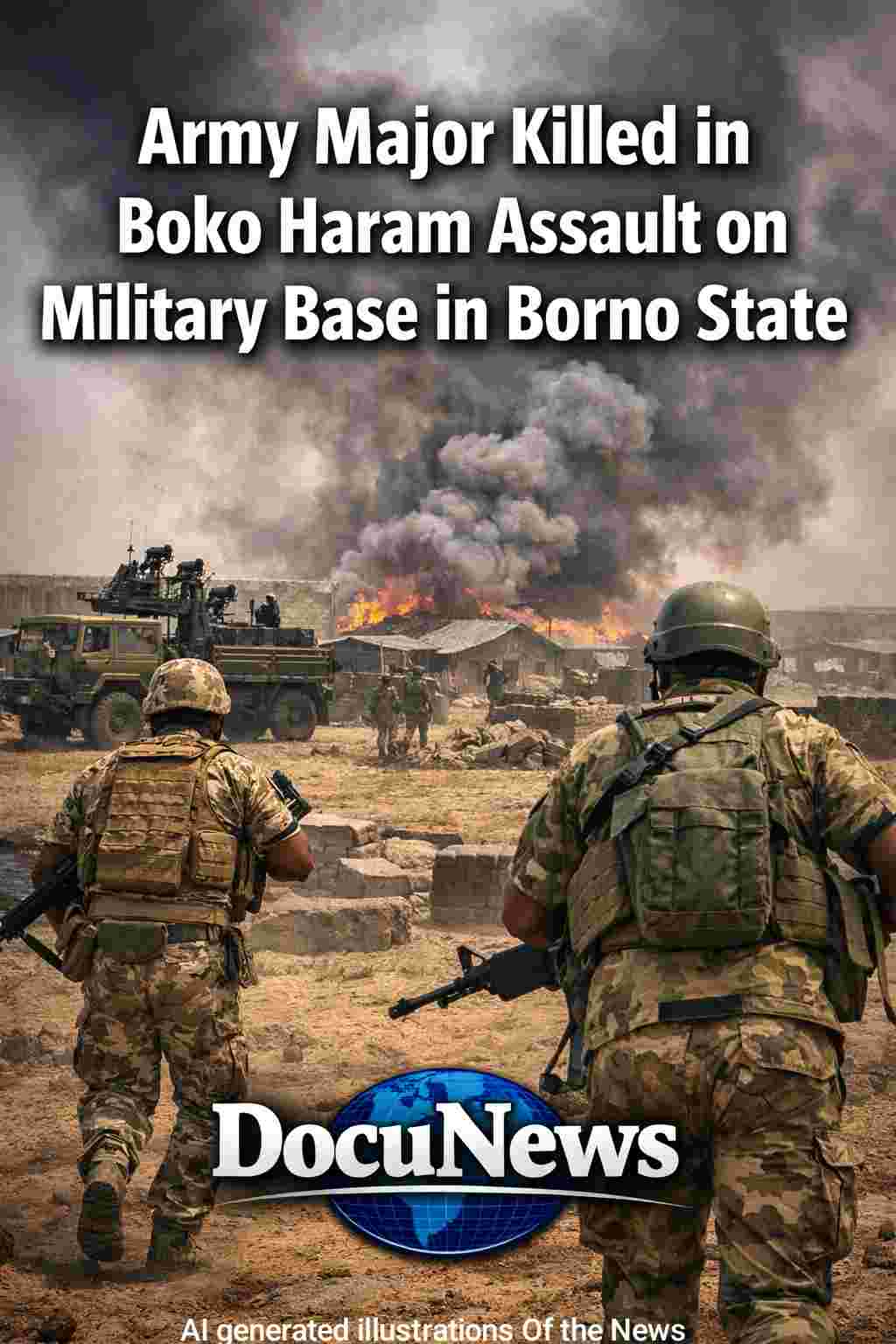
The security crisis in northeastern Nigeria continues to dominate national discussions, particularly after the tragic incident captured in the headline Army Major Killed as Boko Haram Attack Military Base in Borno State, which reflects the persistent threat posed by Boko Haram and the ongoing risks faced by military personnel stationed in volatile regions. This development has renewed attention on counterterrorism operations, defense preparedness, and the broader effort to restore stability across affected communities, while authorities intensify their response to safeguard lives and protect strategic installations.
According to Docunews Central, the attack reportedly occurred in Borno State, Nigeria, on March 1 2026, when armed insurgents launched a coordinated assault on a military base, engaging troops in a prolonged exchange of gunfire that resulted in the death of a senior officer and several soldiers, according to preliminary security accounts. The region has long experienced insurgent activity, and therefore incidents like this demonstrate the continuing challenges faced by defense forces operating in high-risk environments where terrain, logistics, and limited infrastructure often complicate rapid reinforcement and surveillance efforts.
Read also Passengers Kidnapped as Gunmen Storm Highway in Kogi Fresh Attack
Details of the Assault and Immediate Military Response
According to available information from security sources, the attackers approached the base using tactical formations designed to overwhelm defensive positions, and they deployed heavy weaponry in an attempt to breach perimeter defenses. Troops responded quickly, engaging the assailants in sustained combat while attempting to contain the threat and prevent further casualties. The confrontation reportedly lasted for several hours, during which reinforcements moved toward the location to support the stationed unit and reinforce vulnerable sections of the facility.
In addition to the ground engagement, military command structures activated emergency protocols that typically follow major security incidents, including communication with regional headquarters, coordination of backup forces, and immediate assessment of equipment and personnel losses. Furthermore, air support and intelligence units often participate in similar operations to track fleeing militants, secure escape routes, and prevent regrouping. As a result, authorities prioritized stabilization efforts while investigators began collecting evidence to understand the full scope of the attack.
You may have missed this Kogi Security Crisis: Bandits Kidnap Dozens in Kogi Near Government Technical College – Latest Updates
Strategic Importance of Military Bases in Borno State
Military installations in Borno State play a crucial role in counterinsurgency operations because they serve as operational hubs for surveillance, rapid deployment, logistics distribution, and intelligence gathering across the northeastern corridor. Consequently, any successful breach of such a facility represents both a tactical and symbolic challenge, since insurgent groups frequently attempt to undermine confidence in state security institutions. Therefore, protection of these bases remains a central focus within national defense planning and resource allocation strategies.
Moreover, the geographic characteristics of the region, including remote settlements, difficult terrain, and limited transportation networks, can create operational difficulties for security forces while also offering concealment advantages to armed groups. Hence, authorities continue to evaluate infrastructure improvements, technological upgrades, and enhanced perimeter defense systems to reduce vulnerability and strengthen early warning capabilities. In addition, collaboration with local communities remains essential for timely information sharing and threat detection.
Impact on Troop Morale and Operational Stability
The loss of an Army Major carries significant weight within military ranks because senior officers provide leadership, coordination, and strategic oversight during missions, and their presence often influences operational effectiveness and unit morale. Consequently, such incidents can temporarily affect the emotional and psychological state of deployed personnel, particularly in high-intensity conflict zones where prolonged engagement increases stress levels and operational fatigue.
However, military institutions typically emphasize resilience, discipline, and continuity of command, ensuring that succession protocols activate immediately to maintain operational stability. Therefore, leadership transitions occur seamlessly, and units continue executing assigned responsibilities without interruption. Additionally, structured training programs and support systems help personnel manage the aftermath of combat-related events while maintaining readiness for future assignments.
Broader Security Challenges in Northeastern Nigeria
Over the past decade, northeastern Nigeria has faced repeated insurgent attacks that have affected civilians, security personnel, educational institutions, markets, and transportation routes. Boko Haram and affiliated factions have conducted raids, ambushes, and coordinated strikes aimed at destabilizing communities and challenging government authority. As a result, counterterrorism strategies have evolved to incorporate joint task forces, intelligence collaboration, and expanded surveillance initiatives designed to limit operational freedom for militant networks.
Furthermore, ongoing efforts include community engagement programs intended to build trust between residents and security agencies, thereby encouraging timely reporting of suspicious activity. In many instances, local cooperation has contributed to successful interventions and prevention of planned attacks. Nevertheless, persistent security gaps highlight the importance of continued investment in equipment, training, and cross-agency coordination to address emerging threats effectively.
Government Reaction and Investigative Measures
Following the assault, authorities initiated a comprehensive investigation to determine the attackers’ routes, supply sources, and tactical planning methods, while forensic teams examined the scene for physical evidence that could assist intelligence operations. Additionally, security officials often review structural weaknesses and communication systems within affected bases to prevent recurrence, thereby strengthening defensive architecture and operational procedures across similar facilities.
Public communication also forms a critical component of the response process because transparent updates help counter misinformation and reduce public anxiety. Therefore, official statements typically confirm casualty figures, outline ongoing measures, and reassure citizens about reinforcement deployments. Meanwhile, defense agencies continue monitoring surrounding areas to prevent additional incursions and ensure that nearby communities remain protected during heightened alert periods.
Counterterrorism Strategy and International Cooperation
Nigeria’s counterterrorism strategy includes collaboration with regional and international partners who provide intelligence sharing, training support, and technical assistance aimed at strengthening defense capabilities. Consequently, partnerships with neighboring countries contribute to border monitoring and coordinated patrols designed to disrupt cross-border movement of armed groups. Such cooperation enhances situational awareness and expands operational coverage in remote areas.
In addition, technological advancements such as aerial reconnaissance systems, improved communication networks, and digital intelligence tools support real-time data analysis and operational planning. Therefore, authorities continue to integrate modern solutions into traditional defense frameworks, ensuring adaptability in response to evolving insurgent tactics. Sustained funding and strategic planning remain vital components of this long-term security effort.
Community Impact and Social Stability
Attacks on military installations indirectly affect surrounding communities because instability can disrupt trade, schooling, healthcare access, and transportation services, thereby slowing economic development and increasing displacement risks. Consequently, families in affected regions often experience uncertainty and temporary relocation during periods of heightened tension. Despite these challenges, residents frequently demonstrate resilience and cooperation with authorities to restore normalcy.
Community engagement initiatives encourage dialogue between local leaders and security representatives, creating channels for reporting concerns and strengthening mutual trust. Therefore, sustained interaction between citizens and defense institutions plays an essential role in achieving lasting peace and rebuilding confidence in public safety mechanisms.
DocuNews Central Opinion
DocuNews Central believes this incident highlights the urgent need for enhanced intelligence coordination, improved base protection systems, and sustained investment in counterterrorism infrastructure. While security personnel continue demonstrating commitment and professionalism under difficult conditions, policymakers must prioritize long-term strategies that combine technology, training, community cooperation, and transparent communication to reduce future risks and strengthen national stability.
For ongoing coverage and related national updates, visit DocuNews Central.
Conclusion
The headline Army Major Killed in Boko Haram Assault on Military Base in Borno State underscores the continuing security challenges confronting northeastern Nigeria, while also emphasizing the bravery and sacrifice of military personnel who operate in high-risk environments to protect citizens and defend national sovereignty. Although authorities have responded with reinforcement measures and investigative action, sustained collaboration, strategic planning, and community involvement remain essential for achieving long-term peace, preventing further attacks, and ensuring that stability returns to Borno State and surrounding regions.
For More Security Updates Visit Security updates Nigeria
