
Security updates Nigeria
Rising Insecurity in Kaduna as Kagarko Community Hit by Armed Attack

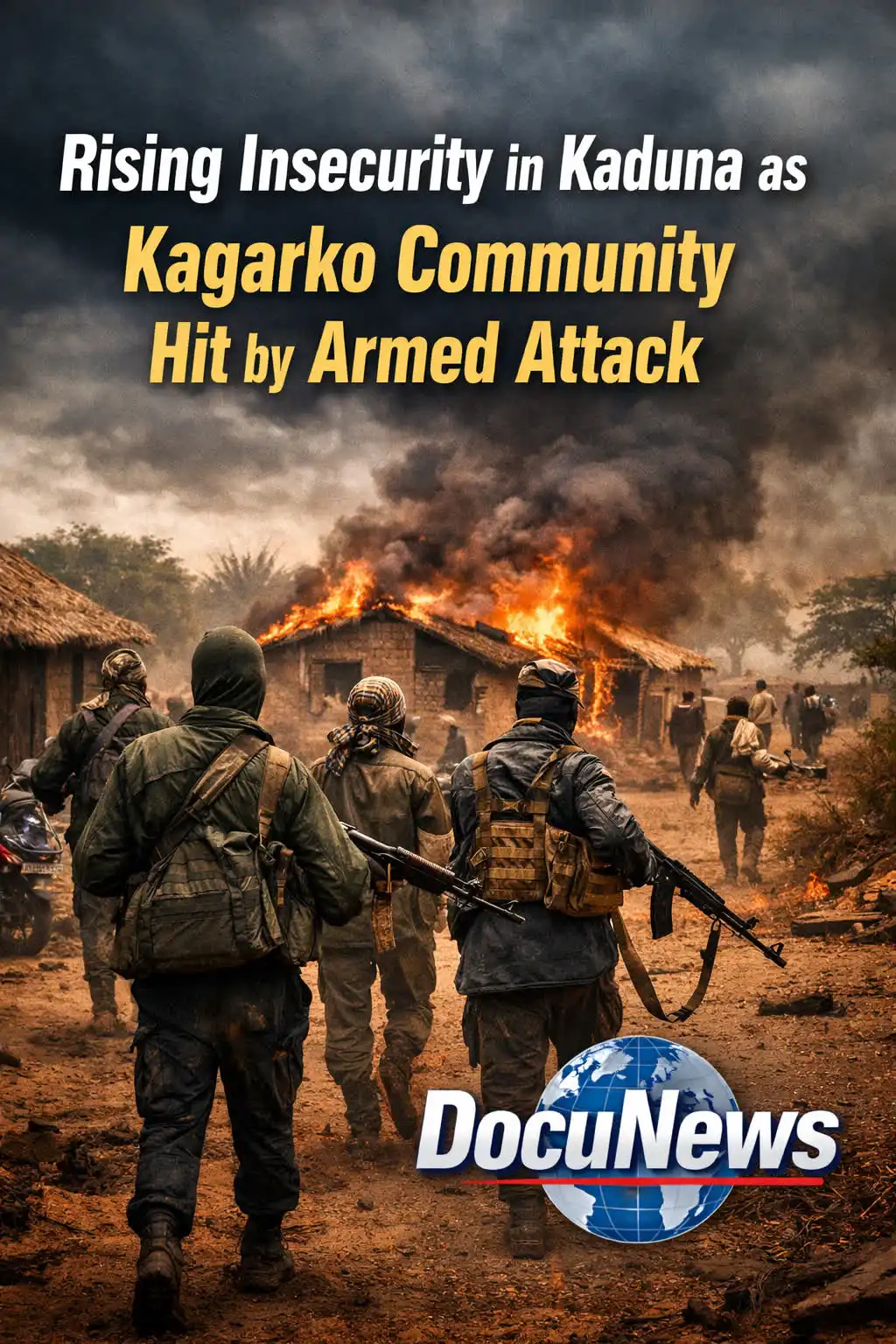
Rising Insecurity in Kaduna as Kagarko Community Hit by Armed Attack has again pushed Kaduna insecurity and the growing threat of banditry in Nigeria into national focus. The latest incident has sparked renewed concern among residents, security analysts, and policymakers. Moreover, the attack reinforces fears that rural communities in Kaduna State remain vulnerable to coordinated raids by armed groups.
According to DocuNews Central, the incident occurred in Kagarko Local Government Area of Kaduna State, northwestern Nigeria. And according to community sources who spoke with DocuNews Central, gunmen stormed the area late at night, fired shots, and abducted several residents before fleeing toward nearby forest routes. Security operatives later arrived, while families searched desperately for missing loved ones.
Eyewitnesses described confusion and panic. Parents shielded children. Youths ran into surrounding bushes. Shop owners locked their stores immediately. Consequently, normal activities stopped within minutes as fear spread across the community.
The Growing Pattern of Banditry in Kaduna
Over recent years, Kaduna security crisis has evolved into a persistent challenge. Initially, rural dwellers reported isolated attacks. However, armed groups gradually expanded operations. They now target highways, villages, schools, and farming settlements. Therefore, Kagarko’s experience mirrors a broader regional trend.
Security analysts argue that forest corridors across northwestern Nigeria provide escape routes for criminal networks. In addition, limited patrol coverage in remote districts creates operational gaps. As a result, attackers often strike at night when visibility drops and response times slow.
Furthermore, ransom-driven kidnappings continue to fuel repeated assaults. Armed groups demand large payments. This financial incentive encourages further raids. Consequently, affected communities struggle to recover after each incident.
For broader analysis on conflict patterns in Nigeria, visit the International Crisis Group.
Details of the Kagarko Armed Attack
Residents reported that the attackers arrived on motorcycles. They shot into the air to create panic. They forced entry into selected homes and gathered victims quickly. Afterwards, they retreated toward forested paths surrounding the district.
Community leaders confirmed multiple abductions, although exact figures remain unclear. Meanwhile, injured individuals receive treatment at nearby clinics. Security personnel from the Nigeria Police Force deployed additional officers to the area to reinforce patrols.
For official security updates, readers may consult the Nigeria Police Force official website.
Impact on Residents and Local Economy
The Kagarko armed attack disrupted daily life immediately. Farmers avoided distant farmlands. Traders reduced travel. Transport operators suspended night movements. Consequently, economic activities slowed across the community.
Kagarko relies heavily on agriculture. Therefore, repeated insecurity threatens food production. When farmers abandon their fields, harvest output declines. As a result, market prices often increase in surrounding towns.
Beyond economic impact, emotional trauma affects families deeply. Children struggle to sleep. Parents remain alert overnight. Teachers report lower attendance rates. Thus, insecurity damages both social stability and community confidence.
Human rights monitoring groups such as Amnesty International have repeatedly raised concerns about rural violence in Nigeria.
Also read Army Major Killed as Boko Haram attack Military Base in Borno State-Full Details
Government Response and Security Measures
Authorities increased patrol presence shortly after the attack. Security operatives launched search operations in surrounding forests. Officials also assured residents of continued protection.
However, many community members demand long-term strategies. They request intelligence-based policing. They seek improved surveillance systems. They also call for stronger collaboration between residents and security agencies.
For legislative insights on national security discussions, visit the National Assembly of Nigeria.
Why Kagarko Remains Vulnerable
Kagarko’s geographic location contributes to security challenges. The area connects to forest belts that stretch across multiple states. Armed groups exploit these routes for movement. Therefore, tracking operations becomes complex.
Additionally, limited infrastructure reduces emergency coordination speed. Although local vigilante groups try to assist, they lack advanced equipment. Consequently, attackers often outmaneuver community defenses.
National Implications of Kaduna Insecurity
The broader issue of banditry in Nigeria continues to shape national security debates. Repeated violence affects investor confidence. It also influences humanitarian planning across affected regions.
Experts argue that enforcement alone cannot solve the crisis. Economic reforms, youth employment programs, and rural development initiatives must accompany security measures. When opportunities increase, recruitment into criminal groups may decline.
For international policy perspectives, explore the Brookings Institution Africa Program.
Community Reactions and Unity Efforts
Religious leaders urged calm following the incident. Youth associations organized neighborhood watches. Women groups mobilized support for affected families. Moreover, civil society organizations demanded transparent investigations.
Residents emphasize resilience despite repeated challenges. They insist on partnership with authorities. They also stress the importance of accurate media coverage.
Independent reporting platforms such as DocuNews Central continue to highlight developments surrounding Kaduna insecurity and national security issues.
DocuNews Central Opinion
DocuNews Central believes the Rising Insecurity in Kaduna as Kagarko Community Hit by Armed Attack signals urgent need for strategic reform. Authorities must move beyond reactive responses. They should prioritize proactive intelligence systems and sustained rural presence.
Furthermore, economic empowerment remains essential. Poverty and unemployment create vulnerabilities. Therefore, coordinated development plans must complement enforcement operations.
Conclusion
The Kagarko armed attack underscores ongoing challenges within Kaduna State insecurity. Although security forces responded quickly, residents still demand lasting solutions. Consequently, policymakers must integrate intelligence, enforcement, and socio-economic reforms to restore lasting stability.
For more Security Updates in Nigeria visit Security updates Nigeria