
World
Iran Soldiers, IRGC Fail to Report for Duty as War Intensifies

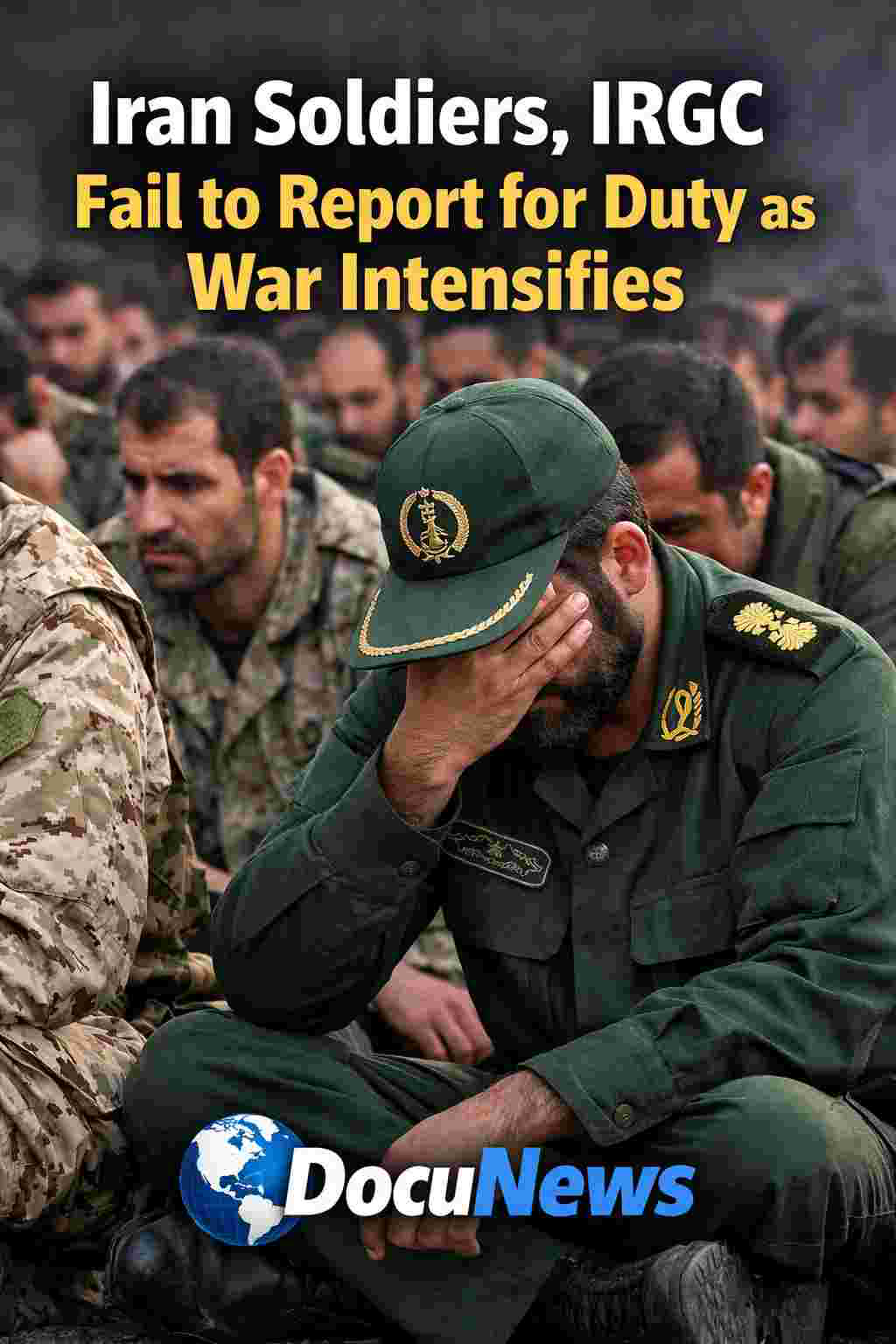
The ongoing conflict surrounding Iran has triggered growing concerns about the stability of the country’s armed forces and internal security structure. Reports from intelligence observers and international analysts now point to a troubling trend within Iran’s defense establishment. Iran Soldiers, IRGC Fail to Report for Duty as War Intensifies, this has started raising serious questions about military morale, discipline, and operational readiness during a period of escalating regional tensions.
According to DocuNews Central, on March 5, 2026, reports emerging from Tehran, Iran, indicated that a noticeable number of soldiers, police officers, and members of the powerful Islamic Revolutionary Guard Corps (IRGC) allegedly failed to report to their posts. According to information cited by The Times of Israel and The Economist, intelligence assessments suggest a pattern of absenteeism that could reflect deeper cracks inside Iran’s military system.
These developments have drawn global attention. Military analysts believe the situation could influence the balance of power in the wider Middle East. Furthermore, the apparent decline in troop participation may weaken Iran’s ability to sustain long-term military operations.
Reports of Absenteeism Within Iran’s Security Forces
Recent intelligence reports have highlighted a pattern that many experts consider unusual for a country known for strict military discipline. Soldiers, police officers, and members of the IRGC reportedly failed to appear at their assigned stations in several locations.
According to reporting by The Times of Israel, intelligence observers noticed that some Iranian personnel did not return to their bases after leave or failed to respond to urgent mobilization orders.
Additionally, analysts cited by The Economist indicated that the pattern has become more visible as the war escalates. The trend suggests a possible erosion of morale among personnel tasked with defending strategic assets and maintaining domestic security.
Military experts emphasize that absenteeism within a standing army often signals internal stress. Soldiers may fear escalation, extended deployments, or increasing casualties. In many cases, such patterns appear during prolonged conflicts that place heavy pressure on troops.
For Iran, the timing of these reports carries particular significance. The country faces mounting military and political pressure while attempting to maintain a strong defensive posture.
Also read Iran May Abandon Nuclear Programme if U.S. Makes New Deal
Role of the Islamic Revolutionary Guard Corps
The Islamic Revolutionary Guard Corps remains one of the most influential security institutions in Iran. Established after the 1979 Iranian Revolution, the organization operates alongside the regular army but holds unique responsibilities.
The IRGC controls significant military resources, including ballistic missile units, intelligence networks, and special operations forces. It also oversees the Basij militia, a volunteer paramilitary organization often used for internal security operations.
Because of its central role in defending the state, any sign of weakness within the IRGC raises immediate alarm among policymakers and observers. If members of this elite force fail to report for duty, the consequences could ripple across Iran’s entire defense structure.
Experts also note that the IRGC plays a major role in protecting key government institutions and strategic infrastructure. These include energy facilities, missile bases, and nuclear sites.
Therefore, reports of absenteeism within the organization have sparked intense debate about the readiness of Iran’s military apparatus.
Intelligence Assessments and External Observations
Several intelligence agencies closely monitor developments within Iran’s armed forces. According to reports cited by The Economist, Israeli intelligence sources have tracked patterns indicating that some Iranian personnel may be avoiding frontline assignments.
While intelligence reports often remain confidential, analysts occasionally share general findings with journalists and policy institutions. In this case, the data reportedly suggests that the pattern has grown more noticeable as regional tensions escalate.
Observers believe the situation may result from a combination of factors. These include prolonged military mobilization, growing fear of direct confrontation, and uncertainty about the outcome of ongoing hostilities.
Furthermore, some analysts suggest that the rapid pace of events has strained command structures within Iran’s defense system.
For additional global security analysis, readers can explore research published by the International Institute for Strategic Studies.
Pressure on Iran’s Military Structure
Iran maintains one of the largest military forces in the Middle East. The country’s defense system includes the regular army, the IRGC, naval units, air defense systems, and intelligence agencies.
However, sustained conflict often exposes weaknesses even in large military organizations. Continuous deployments increase fatigue among personnel. At the same time, supply chains and logistics networks face constant pressure.
Military scholars often point out that morale plays a decisive role in wartime performance. When soldiers feel uncertain about leadership decisions or mission outcomes, discipline can weaken.
For Iran, maintaining morale remains particularly important because the country relies heavily on both professional soldiers and ideological forces such as the Basij militia.
Therefore, reports that troops may be avoiding duty could indicate broader concerns within the ranks.
Impact of Escalating Regional Tensions
The Middle East currently faces one of its most volatile periods in recent years. Several incidents have increased the risk of direct military confrontation among regional powers.
Iran’s strategic position places it at the center of many of these developments. The country maintains alliances and proxy networks across multiple territories.
At the same time, Iran must defend its own borders, infrastructure, and political leadership.
These responsibilities require strong coordination between different branches of the military. When troops fail to report for duty, operational planning becomes more difficult.
Defense analysts believe that even small disruptions can affect mission readiness.
For example, air defense units require trained operators at all times. Similarly, missile systems depend on specialized teams who understand complex equipment.
If trained personnel remain absent, the effectiveness of these systems may decline.
Readers seeking deeper geopolitical context can review analysis from the Council on Foreign Relations.
Possible Causes Behind the Absenteeism
Several factors may explain why soldiers and security personnel fail to appear at their assigned posts during wartime.
First, extended military operations often create psychological pressure. Soldiers face constant stress, uncertainty, and the possibility of combat.
Second, logistical challenges sometimes disrupt communication between commanders and personnel. In rapidly changing conflict zones, orders may arrive late or fail to reach every unit.
Third, political uncertainty can also influence morale. When soldiers question the direction of a conflict, they may hesitate to participate fully.
In Iran’s case, the situation may involve a mixture of these elements.
Analysts caution against drawing premature conclusions. Nevertheless, the pattern has drawn enough attention to raise concerns among international observers.
Global Reactions to the Reports
News about possible absenteeism in Iran’s armed forces has attracted reactions from several governments and policy organizations.
Western security experts have emphasized the importance of verifying intelligence reports before making definitive judgments. At the same time, many analysts acknowledge that morale challenges occur in nearly every prolonged conflict.
Regional governments continue to monitor developments closely. The balance of military power in the Middle East depends heavily on Iran’s capabilities and readiness.
Therefore, any indication of instability within Iran’s military structure could influence strategic calculations across the region.
For ongoing global military developments, readers can also follow reports published by BBC News.
Strategic Implications for the Region
The Middle East remains one of the world’s most strategically sensitive regions. Major energy routes, political alliances, and security arrangements converge in this area.
Iran’s military capabilities play a central role in shaping regional dynamics. If troop participation declines, rival states may interpret the situation as a shift in the balance of power.
However, analysts caution that isolated incidents do not necessarily indicate systemic collapse. Large military organizations often experience fluctuations in morale during intense conflicts.
Nevertheless, the reports highlight the importance of cohesion within armed forces.
Maintaining discipline, communication, and trust between commanders and soldiers remains essential for effective military operations.
Internal Stability and Public Perception
Domestic perception also influences military stability. When citizens observe signs of uncertainty within security forces, public confidence may decline.
Iran’s leadership therefore faces a delicate challenge. Officials must reassure the population while also addressing any real issues within the armed forces.
Government statements typically emphasize unity and resilience during periods of conflict. These messages aim to reinforce national morale and demonstrate strength.
At the same time, leadership must ensure that troops receive adequate support, resources, and clear strategic direction.
Coverage by DocuNews Central
International media outlets continue to monitor the situation closely. Independent analysis plays an important role in helping readers understand complex geopolitical developments.
For additional coverage and investigative reporting, readers can visit DocuNews Central, where ongoing analysis explores global security trends, military developments, and international diplomacy.
DocuNews Central Opinion
From an analytical perspective, the reports about absenteeism in Iran’s military highlight the intense pressure that prolonged conflict places on any nation’s defense structure.
Armies operate effectively when discipline, morale, and strategic clarity remain strong. When any of these elements weakens, operational efficiency may decline.
However, it is also important to approach intelligence-based reports carefully. Information released during wartime often reflects partial data or strategic messaging.
Therefore, observers should continue monitoring developments while considering multiple sources of information.
The broader lesson for governments worldwide involves the importance of maintaining strong communication with military personnel. Transparent leadership and adequate support can help sustain morale even during challenging periods.
Conclusion
The reports that Iran soldiers and members of the Islamic Revolutionary Guard Corps may be failing to report for duty have drawn widespread attention from analysts and policymakers. As the regional conflict intensifies, questions about morale, discipline, and operational readiness have become increasingly important.
While intelligence assessments suggest emerging patterns, the full extent of the situation remains unclear. Large military organizations often face internal challenges during prolonged conflicts.
Nevertheless, the issue highlights the strategic significance of troop morale and cohesion. For Iran and the broader Middle East, these developments could shape military and political dynamics in the months ahead.
Observers across the world will continue to watch closely as new information emerges.
News Disclaimer
This article is published for informational and journalistic purposes only. The report relies on publicly available information, media sources, and international analysis. Some details may change as new developments emerge. Readers are encouraged to consult multiple credible sources for a broader understanding of the situation. DocuNews Central does not claim independent verification of classified intelligence referenced by external publications.
