
World
Iran May Abandon Nuclear Programme if U.S. Makes New Deal

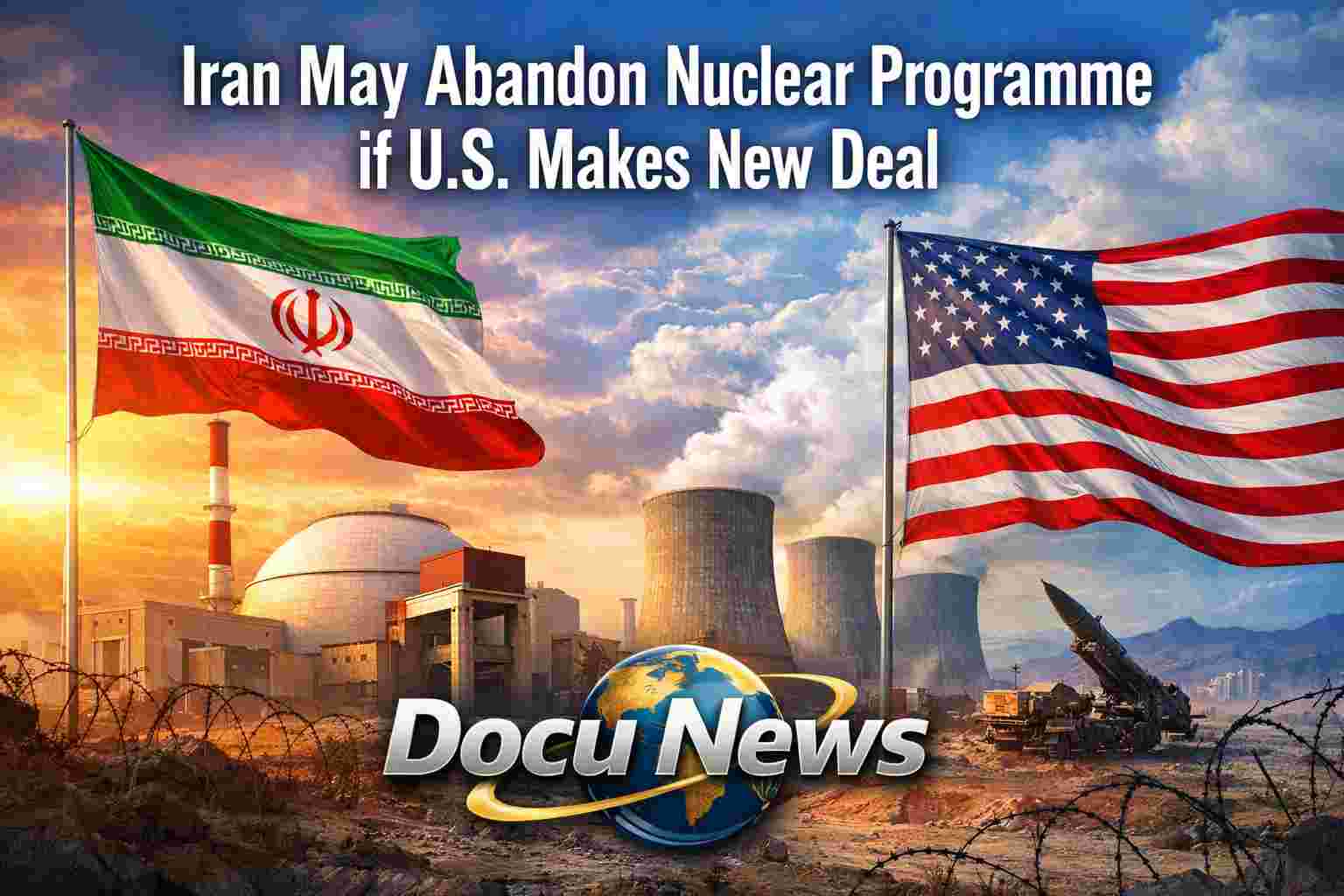
The future of the Iran nuclear programme has once again become a central issue in global diplomacy and Middle East security. For years, tensions between Iran and the United States have shaped discussions about nuclear weapons, sanctions, and regional stability. However, a new diplomatic signal from Tehran suggests a possible shift in strategy. Iranian officials recently indicated that Iran May Abandon Nuclear Programme if U.S. Makes New Deal, a statement that has captured the attention of policymakers, analysts, and global observers. The announcement suggests that Iran may reconsider its nuclear path if Washington presents a credible and satisfactory agreement that addresses Tehran’s key concerns and guarantees long-term economic relief.
According to DocuNews Central, on March 5, 2026 in Tehran. Iranian diplomatic officials speaking through international channels said the country could reconsider the continuation of its nuclear programme if the United States presents what they describe as a balanced and realistic proposal. The statement signals a potential diplomatic opening at a time when geopolitical tensions remain high across the Middle East. While negotiations have stalled in recent years, this new signal suggests that both sides may still find common ground through carefully structured diplomacy.
For more than two decades, the nuclear ambitions of Iran have remained one of the most debated security issues in international politics. The dispute involves nuclear technology, regional influence, economic sanctions, and global non-proliferation commitments. Many governments argue that Iran’s enrichment activities could eventually lead to weapons capability. Iran continues to insist that its nuclear activities serve peaceful purposes such as energy production and scientific research. Consequently, diplomatic negotiations have attempted to bridge these competing positions.
Also read Iranian Warship Sunk by U.S. Submarine, 140 Personnel Missing
Background of the Iran Nuclear Programme
Iran’s nuclear programme did not emerge suddenly. Instead, the country began developing nuclear technology during the 1950s under the global “Atoms for Peace” initiative, which encouraged civilian nuclear energy development. At that time, Western governments actually supported Iran’s early nuclear projects. However, the political landscape changed dramatically after the 1979 Iranian Revolution. Diplomatic relations between Iran and the United States collapsed, and nuclear cooperation ended.
Despite the breakdown in relations, Iran continued expanding its nuclear research. Over time, the country constructed several nuclear facilities designed for uranium enrichment, research, and heavy water production. Among the most widely known sites are the Natanz enrichment facility, the Fordow underground enrichment complex, and the Arak heavy water reactor. These locations later became the focus of international monitoring and political pressure.
Global institutions began investigating Iran’s nuclear activities as concerns grew about possible weapons development. The International Atomic Energy Agency plays a critical role in nuclear monitoring and verification around the world. Its inspectors review nuclear facilities, track nuclear materials, and verify compliance with international agreements. More information about international nuclear safeguards can be found through the official website of the International Atomic Energy Agency: https://www.iaea.org.
The 2015 Nuclear Deal and Its Collapse
The most significant diplomatic effort to resolve the nuclear dispute occurred in 2015. After years of negotiation, Iran and six major world powers reached the Joint Comprehensive Plan of Action. This agreement imposed strict limitations on uranium enrichment, nuclear fuel stockpiles, and advanced centrifuge development. In return, international sanctions targeting Iran’s economy were suspended, allowing the country to re-enter global markets.
Initially, the agreement appeared to reduce tensions. International inspectors verified that Iran followed many of the imposed restrictions. However, political disagreements continued to develop. Critics argued that the agreement did not permanently eliminate the possibility of nuclear weapons development. Supporters countered that the deal represented the best available diplomatic solution.
The situation changed dramatically in 2018 when the United States withdrew from the agreement and reinstated sweeping economic sanctions. Following that decision, Iran gradually reduced its compliance with the nuclear restrictions. Uranium enrichment levels increased beyond earlier limits, and diplomatic tensions returned to the global stage.
Renewed Diplomatic Signals
The latest statement from Iranian officials therefore carries significant diplomatic implications. When Tehran suggests it may abandon its nuclear programme under a new agreement, analysts view the statement as an attempt to reopen negotiations. At the same time, Iranian leaders emphasize that any deal must address the country’s economic and security concerns.
Economic sanctions remain one of the most powerful sources of pressure on Iran. Restrictions have limited access to global banking systems, international trade networks, and energy markets. Oil exports have fluctuated under these restrictions, and foreign investment has remained limited. Consequently, economic reform and sanctions relief remain central priorities for Iranian policymakers.
Because of these economic pressures, diplomatic engagement has gained renewed attention within international policy circles. Governments across Europe and Asia have expressed cautious optimism that new negotiations could eventually reduce tensions and stabilize regional politics.
Conditions for Ending the Nuclear Programme
Iranian officials have outlined several broad conditions that must be addressed before Tehran would consider abandoning its nuclear programme. First, the United States would need to remove major economic sanctions that restrict oil exports, banking transactions, and trade. Iranian leaders argue that economic pressure has deeply affected the country’s financial stability and public welfare.
Second, Iran seeks assurances that future agreements will remain stable over time. The collapse of the previous nuclear deal created significant distrust. Tehran therefore wants stronger guarantees that future U.S. administrations will honor negotiated agreements and avoid sudden policy reversals.
Third, Iran insists on maintaining its right to develop peaceful nuclear technology. Civilian nuclear power can generate electricity and support medical research programs. Iranian officials argue that international law allows countries to pursue peaceful nuclear energy while complying with monitoring requirements.
The U.S. Position on Nuclear Negotiations
Washington maintains that transparency and strict verification remain essential components of any new agreement. U.S. officials insist that international inspectors must have full access to nuclear facilities to verify compliance. In addition, policymakers argue that Iran must demonstrate a clear commitment to non-proliferation principles before sanctions relief becomes possible.
Despite political disagreements, American leaders continue to emphasize diplomacy as the preferred strategy. Military confrontation remains a last resort in official policy discussions. Government statements frequently highlight the importance of preventing nuclear weapons proliferation while maintaining international stability.
Official updates on United States foreign policy and diplomatic initiatives can be found through the U.S. Department of State website: https://www.state.gov.
Regional Security Concerns
Middle Eastern governments closely monitor the nuclear negotiations. Several regional powers believe that a nuclear-armed Iran could dramatically alter the strategic balance in the region. As a result, regional diplomacy often focuses on preventing nuclear proliferation while maintaining stability.
Security analysts frequently point out that nuclear tensions could trigger broader geopolitical consequences. If one country develops nuclear weapons capability, neighboring states may pursue similar programs for defense purposes. This chain reaction could significantly increase security risks across the Middle East.
Consequently, diplomatic negotiations involving Iran attract attention from governments around the world. The outcome of these talks could influence regional alliances, economic cooperation, and global energy markets.
Economic Implications of a New Deal
A successful nuclear agreement could transform Iran’s economic outlook. Sanctions relief would likely allow Iran to increase oil exports and reconnect with international financial systems. The country possesses vast oil and natural gas reserves, making it a major potential energy supplier.
Energy analysts note that global oil markets respond quickly to geopolitical developments involving Iran. If sanctions were lifted, global supply could increase. That increase might influence international energy prices and reshape trade relationships between major energy consumers and producers.
International institutions such as the United Nations often encourage diplomatic solutions to global disputes. The organization supports peaceful negotiations aimed at reducing conflict and strengthening international cooperation. Additional information about global diplomacy initiatives can be found at https://www.un.org.
Challenges Facing Negotiators
Although diplomatic signals appear encouraging, several challenges remain. Political divisions inside both countries complicate negotiations. Some leaders argue that previous agreements failed to guarantee long-term security. Others believe diplomacy still offers the most effective path toward stability.
Domestic politics also influence negotiations. Political groups within Iran and the United States often hold different views regarding international agreements. These differences shape national debates and affect the speed of diplomatic progress.
In addition, regional conflicts and military tensions occasionally overshadow diplomatic efforts. Negotiators must therefore manage multiple complex issues at the same time while attempting to rebuild trust between longtime rivals.
DocuNews Central Opinion
From the perspective of DocuNews Central, the statement that Iran may abandon its nuclear programme if the United States makes a new deal represents an important diplomatic signal. The possibility of renewed negotiations demonstrates that dialogue remains possible even after years of tension and disagreement.
Diplomacy often moves slowly. However, history shows that persistent negotiation can produce breakthroughs in difficult situations. If both sides approach discussions with flexibility and realistic expectations, a balanced agreement could eventually emerge.
Readers interested in continued geopolitical coverage and international policy analysis can follow updates through DocuNews Central, where global developments are examined in detail with context and expert insight.
Conclusion
The statement that Iran may abandon its nuclear programme if the United States presents a new agreement represents a potential turning point in one of the world’s most complex diplomatic disputes. For decades, nuclear negotiations between Tehran and Washington have influenced international security, economic policy, and regional alliances.
While many obstacles remain, the willingness to discuss new diplomatic arrangements suggests that both sides may still seek a peaceful resolution. Achieving such an agreement would require patience, transparency, and cooperation among multiple global powers. Nevertheless, the possibility of renewed negotiations offers cautious optimism that diplomacy can still shape the future of nuclear security.
News Disclaimer
This article is published for informational and journalistic purposes only. Global political developments evolve quickly, and negotiations may change as new information emerges. The analysis presented in this report reflects publicly available information at the time of writing. Readers are encouraged to consult official government sources and international organizations for the most current updates regarding the Iran nuclear negotiations and related geopolitical developments.
For all updates visit Israeli-Iran-U.S War
