
Security
Nigerian Army Storms Kwara Bandit Camps, Rescues Kidnap Victims

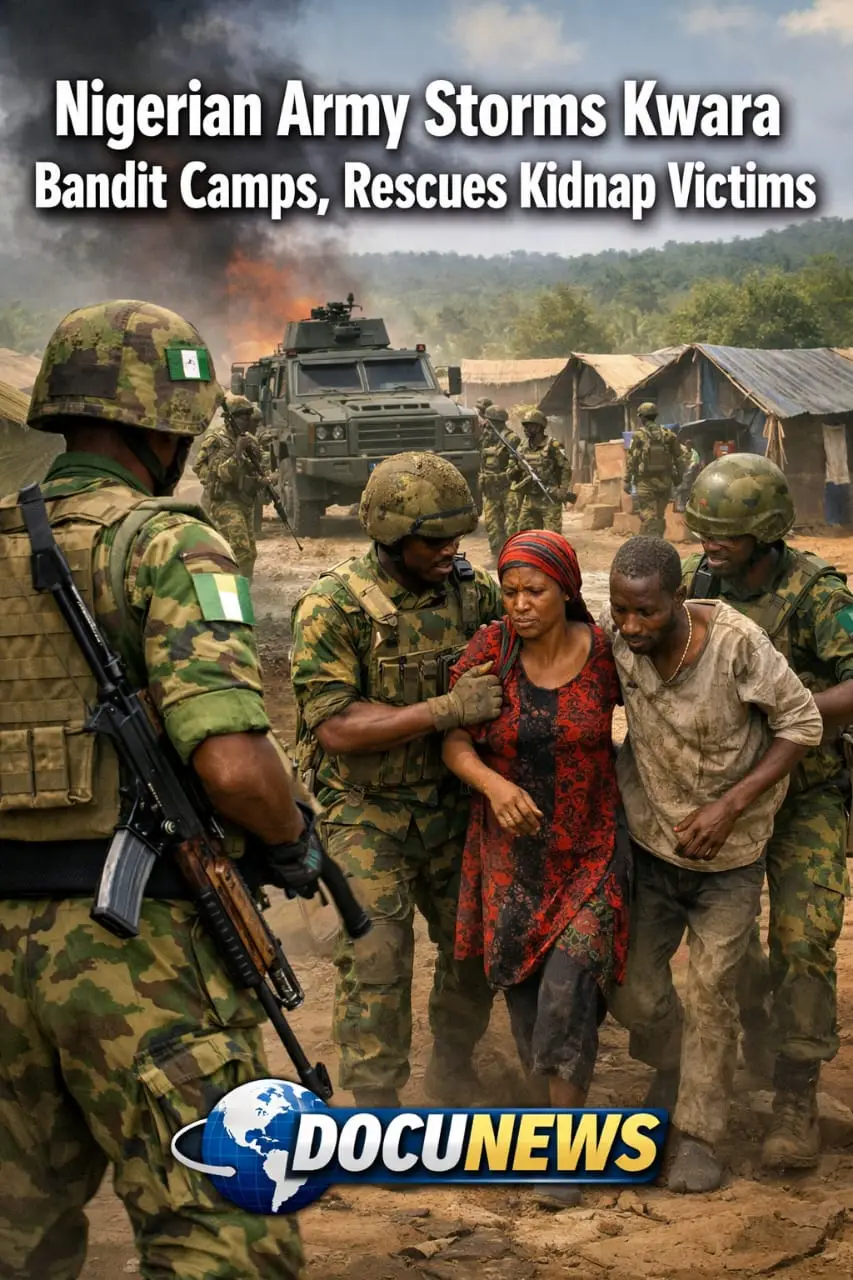
Photo Credit Visit Disclaimers: Use Of AI Images In Our Newsletters
Nigerian Army Storms Kwara Bandit Camps, Rescues Kidnap Victims
In a bold and precise operation, the Nigerian Army stormed multiple bandit camps in Kwara State. Dozens of kidnapped victims were rescued from armed criminals. The troops dismantled fortified hideouts and secured the region. This marked a decisive step in restoring peace to North Central Nigeria.
Ilorin, Kwara State, Nigeria | January 31, 2026 — Soldiers operating under Operation Igbo Danu moved into remote forest enclaves. Bandits had terrorized communities, abducted civilians, and disrupted daily life. The operation showed the Army’s determination to restore security swiftly.
The mission relied heavily on intelligence reports from local residents. Troops identified key hideouts and planned their approach carefully. They moved at dawn, using both ground forces and aerial support. Quick action prevented bandits from harming civilians further.
Read Also Zamfara Attack Latest Updates on Killings and government Response
Swift Military Action Yields Results
The Nigerian Army achieved immediate success. Illegal hideouts were located and dismantled. Victims, including women and children, were rescued safely. Medical teams and humanitarian partners attended to survivors without delay.
Army units also secured evidence for further investigations. Criminal networks that sustained the bandits were disrupted. Local communities expressed relief, showing confidence in national security forces. The operation proved the effectiveness of coordinated military strategies.
Troops collected intelligence from the camps. This information could lead to arrests of key suspects. Citizens in surrounding areas began reporting suspicious activities to authorities. The partnership between civilians and the Army became stronger during the mission.
Details of the Kwara Raids
Soldiers moved swiftly after confirming bandit camp locations. Forest paths were treacherous, but troops adapted. Resistance pockets were met with measured force. Civilians were guided to safe zones as each camp was cleared.
Temporary safe points were established for rescued victims. Medical personnel assessed health conditions. Psychosocial support teams attended to trauma. Food, water, and shelter were provided immediately. Survivors were able to regain strength before returning home.
The military also destroyed crude checkpoints and camp structures. Engineers dismantled barriers that bandits used to control the area. These actions made it harder for criminals to regroup or launch future attacks.
Immediate Impact on Communities
Local residents felt relief after years of fear. Markets reopened quickly. Farming activities resumed, signaling restored normalcy. Families who had lost members felt hope returning. Communities began rebuilding social connections disrupted by banditry.
Officials encouraged families to report missing persons. Liaison teams were deployed to assist in reunifications. Humanitarian groups provided counseling and support. Gradually, trust between civilians and security forces strengthened.
Villagers reported that the presence of the Army reduced intimidation. Community leaders highlighted that children could now return to school safely. Economic activities, including local trade, began to recover. Residents felt safer traveling within the region.
You may have missed this Military Patrol Hit Hard as ISWAP Captures 13 Soldiers in Borno
Strategies Behind the Operation
Success came from precise planning and real-time intelligence. Local informants shared information about bandit movements. Surveillance teams confirmed positions and alerted troops. This preparation minimized casualties and maximized efficiency.
Troops used advanced mapping tools and secure radios. Vehicles and foot patrols allowed flexible navigation through dense forests. Commanders coordinated closely with headquarters, refining tactics at every stage. The operation set a model for future security efforts.
Leaders emphasized collaboration with civilians. Reports from local communities provided critical intelligence. This cooperative strategy strengthened the Army’s response and limited bandits’ ability to evade capture.
Experiences of Rescued Victims
Survivors described harrowing conditions. Many were confined in makeshift cells, guarded by armed men. Food and water were scarce. Movement was heavily restricted. Psychological stress and fear were constant companions.
One survivor said, “We prayed for help every night. When the soldiers came, we knew our prayers were answered.” Another added, “Our children are safe now. We can start our lives again.”
Medical teams checked survivors for injuries, dehydration, and trauma. Counselors provided immediate emotional support. Victims received food, water, and shelter. Local NGOs helped facilitate reintegration into society. The comprehensive approach ensured quick stabilization.
Government Response and Policy Steps
Senior government officials praised the Army’s performance. They reiterated commitment to eliminating criminal networks nationwide. Authorities emphasized that military action alone was insufficient. Cooperation with local leaders, health professionals, and communities was critical.
Rehabilitation programs were planned for rescued victims. Education, job training, and social services were provided to aid reintegration. Government agencies coordinated to ensure consistent support and reduce future vulnerabilities.
Policymakers also stressed continued pressure on armed groups. Community policing, economic investment, and social engagement were highlighted as long-term strategies. National authorities committed to addressing both security and socio-economic factors driving banditry.
Neighboring States and Regional Implications
States surrounding Kwara observed the operation closely. Similar threats affected these regions. Officials pledged to strengthen surveillance, reporting, and community vigilance. They recognized the importance of collaboration across borders to prevent bandits from relocating.
Regional coordination aimed to contain criminal movement. Authorities shared intelligence and best practices. Communities across states became more proactive in alerting security forces. This approach expanded the impact of Operation Igbo Danu beyond Kwara.
Experts noted that successful raids encouraged civic participation. Residents were motivated to assist authorities in identifying threats. Information flow between civilians and military units increased, enhancing security in real time.
Analysis: Long-Term Significance
The operation highlighted effective counter-banditry strategies. Military precision, community cooperation, and intelligence sharing were critical. Focused action disrupted entrenched criminal networks. Local and regional stability improved as a result.
Security analysts emphasized that repeated operations would deter bandits from establishing safe havens. The offensive demonstrated that disciplined and coordinated responses reduce the operational capacity of armed groups. Future missions can build on these lessons.
Furthermore, the initiative strengthened the sense of public security. Citizens now perceive government and military efforts as reliable. Restored trust between communities and security forces is essential for sustainable peace.
People are reacting to this Seven Soldiers Including Lieutenant Colonel, Killed as Boko Haram Attacks Convoy
Rebuilding Trust and Ensuring Stability
Authorities prioritized long-term stability. Rebuilding trust between security forces and communities was emphasized. Job creation, education, and consistent service provision formed part of the recovery plan. Social engagement initiatives addressed vulnerabilities that bandits previously exploited.
Local leaders collaborated with government representatives to chart sustainable security paths. Residents were involved in decisions about protection, infrastructure, and social programs. Participation encouraged accountability and increased community resilience.
Families of rescued victims received support for schooling, employment, and emotional recovery. Social networks strengthened through coordinated local and government efforts. Communities were able to resume normal activities more confidently and safely.
Lessons Learned from Operation Igbo Danu
The Kwara raids provided insights for future missions. Intelligence accuracy, rapid troop mobilization, and community cooperation were critical factors. Clear communication reduced errors and enhanced operational effectiveness. The Army now has a blueprint for similar operations in other states.
Coordination between civilian and military actors demonstrated that security is a shared responsibility. Engagement with local communities before and after operations ensured sustainable impact. Feedback loops from civilians allowed forces to adapt quickly to evolving threats.
Finally, documenting strategies, successes, and challenges during this operation informs future planning. Lessons from Kwara can improve tactics, training, and resource allocation for broader national security objectives.
Community Resilience and Economic Recovery
Communities quickly resumed economic activity. Markets, farms, and trade routes reopened. Citizens felt encouraged to invest in local businesses. Reduced criminal influence allowed citizens to reclaim public spaces safely.
Support programs for affected households ensured families could rebuild. Education initiatives helped children catch up on lost learning. Local councils and NGOs collaborated to provide essential resources and counseling.
Public confidence in law enforcement strengthened. Citizens became more willing to report criminal activity. Community resilience increased, creating a cycle of security, trust, and economic growth.
Moving Forward: Sustaining Peace in Kwara
Long-term peace requires continuous engagement. Authorities must maintain pressure on criminal networks while promoting social and economic development. Job creation, vocational training, and accessible services are central to this strategy.
Ongoing surveillance and intelligence gathering remain critical. Community awareness campaigns encourage residents to report suspicious activity. The combination of proactive military action and civil engagement reduces vulnerability to banditry.
Authorities plan to monitor progress and adjust strategies. Feedback from local communities guides policy and operations. Coordinated efforts aim to secure the region and prevent future crises.
Conclusion: A Hopeful Chapter for Kwara
The Nigerian Army’s operation demonstrates commitment to citizen protection. Bandit strongholds were dismantled, and victims rescued. The region now enjoys a period of relative stability. Communities are rebuilding trust and economic activity is returning.
Success in Kwara serves as a model for similar interventions across Nigeria. Authorities aim to sustain peace and prevent the resurgence of criminal networks. Citizens, empowered by support and security, can now envision a safer future.
For ongoing coverage of security operations and related developments, visit DocuNews Central.
