
Security updates Nigeria
Nigeria Strengthens Fight Against Terror with 45 Drones

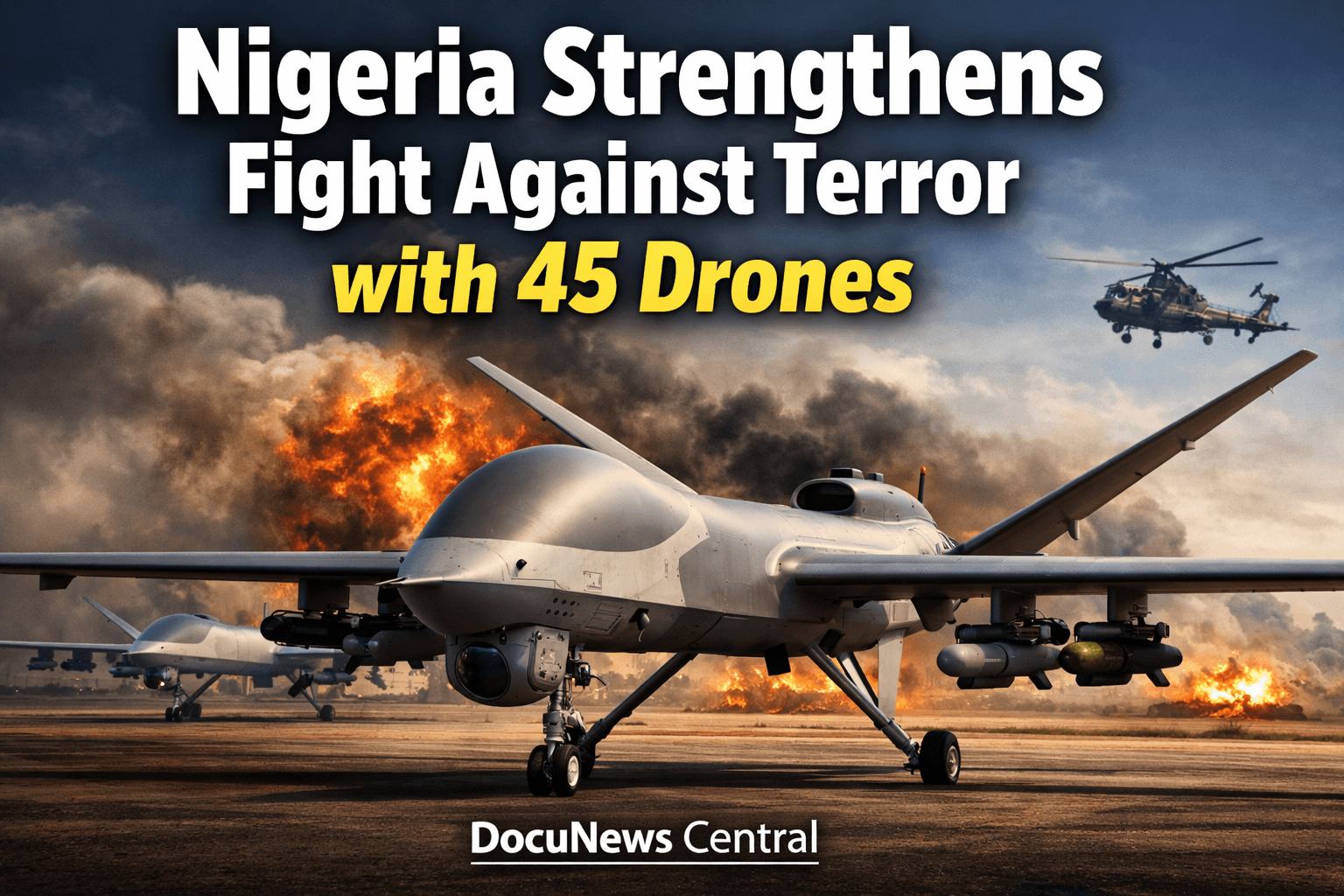
The Nigerian military is expanding its aerial warfare capacity with the planned acquisition of 45 Wing Loong combat drones from China, a move aimed at improving surveillance, intelligence gathering, and precision strikes against terrorism and banditry across the country.
Nigeria continues to reshape its security architecture as the Nigerian Armed Forces advance plans to acquire 45 advanced Wing Loong combat drones from China. The decision reflects a renewed determination to confront terrorism, banditry, and organized violence that have disrupted communities across several regions. Over recent years, threats have evolved steadily, and security responses have followed a similar path, increasingly guided by intelligence, technology, and accuracy.
For more than a decade, Nigeria has faced layered security pressures stretching from the northeast to the northwest and other vulnerable zones. Armed groups have taken advantage of difficult terrain, surveillance gaps, and rapid mobility. Consequently, defense planners have focused attention on systems that improve visibility, response speed, and operational coordination. The drone acquisition fits directly into this strategic recalibration. Read also Security Operatives Repel Bandit Attack in Benue Community
Why Nigeria Strengthens Fight Against Terror with Drone Power
Unmanned aerial vehicles now play a central role in modern counterterrorism operations. Unlike conventional aircraft, combat drones remain airborne for extended periods, monitor movements discreetly, and transmit real-time intelligence to command centers. As Nigeria strengthens fight against terror, these advantages offer a practical solution to complex security environments.
Wing Loong combat drones provide long-range surveillance and precision strike capability, allowing security forces to track hostile movements without immediate ground deployment. This approach reduces ambush risks and improves planning efficiency. In addition, commanders can verify targets before authorizing engagement, which limits unintended consequences.
Across global conflict zones, unmanned systems have reshaped how military forces operate. Nigeria’s decision aligns with lessons drawn from international counterterror campaigns, where drone technology strengthened both intelligence collection and tactical execution. You may like this one too Amotekun Intercepts 39 Suspects Escaping Sokoto After US Strikes
How Nigeria Strengthens Fight Against Terror Through Precision Operations
Precision remains a defining feature of effective counterterrorism operations. Broad force application often worsens insecurity by damaging community trust. In contrast, targeted engagement weakens hostile networks while preserving civilian safety. As Nigeria strengthens fight against terror, drone-enabled precision supports this balanced approach.
Wing Loong platforms carry advanced sensors that operate during nighttime missions and challenging weather conditions. Armed groups often rely on darkness and rough terrain to avoid detection. With continuous aerial monitoring, such tactics lose effectiveness. Precision-guided munitions further ensure that confirmed threats receive focused responses.
Military analysts note that improved precision enhances morale among both troops and civilians. Soldiers operate with clearer intelligence, while residents experience fewer disruptions. Over time, this balance contributes to sustained operational effectiveness. You may also like this headline too US Airstrikes in Nigeria: Gumi Calls It Sovereignty Breach
Operational Flexibility
Nigeria’s security challenges differ across regions. The northeast continues to confront insurgent activity, while the northwest struggles with banditry in Nigeria, mass kidnappings, and rural violence. Other areas face sporadic militant threats tied to local grievances. Each situation demands a tailored response.
The deployment of 45 combat drones introduces operational flexibility. Assets can be reassigned rapidly based on threat assessments. When intelligence signals escalation, drones deploy without the logistical delays associated with large troop movements. As Nigeria strengthens fight against terror, this flexibility supports proactive engagement.
Security experts also argue that sustained aerial oversight restricts enemy movement. Once armed groups recognize constant monitoring, planning attacks becomes more difficult, reinforcing deterrence.
Improved Intelligence
Modern security operations rely heavily on intelligence fusion, where information from multiple sources combines into a unified operational picture. Drone imagery complements human intelligence, intercepted communications, and field reports.
As Nigeria strengthens fight against terror, real-time drone feeds allow commanders to validate intelligence quickly. When reports align, operations proceed with confidence. When inconsistencies appear, further verification prevents costly errors.
Shared intelligence also strengthens coordination among security agencies. Joint planning reduces duplication and improves mission outcomes. International defense platforms such as Defense News and Jane’s Defence frequently highlight how intelligence fusion enhances counterterrorism operations.
Training Focus as
Technology delivers results only when supported by skilled personnel. Recognizing this reality, Nigeria has invested in training programs for drone operators, analysts, and technical teams. As Nigeria strengthens fight against terror, human expertise remains central.
Operators receive instruction in flight control, sensor interpretation, and engagement protocols. Analysts focus on identifying patterns that reveal supply routes and operational networks. Maintenance crews ensure system reliability through routine servicing and technical support.
Economic Stability as Nigeria Strengthens Fight Against Terror
Security stability directly influences economic activity. In regions affected by violence, farming declines, schools close, and businesses withdraw. Restoring safety creates conditions for recovery. As Nigeria strengthens fight against terror, improved surveillance contributes indirectly to economic resilience.
Drone operations also reduce long-term costs associated with extensive ground patrols. While acquisition expenses appear significant, efficiency gains offset spending over time. Communities benefit from reduced disruptions and renewed confidence. Many people also reacting to this headline US Plans Fresh Airstrikes on Terrorist Hideouts in Nigeria- Riley
Regional Cooperation as Nigeria Strengthens Fight Against Terror
Nigeria’s security challenges extend beyond its borders. Armed groups often operate across neighboring countries, exploiting porous boundaries. Regional cooperation therefore remains essential. As Nigeria strengthens fight against terror, drone surveillance supports shared security objectives.
Aerial monitoring improves tracking of cross-border movements, particularly in remote zones. Information sharing enhances situational awareness and limits safe havens for criminal networks.
Public Trust While Nigeria Strengthens Fight Against Terror
Public confidence influences security outcomes significantly. Communities that trust security agencies share intelligence willingly. As Nigeria strengthens fight against terror, transparency and accountability remain priorities.
Authorities have reiterated commitments to lawful engagement and civilian protection. Clear operational guidelines govern drone usage, ensuring compliance with national and international standards.
Future Outlook as Nigeria Strengthens Fight Against Terror
The acquisition of Wing Loong combat drones signals sustained commitment rather than short-term reaction. Military planners view unmanned systems as integral to future counterterrorism operations. As Nigeria strengthens fight against terror, lessons from current deployments will shape long-term doctrine.
Conclusion: Nigeria Strengthens Fight Against Terror with Strategic Resolve
Nigeria’s decision to acquire 45 Wing Loong combat drones underscores a strategic shift toward intelligence-led security operations. Through enhanced surveillance, precision engagement, and operational flexibility, the Nigerian military strengthens its ability to protect citizens.
As Nigeria strengthens fight against terror, continued investment in training, accountability, and regional cooperation will shape lasting outcomes. While challenges remain, the integration of advanced drone technology marks a significant step in the country’s evolving security strategy.