
Security updates Nigeria
Nigerian Air Power Strikes Again as Terrorists Targeted in Borno

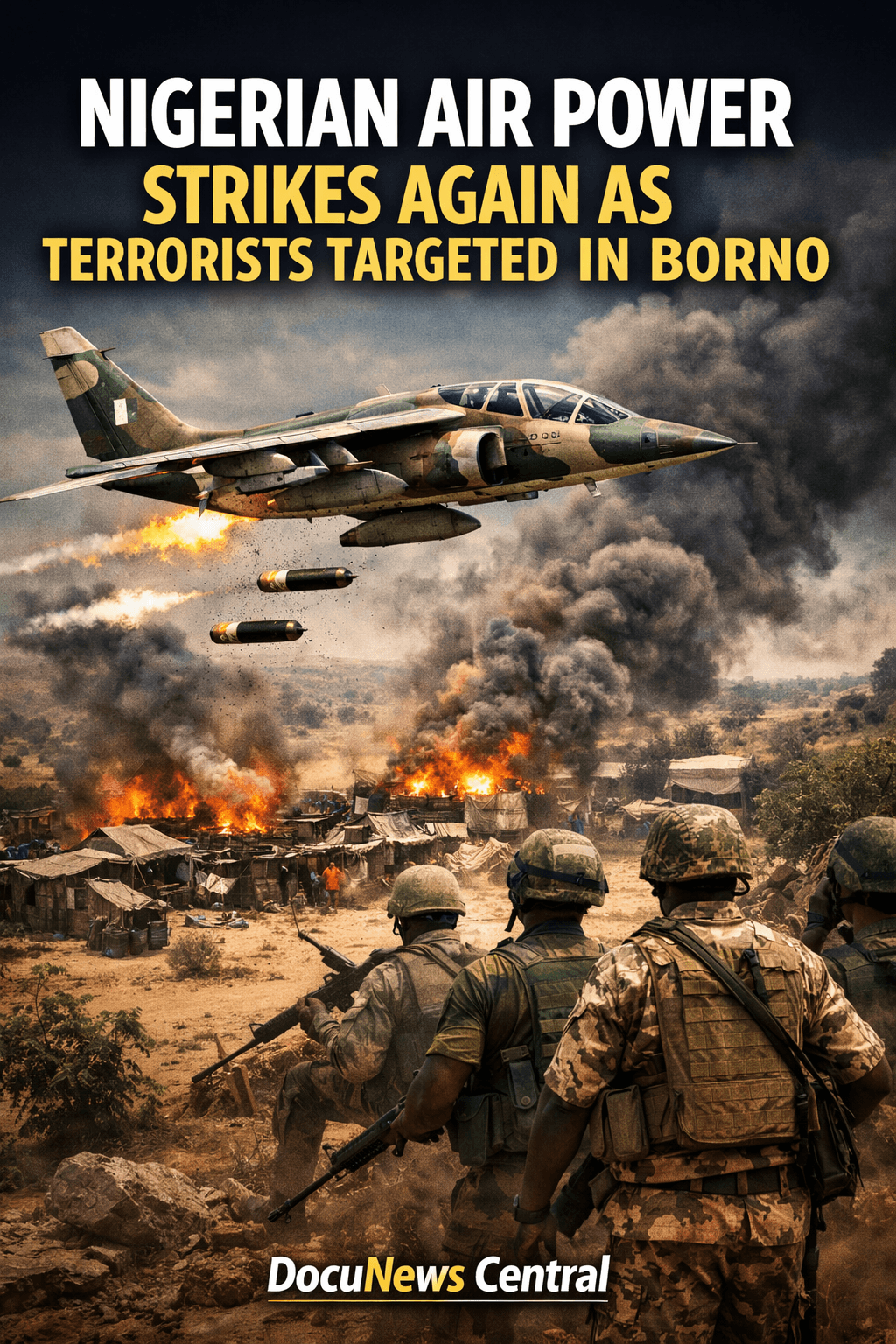
Maiduguri, Borno State — Thursday, January 8, 2026 (6:40 AM)
Nigeria’s counterterrorism campaign entered a decisive phase on Thursdays morning as military aircraft carried out a fresh air operation against terrorist elements operating within remote parts of Borno State. The strike, confirmed by security sources, took place in the early hours of the day and targeted locations long associated with armed groups threatening civilians and national stability.
The renewed aerial action followed weeks of intelligence gathering, surveillance flights, and ground coordination involving multiple security units. According to officials familiar with the operation, the mission aimed to disrupt movement routes, logistics hubs, and meeting points used by insurgent factions hiding in difficult terrain.
Although operational details remain restricted for security reasons, the latest development reflects an ongoing effort by the Nigerian military to maintain pressure on hostile groups while preventing renewed attacks on local communities.
Strategic Locations Targeted During Early Morning Operation
The air operation focused on isolated zones within northern and central Borno State, including forested corridors and sparsely populated areas known for militant activity. Military planners selected these locations after sustained aerial reconnaissance revealed unusual movements and temporary settlements believed to be linked to armed cells.
Because these areas remain challenging for ground troops due to landmines and rugged geography, air support continues to play a critical role. The timing of the strike, just before sunrise, allowed pilots to take advantage of limited visibility for hostile groups while ensuring precision targeting.
Residents in nearby communities reported hearing aircraft overhead followed by controlled explosions. However, local leaders later confirmed that no civilian areas were affected, reinforcing claims that the operation followed strict engagement rules.
This approach aligns with Nigeria’s broader security doctrine, which emphasizes targeted actions over large-scale offensives that could disrupt daily life. As a result, authorities continue to stress that civilian safety remains a priority throughout ongoing operations.
Why Nigerian Air Power Strikes Again in Borno
Security analysts note that renewed aerial actions often respond to shifting patterns among insurgent groups. When pressure increases in one zone, fighters tend to relocate, reorganize, or attempt cross-border movement. Therefore, sustained air surveillance helps prevent regrouping.
In recent weeks, intelligence reports indicated increased coordination efforts among terrorist elements operating across the Lake Chad basin. As a result, military leadership authorized proactive measures designed to limit their operational freedom before planned attacks could materialize.
Moreover, air operations support ongoing ground efforts by weakening supply lines and disrupting command structures. By striking logistical assets, the military reduces the ability of hostile groups to sustain prolonged activity.
Experts believe this layered strategy has gradually reduced the scale of attacks in several parts of the North-East, even though isolated incidents still occur.
Coordination Between Air and Ground Forces
The latest strike did not occur in isolation. Ground troops stationed in forward operating bases received advance briefings and adjusted patrol routes to prevent escape attempts. This level of coordination demonstrates improved communication between air units and infantry formations.
Following the air action, reconnaissance drones reportedly monitored the area to assess impact and detect any movement. Such post-strike assessments help planners decide whether follow-up missions are necessary.
Military officials emphasize that these operations form part of a continuous cycle rather than one-time events. Each phase builds upon previous intelligence, allowing commanders to adapt quickly to evolving threats.
For more context on previous joint operations, readers can explore our in-depth coverage here: Security updates Nigeria
Impact on Local Communities
For many residents of Borno State, renewed security action brings cautious optimism. Communities that have endured years of uncertainty often view decisive military responses as reassurance that authorities remain committed to restoring lasting peace.
Local leaders in affected areas confirmed that advance warnings were issued through established channels. This communication helped prevent panic while allowing residents to remain indoors during the operation.
Humanitarian groups operating in the region continue to monitor the situation closely. While aid activities were temporarily paused in nearby zones, organizations confirmed plans to resume normal operations once security assessments conclude.
These measures underline the delicate balance between maintaining security and supporting civilian life in conflict-affected regions.
Regional Security Implications
Borno State remains central to Nigeria’s broader security challenges due to its proximity to international borders. Consequently, actions taken within the state often carry implications beyond national boundaries.
Regional cooperation among neighboring countries has improved intelligence sharing and surveillance coverage. This collaboration reduces safe havens and limits cross-border movement by armed groups.
According to defense observers, consistent air operations send a clear signal that territorial control will not be ceded to non-state actors. Over time, such messaging can weaken recruitment efforts and reduce local support for violent groups.
For regional security insights, see this external analysis from a recognized defense institution: Council on Foreign Relations – Africa Security.
Military Response and Official Position
While formal statements remain limited, senior defense sources reiterated the military’s commitment to protecting citizens and infrastructure. Officials stressed that operations will continue as long as threats persist.
They also urged the public to rely on verified information and avoid spreading unconfirmed reports, particularly on social media platforms where misinformation can escalate fear.
According to these sources, continuous evaluation ensures that tactics evolve in response to new intelligence, technology, and operational realities.
Challenges That Remain
Despite recent progress, security experts acknowledge that challenges remain. Difficult terrain, funding networks, and ideological influence still enable small cells to operate.
However, sustained pressure through air surveillance and targeted strikes reduces the space available for long-term planning by hostile groups.
Authorities believe that combining military action with community engagement and economic recovery programs offers the most viable path toward lasting stability.
Looking Ahead
As operations continue, attention will shift toward consolidation and stabilization efforts. Restoring local governance, reopening schools, and supporting displaced families remain critical objectives.
The military has signaled readiness to adapt as conditions change, emphasizing flexibility and intelligence-driven responses.
Ultimately, sustained vigilance and coordinated action will determine whether recent gains translate into long-term peace for Borno State and the wider region.
More breaking security developments are available at Security updates Nigeria
Related Stories
- Bandits Run Parallel Government, Tax Farmers ₦50,000 Each
- Sheikh Gumi Allegedly Says He Hates Beer-Drinking Christians
- Nigerian Army Records Major Gains Against ISWAP, Boko Haram
- Bandits Storm Kwara Palace, Abduct Seven Family Members