
Security updates Nigeria
Kogi Airstrike: Joint Forces Deliver Deadly Strike on Bandits.

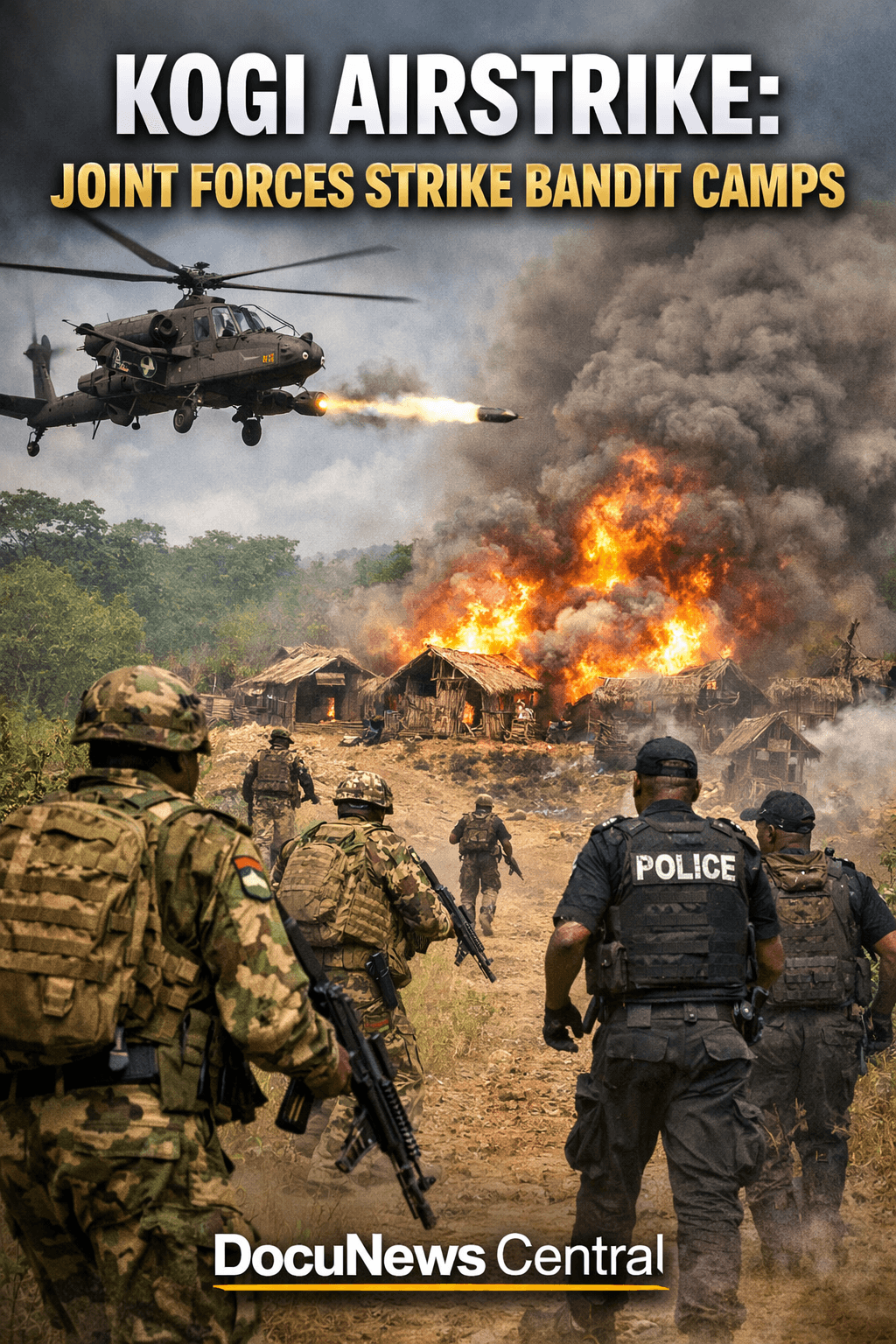
Lokoja, Kogi State — Sunday, January 11, 2026 (reported): A carefully executed Kogi airstrike by security forces reportedly neutralised scores of armed bandits and dismantled several of their criminal networks. The operation marked a significant achievement in ongoing efforts to restore peace and stability in Kogi State. Source
Security sources confirmed that a joint operation involving the Nigeria Police Force, the Nigerian Army, and the police Air Wing carried out the strike. Precision aerial bombardments, followed by coordinated ground maneuvers, reportedly devastated bandit camps across remote areas. Command officials described it as a deadly strike on bandits intended to dismantle their operational capacity in the region. Source
This strike comes at a time when communities across the North Central zone have been increasingly vulnerable to criminal attacks. Residents in and around Lokoja have endured months of insecurity, with kidnappings and armed raids disrupting daily life and commerce. This operation is viewed as a turning point for the affected communities.
Planning and Execution of the Kogi Airstrike
The operation began earlier in the week after security agencies received credible intelligence about the movement of armed bandits along forested corridors connecting several local government areas. Units from the Nigerian Army and the police Air Wing reportedly tracked the criminals’ activities over several days.
Air reconnaissance identified key bandit hideouts, which then became the target of precise aerial strikes. Ground forces moved in immediately after the air attack to clear the areas, recover weapons, and neutralise remaining threats. According to residents, the coordinated approach amplified the effectiveness of the mission.
Local eyewitnesses reported hearing aircraft flying at low altitudes, followed by explosions from the targeted zones. Security patrols increased significantly after the airstrikes, reinforcing the message that law enforcement agencies were committed to securing the state. Leaders from affected communities welcomed the operation and described it as a decisive blow to criminal elements.
Targeting Criminal Networks
The airstrike focused on known bandit encampments linked to multiple kidnappings, robberies, and armed attacks along poorly patrolled routes. Security analysts emphasised that the operation aimed not only to neutralise bandits but also to disrupt the logistics and coordination that allowed them to thrive. By targeting command centers and supply points, authorities hope to prevent a rapid regrouping of these groups.
Although official casualty figures remain undisclosed, sources on the ground said the operation significantly weakened armed groups that had terrorised rural and semi-urban communities. The presence of military and police units in the area also reassured residents that authorities were serious about maintaining security in the coming weeks. Read also 25 Arrested as Police Interrupt Cult Initiation in Ondo
Historical Context: Banditry in Kogi State
Banditry in Kogi State is not a new phenomenon. Communities such as Idofin, Okene, Kabba, and Yagba have experienced repeated attacks in the past year. On January 3, 2026, gunmen attacked Idofin, killing one resident and injuring another. Source
Farmers, traders, and residents have often been forced to abandon their daily routines due to fear of ambushes. Transport along key routes connecting towns to the state capital, Lokoja, has been disrupted, limiting trade and economic growth. The recent airstrike is expected to restore a degree of normalcy and allow communities to resume activities that were once risky due to insecurity.
Impact on Local Communities
Residents in affected areas reported feeling safer following the airstrike. Farmers who had abandoned their fields are gradually returning, while traders are resuming business along main roads. Local schools, long disrupted by insecurity, are also beginning to operate without fear of attack.
Community leaders stressed the importance of continued vigilance and cooperation with security agencies. Many encouraged citizens to report suspicious activities and provide timely information that could prevent future attacks. The strike has fostered renewed confidence in the ability of law enforcement to protect both rural and semi-urban settlements.
Coordination Among Security Agencies
The Kogi airstrike exemplifies the effectiveness of joint forces operations. The Nigerian Army, police, and the Air Wing worked together seamlessly, combining intelligence gathering, aerial strikes, and ground patrols. Such integrated strategies have proven effective in disrupting criminal networks and rescuing kidnapped victims.
Similar operations have been carried out in other North Central and North West states. In these missions, coordination between military and law enforcement has led to the neutralisation of armed groups, recovery of stolen property, and restoration of local peace. Source
Broader Implications for National Security
Security experts highlight that proactive operations like the Kogi airstrike are critical for curbing banditry nationwide. By striking deep into hideouts, authorities prevent bandits from regrouping and expanding their reach into neighboring states such as Kwara, Niger, and Kaduna.
Operation Fansan Yamma and similar missions demonstrate the importance of continuous aerial surveillance and intelligence-led interventions. When combined with community support, these strategies create an environment where bandits cannot operate with impunity. Many people are reacting to this headline NAF Intensifies War on Terror with Coordinated Airstrikes in Borno
Community Recommendations and Citizen Engagement
Leaders in Kogi State advised residents to continue supporting security agencies. They encouraged citizens to report suspicious behavior and share information that could prevent criminal activity. Public cooperation is seen as essential to sustaining peace.
Residents who have long lived under the threat of nightly raids welcomed the airstrike. They hope it will restore economic life, ensure children’s safety, and allow for uninterrupted farming and trade. These voices reflect a national desire for safer regions where daily life can proceed without constant fear of attack.
Remaining Challenges and Next Steps
Despite the operation’s success, experts warn that isolated armed groups may attempt to relocate or regroup. Continuous patrols, intelligence sharing, and aerial surveillance remain critical to prevent a resurgence. Authorities must also maintain community engagement and invest in local security partnerships.
The government is urged to complement battlefield gains with infrastructure improvements, development projects, and sustained support for law enforcement. This approach can ensure that operational success translates into long-term stability and economic recovery for affected communities.
Resources and Further Reading
For more information on security conditions in northern Nigeria, trusted sources include Punch Newspapers and Tribune Online. Source
Readers interested in anti-banditry efforts outside Kogi State can explore coverage of Operation Fansan Yamma and other security operations in neighboring states, which highlight the effectiveness of combined military and police interventions.
Location: Kogi State, Nigeria Date Reported: Sunday, January 11, 2026 Time Referenced: Early January reports
Related Stories
- NAF Intensifies War on Terror with Coordinated Airstrikes in Borno
- Nigerian Air Power Strikes Again as Terrorists Targeted in Borno
- Nigerian Army Records Major Gains Against ISWAP, Boko Haram
For all Security Updates visit Security updates Nigeria