World News
Venezuela Demands Maduro’s Immediate Release at UN

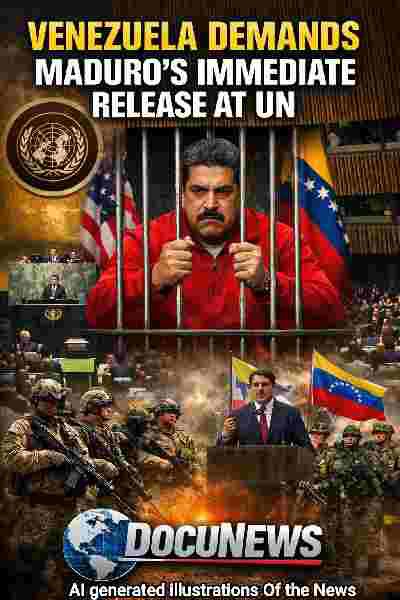
Venezuela demands Maduro’s immediate release at the UN, is now escalating tensions with the United States over detention, sovereignty, and international law. And this has become one of the most discussed global headlines, drawing attention from governments, international organizations, legal experts, and human rights observers across the world. The demand places Venezuela, the United States, and the United Nations at the center of an intense diplomatic dispute involving sovereignty, international law, and political accountability.
The Venezuelan government formally requested urgent intervention from the United Nations Human Rights Council, insisting that Nicolás Maduro must be released immediately from U.S. custody. As a result, the situation has escalated into a high-profile international crisis. Moreover, the issue now dominates global news platforms and diplomatic discussions.
This development carries significant geopolitical implications. Therefore, it has triggered debates regarding state sovereignty, cross-border enforcement actions, and the role of international institutions in resolving conflicts between powerful nations.
Date and Location of the UN Appeal
On 23 February 2026, in Geneva, Switzerland, Venezuela’s Foreign Minister Yvan Gil addressed the United Nations Human Rights Council. During the session, he formally demanded the immediate release of Nicolás Maduro and called for international oversight of the situation.
According to DocuNews Central, the location holds global diplomatic importance because Geneva hosts major international institutions, including United Nations bodies focused on human rights and global cooperation. Consequently, Venezuela chose this platform to elevate its concerns before the international community.
According to the delegate who spoke to DocuNews Central, the Venezuelan delegation presented arguments claiming that the detention violates international law and represents an infringement on national sovereignty. As a result, the appeal gained immediate global attention.
Background of the Detention
The crisis began following reports that U.S. forces conducted an operation that resulted in Maduro’s detention. According to statements from Caracas, the action occurred without proper international authorization. Therefore, Venezuelan authorities describe the operation as unlawful.
Meanwhile, U.S. officials argue that legal proceedings justify the detention. They maintain that criminal allegations require accountability, regardless of political status. Consequently, both governments present opposing legal interpretations.
This disagreement intensified diplomatic tensions. Moreover, international observers began analyzing the situation under principles of sovereignty, extradition law, and jurisdiction.
Venezuela’s Position at the United Nations
During the UN session, Venezuela urged member states to support its demand. The foreign minister emphasized that immediate release remains essential for restoring diplomatic balance. Additionally, the government requested examination of the circumstances surrounding the detention.
Venezuelan representatives highlighted concerns regarding due process and transparency. Therefore, they argued that the UN Human Rights Council should review whether international standards were respected.
Furthermore, Venezuela framed the case as a broader issue affecting global stability. In doing so, officials connected the incident to international legal norms and institutional responsibility.
International Reactions
The detention sparked responses from multiple countries. Some governments expressed concern and urged restraint. Others emphasized the importance of legal accountability.
Several international actors called for diplomatic dialogue to prevent escalation. Consequently, global discussions now focus on peaceful resolution mechanisms.
For official international references, see:
These institutions provide frameworks for evaluating international disputes. Therefore, their role remains significant in analyzing this crisis.
Legal Debate and Sovereignty Issues
At the center of the controversy lies the principle of sovereignty. International law traditionally protects states from external military intervention. Therefore, Venezuela argues that any cross-border operation without authorization violates the United Nations Charter.
However, supporters of U.S. actions argue that international criminal allegations justify enforcement measures under specific conditions. Consequently, legal scholars debate whether exceptions apply in this scenario.
This dispute highlights tensions between national sovereignty and global enforcement mechanisms. Moreover, it demonstrates how international law continues to evolve in response to modern challenges.
Human Rights Implications
Venezuela insists that the case requires urgent human rights evaluation. The government claims that detention conditions and legal procedures must align with global standards.
Human rights organizations frequently monitor politically sensitive detentions. For example, international advocacy groups often review transparency, fair trial guarantees, and access to legal representation.
Because the United Nations Human Rights Council focuses on protecting fundamental freedoms, Venezuela believes the Council must examine the matter thoroughly.
For additional context on global human rights principles, visit:
Regional Impact in Latin America
The situation also affects regional diplomacy. Latin American governments continue encouraging dialogue between both nations. Therefore, diplomatic channels remain open.
Regional stability depends on cooperation, economic relationships, and security coordination. Consequently, prolonged tension could influence broader geopolitical dynamics.
Furthermore, neighboring countries monitor developments carefully, as outcomes may shape future diplomatic alignments.
Global Security Considerations
The detention of a political leader raises significant international questions. For instance, global leaders must consider how enforcement actions interact with diplomatic immunity.
Additionally, analysts examine whether the event could set a precedent for future operations involving high-ranking officials.
Because international norms rely on consistent application, many experts stress the importance of clarity and transparency.
Media Coverage and Public Attention
International media outlets continue reporting updates on the situation. As a result, search engines show increased queries related to Venezuela, Maduro, UN intervention, and U.S. detention.
These keywords contribute to strong online visibility and global engagement. Therefore, the headline remains highly relevant for news audiences.
Public interest remains elevated due to the political implications and potential long-term consequences.
Diplomatic Solutions and Possible Outcomes
Several potential outcomes may emerge from this dispute. First, the United Nations could initiate formal review procedures. Second, both governments might engage in bilateral negotiations.
Third, international mediators could facilitate dialogue. Consequently, diplomatic engagement represents a practical pathway toward de-escalation.
Furthermore, legal institutions may become involved depending on future developments. Therefore, observers continue monitoring official statements closely.
DocuNews Central Opinion
DocuNews Central believes this crisis represents a critical diplomatic moment that requires measured dialogue and adherence to international law.
The organization emphasizes that sovereignty must remain respected. However, it also stresses that accountability and due process must apply equally in all circumstances.
Moreover, DocuNews Central encourages constructive engagement between Venezuela, the United States, and international institutions. Therefore, peaceful negotiation remains the most effective solution.
Balanced diplomacy, transparent communication, and legal clarity will help reduce global tension and restore stability.
Conclusion
Venezuela Demands Maduro’s Immediate Release at UN continues to dominate global headlines and diplomatic discussions. The case highlights complex intersections between sovereignty, international law, and human rights.
As the United Nations reviews Venezuela’s petition, the international community watches closely. Moreover, the outcome may influence future interpretations of global legal standards.
Ultimately, diplomatic engagement, institutional cooperation, and adherence to international frameworks will determine the direction of this evolving crisis.
For Security Updates In Nigeria Visit Security updates Nigeria