
Security
Borno Under Threat as Boko Haram and ISWAP Fight for Territory

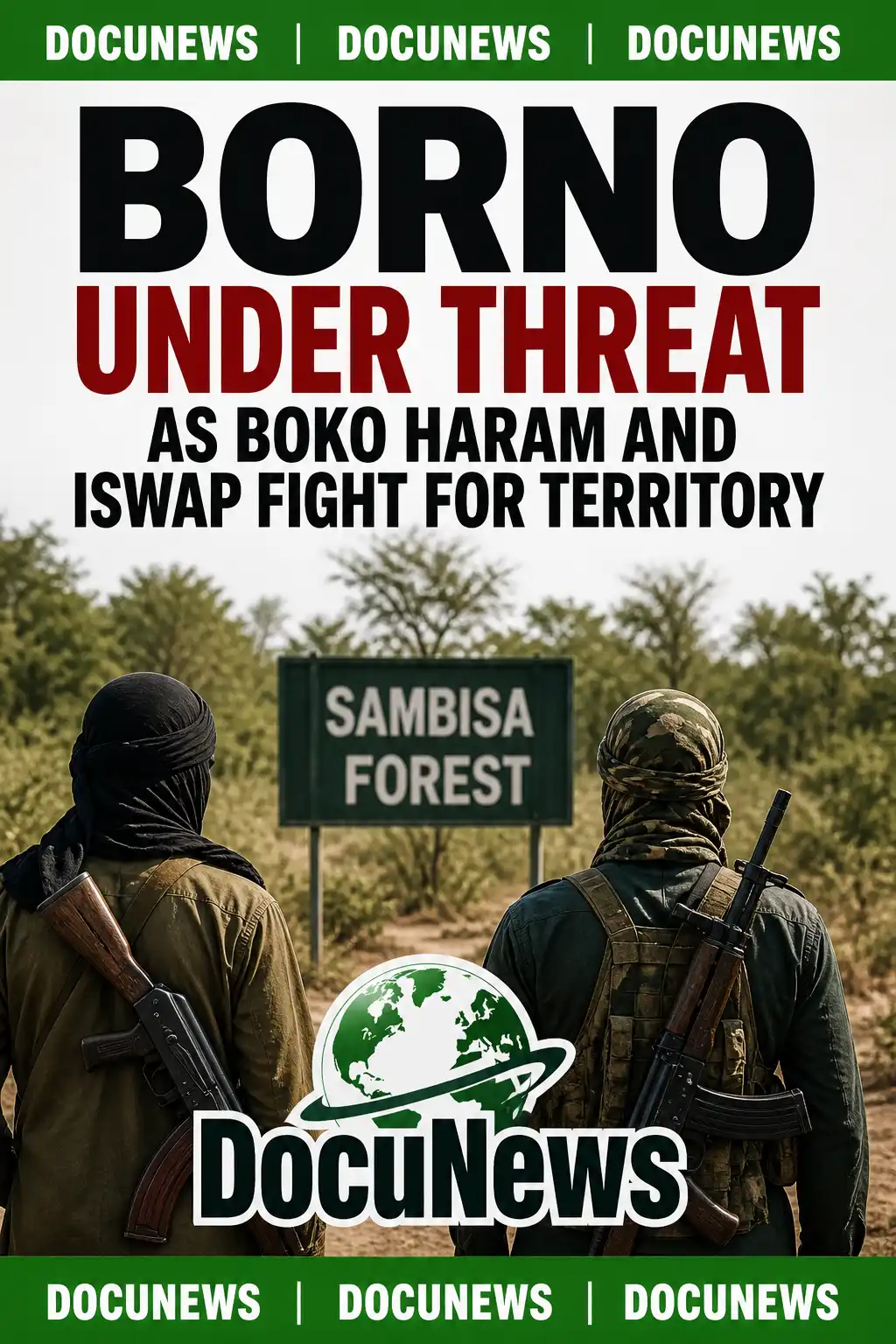
By Jonadab | DocuNews Central | May 3, 2026
Fresh intelligence reports indicate that violent clashes between Boko Haram and the Islamic State West Africa Province (ISWAP) have intensified across parts of Borno State. The renewed fighting has raised concerns among residents and security observers as both factions struggle for dominance.
In recent days, multiple confrontations have been reported within the Sambisa Forest and nearby communities. As a result, movement around the area has become increasingly risky, while local sources confirm heightened gunfire and militant activity.
On May 3, 2026, sources within Borno State confirmed that the latest clashes occurred around the Sambisa axis, a long-standing stronghold for insurgent operations in northeastern Nigeria.
Also read A.D.C Crisis Ends as Court Restores David Mark. Latest Update.
What Happened?
Clashes broke out between Boko Haram fighters and ISWAP militants in several locations within Sambisa Forest. The fighting reportedly involved heavy gunfire and tactical ambushes as both groups attempted to outmaneuver each other.
These confrontations have become more frequent. Analysts say the escalation reflects deepening rivalry over control of territory, weapons routes, and influence among local fighters.
Where Did It Happen?
The incidents occurred primarily in Sambisa Forest and surrounding rural areas in Borno State. This region has long served as a strategic base due to its dense vegetation and difficult terrain.
Additionally, nearby villages have reported unusual movements of armed groups. Although no official displacement figures have been released, residents are increasingly avoiding travel along key routes.
Who Is Involved?
The clashes involve Boko Haram and ISWAP, two rival extremist factions operating in northeastern Nigeria. While both groups share similar origins, they have split over leadership and operational strategies.
Boko Haram remains known for its decentralized attacks, while ISWAP has focused on structured operations and territorial control. Therefore, the ongoing conflict reflects a struggle for supremacy between the factions.
Rising Tensions in Sambisa Forest
Sambisa Forest has remained a critical battleground for years. However, the latest developments suggest a shift in internal dynamics among insurgent groups.
Although security forces have conducted repeated operations in the area, militant groups continue to regroup. Consequently, intermittent clashes between rival factions have become more visible.
Local intelligence sources indicate that ISWAP has been attempting to expand its influence deeper into territories historically controlled by Boko Haram. In response, Boko Haram fighters have launched counterattacks to defend their positions.
Impact on Local Communities
Residents living near the affected areas face growing uncertainty. While some communities have experienced reduced direct attacks, the internal conflict between the groups has created new risks.
For instance, civilians often become trapped between opposing factions. As a result, access to farmland, markets, and basic services has been disrupted.
In addition, humanitarian concerns continue to rise. Aid workers warn that prolonged instability could worsen food insecurity and displacement in already vulnerable communities.
Security Response and Ongoing Operations
Nigerian security forces have maintained pressure on insurgent groups across Borno State. Military operations have targeted key hideouts, including areas within Sambisa Forest.
However, the evolving rivalry between Boko Haram and ISWAP presents new challenges. While clashes between the groups may weaken both sides, they also create unpredictable security conditions.
Security analysts note that such infighting can temporarily reduce coordinated attacks on civilians. Nevertheless, it may also lead to fragmented violence across multiple locations.
Regional Implications
The conflict between Boko Haram and ISWAP extends beyond Borno State. Neighboring regions in northeastern Nigeria and parts of the Lake Chad Basin have also felt the impact.
As these groups compete for influence, cross-border movements have increased. Consequently, regional security cooperation remains critical in addressing the threat.
Efforts by multinational forces continue, although challenges persist due to terrain, logistics, and evolving tactics used by insurgents.
Background to the Rivalry
Boko Haram and ISWAP split several years ago following disagreements over leadership and strategy. Since then, both factions have operated independently while occasionally clashing.
ISWAP has sought to position itself as a more structured organization, often targeting military positions. In contrast, Boko Haram has maintained a more fragmented approach, including attacks on civilian targets.
This rivalry has periodically erupted into violence. However, the current escalation suggests a renewed push for dominance in key territories.
Outlook
The situation in Borno State remains fluid. While security forces continue operations, the rivalry between Boko Haram and ISWAP adds another layer of complexity.
Observers believe that sustained military pressure, combined with intelligence coordination, will be essential in managing the evolving threat.
For now, residents remain cautious as uncertainty persists across affected areas.
For further updates on security developments, visit Nigerian Ministry of Defence and ReliefWeb.
