
Politics
Supreme Court Nullifies Ibadan PDP Convention.

By Jonadab | May 1, 2026 | DocuNews Central
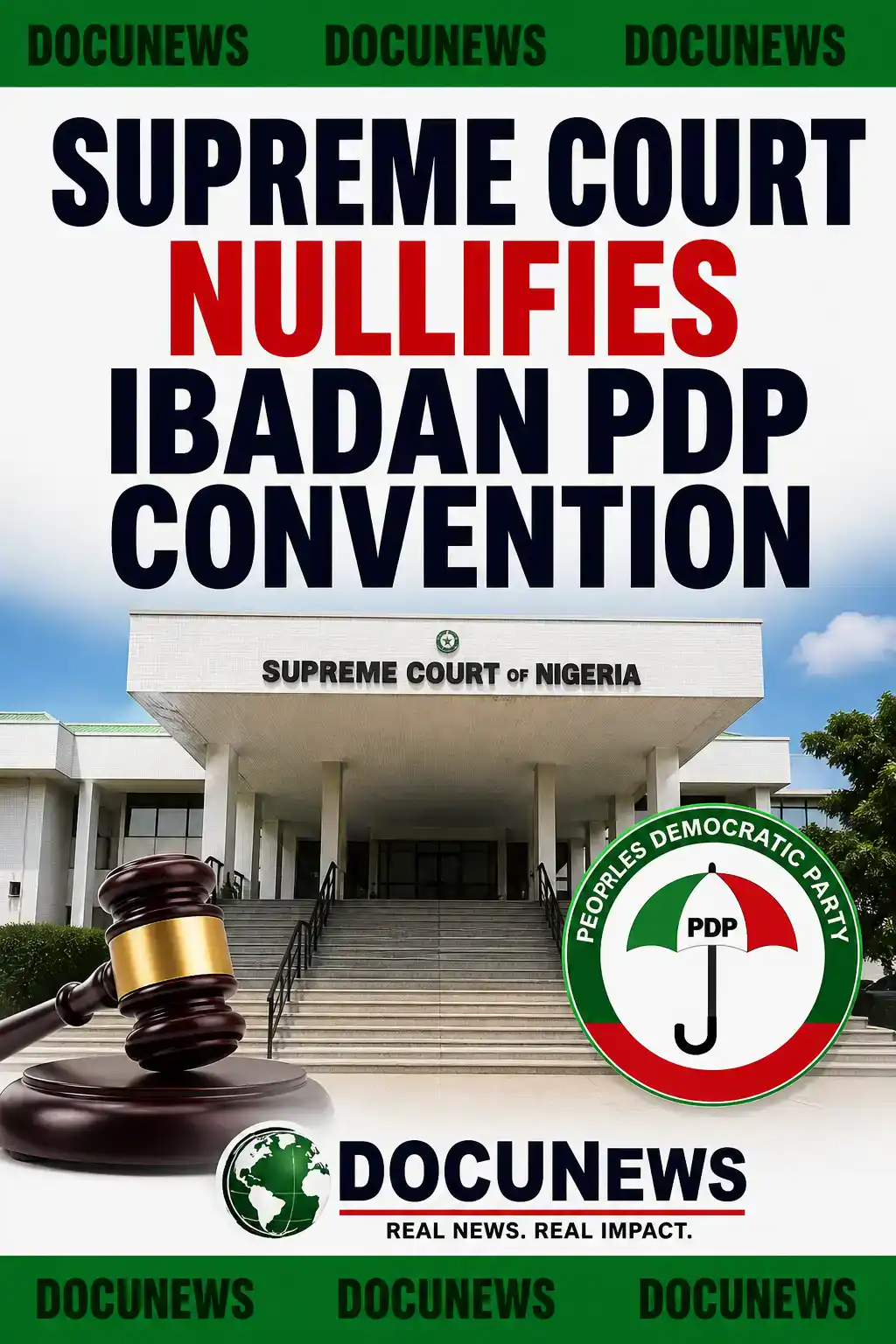
The Supreme Court of Nigeria has nullified the Peoples Democratic Party (PDP) convention held in Ibadan, Oyo State. The ruling has immediately reshaped the internal structure of the opposition party. It has also triggered fresh uncertainty over leadership legitimacy and future congresses.
The decision followed a series of legal disputes that questioned how the convention was conducted. In its judgment, the apex court held that due process was not followed. As a result, all decisions and outcomes from the convention have been set aside.
The ruling was delivered in Abuja on May 1, 2026. The case stemmed from complaints filed by aggrieved party members. They argued that the process violated party guidelines and constitutional provisions.
Also read Notorious Bandit Commander Killed by Troops in Zamfara Raid
What Happened?
The court examined whether the Ibadan convention complied with PDP rules. It found multiple procedural breaches. Therefore, the convention was declared invalid.
The justices emphasized that political parties must follow their constitutions. They noted that failure to do so undermines internal democracy. Consequently, all leadership decisions from the convention lost legal standing.
Where Did It Happen?
The disputed convention took place in Ibadan, the capital of Oyo State. However, the final ruling was delivered at the Supreme Court in Abuja.
Ibadan had hosted party delegates from across Nigeria. The gathering aimed to resolve internal disputes and elect key officials. Instead, it has now become the center of a major legal reversal.
Who Is Involved?
The case involved members of the Peoples Democratic Party (PDP). Party stakeholders, including delegates and aspirants, were directly affected.
Legal representatives of the aggrieved members presented evidence before the court. Meanwhile, party leadership defended the process. The Supreme Court ultimately ruled in favor of those challenging the convention.
The judgment also affects national officers who emerged from the Ibadan gathering. Their positions are now uncertain. Further internal consultations are expected within the party.
Legal Implications of the Judgment
The ruling reinforces the authority of the Supreme Court in political disputes. It also highlights the judiciary’s role in ensuring compliance with party constitutions.
Experts say the judgment may set a precedent. Political parties could face stricter scrutiny in future conventions. As a result, internal processes are likely to become more transparent.
In addition, the decision may trigger further litigation. Some party members may challenge subsequent steps taken by PDP leadership. Therefore, legal battles within the party could continue.
Political Impact on PDP
The nullification has created a leadership vacuum within the party. This development comes at a critical time in Nigeria’s political cycle. As preparations for future elections intensify, stability within the PDP remains uncertain.
Party stakeholders are expected to convene emergency meetings. They will likely discuss the next course of action. Options may include organizing a fresh convention or appealing aspects of the ruling.
Meanwhile, political analysts believe the decision could weaken the party temporarily. However, they also note that it offers an opportunity to rebuild internal processes.
Reactions from Party Members
Reactions have emerged from various factions within the PDP. Some members welcomed the ruling. They described it as a victory for internal democracy.
Others expressed concern over the timing. They warned that prolonged disputes could affect the party’s electoral strength. Despite differing views, there is agreement on the need for unity.
Party leaders have urged calm among supporters. They emphasized that consultations are ongoing. A unified response is expected in the coming days.
Electoral and Institutional Significance
The judgment underscores the importance of adherence to established procedures. Political parties play a central role in Nigeria’s democracy. Therefore, their internal operations must reflect democratic principles.
Institutions like the Independent National Electoral Commission (INEC) may also take note. The ruling could influence how party activities are monitored. It may also shape future regulatory actions.
Furthermore, the decision highlights the judiciary’s independence. It demonstrates that legal standards apply to all political actors. This reinforces public confidence in democratic institutions.
Possible Next Steps
The PDP is expected to outline its next steps soon. A fresh convention remains a likely option. However, consultations with stakeholders will determine the final decision.
Legal teams within the party are also reviewing the judgment. They may explore possible interpretations. Nevertheless, compliance with the ruling appears unavoidable.
In the meantime, party activities may proceed with caution. Leaders are likely to prioritize stability. This approach aims to prevent further disruptions.
Broader National Context
The ruling comes amid ongoing political realignments in Nigeria. Parties are preparing for future elections. Therefore, internal cohesion has become increasingly important.
Observers note that similar disputes have occurred in other parties. As a result, the Supreme Court’s decision may influence broader political practices. It sends a clear message about accountability.
Additionally, the judgment may encourage reforms within party structures. Leaders may adopt stricter compliance measures. This could strengthen democratic processes over time.
Conclusion
The nullification of the Ibadan PDP convention marks a significant moment in Nigeria’s political landscape. It reflects the judiciary’s commitment to upholding legal standards. At the same time, it presents challenges for the PDP.
As developments unfold, attention will remain on the party’s next steps. The outcome will shape its future direction. Ultimately, the ruling reinforces the principle that due process cannot be ignored.
For official court updates, visit Supreme Court of Nigeria.
For electoral guidelines, see Independent National Electoral Commission (INEC).
