
Breaking news
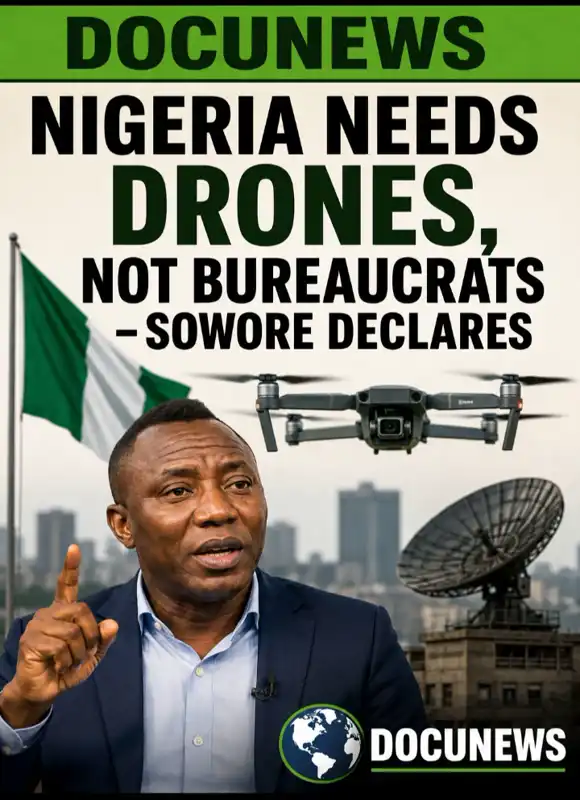
Nigeria Needs Drones, Not Bureaucrats – Sowore Declares

Author: Jonadab
Publisher: DocuNews Central
Date Published: 2026-05-29T14:30:00+01:00
Omoyele Sowore, a leading figure in the African Action Congress (AAC), has renewed his call for technology-driven security reforms in Nigeria. The activist and presidential aspirant said the country should prioritize drones, intelligence systems, and rapid-response technology rather than expanding layers of bureaucracy. According to him, modern security threats require modern solutions. He said that Nigeria Needs Drones, Not Bureaucrats.
His remarks came as insecurity remains a major national concern. Nigeria continues to face challenges linked to terrorism, banditry, kidnapping, piracy, and organized criminal activity across several regions. Consequently, discussions about new security strategies have intensified among political leaders, security experts, and citizens.
The statement was made on May 29, 2026, during a televised interview broadcast from Nigeria. During the discussion, Sowore argued that advanced surveillance technology could improve security operations and help authorities respond faster to threats across the country.
What Happened?
Sowore declared that if elected president, he would rely heavily on drone technology to strengthen Nigeria’s security architecture. He said drones could provide continuous surveillance, intelligence gathering, and operational support against criminal networks. Furthermore, he argued that modern security systems should be driven by technology rather than excessive administrative structures.
During the interview, he stated that his “defence minister would be a drone,” a remark intended to emphasize his confidence in technological solutions. Although the statement was symbolic, it reflected his broader argument that innovation should play a central role in national defence planning. Reports from multiple media organizations quoted him as advocating stronger investment in unmanned aerial systems and centralized intelligence operations.
Who Is Involved?
The central figure in the discussion is Omoyele Sowore, publisher, activist, and presidential hopeful under the African Action Congress. Sowore has consistently advocated reforms in governance, security, and public accountability. In recent months, he has also confirmed his intention to participate in the 2027 presidential race.
The debate also involves policymakers, defence officials, military planners, and security analysts. Their perspectives are important because any large-scale shift toward technology-driven defence operations would require coordination between multiple government institutions.
Where Did It Happen?
The comments emerged during a nationally televised interview in Nigeria. However, the implications of the discussion extend beyond a single broadcast studio. The proposal relates to security operations across the entire country, including regions affected by insurgency, bandit attacks, kidnapping incidents, and cross-border criminal activity.
Sowore’s Security Vision
According to Sowore, Nigeria should establish centralized command and control systems capable of tracking threats in real time. Such systems would collect intelligence from multiple sources and enable faster operational decisions. He argued that technology can improve efficiency while reducing delays associated with traditional administrative processes.
He also maintained that security agencies require modern tools that can monitor difficult terrain. Drones, he said, can cover vast areas more effectively than conventional methods. Therefore, he believes investment in surveillance technology would improve intelligence gathering and operational effectiveness.
In addition, Sowore suggested that advanced monitoring systems could help identify criminal movements before attacks occur. Consequently, authorities would gain opportunities to intervene earlier and prevent security incidents.
Also read Your Propaganda Reign Is Ending – Atiku Warns Tinubu.
Growing Interest in Defence Technology
The discussion comes at a time when governments around the world are investing heavily in defence technology. Many countries now use drones for surveillance, reconnaissance, border monitoring, and intelligence collection. As a result, unmanned systems have become increasingly important components of modern security operations.
Nigeria has also expressed interest in expanding technology-based security capabilities. Recent statements from defence officials highlighted efforts to strengthen surveillance systems, intelligence infrastructure, and command-and-control platforms. Government representatives have emphasized the importance of integrating advanced technologies into national defence planning.
Furthermore, defence authorities recently discussed partnerships aimed at improving intelligence gathering, threat detection, and operational coordination. These initiatives indicate that technology remains an important area of focus within broader security modernization efforts.
Security Challenges Facing Nigeria
Nigeria continues to confront diverse security threats. Insurgency remains a concern in parts of the North-East. Meanwhile, bandit attacks have affected several communities in the North-West. Kidnapping incidents have also been reported in different parts of the country.
Additionally, authorities face challenges linked to maritime security, illegal mining activities, and organized criminal networks. These threats often involve large geographic areas that can be difficult to monitor continuously.
Because of these realities, experts frequently discuss the role of intelligence, surveillance, and rapid response systems. Technology advocates argue that drones and integrated monitoring platforms can improve situational awareness. However, others stress that technological tools must complement broader institutional reforms.
Why Drones Are Central to the Debate
Drones have transformed security operations in many parts of the world. They can remain airborne for extended periods and gather intelligence from locations that may be difficult for personnel to access. Consequently, security agencies often use them to monitor remote areas and track suspicious activities.
Supporters of expanded drone use argue that these systems can reduce operational risks while improving information gathering. Moreover, they believe that real-time surveillance can support faster responses to emerging threats.
Sowore’s remarks align with this perspective. He has repeatedly argued that unmanned aerial vehicles should receive greater attention within Nigeria’s security framework. Earlier interviews also showed him advocating increased investment in drone capabilities rather than traditional military procurement programs.
Balancing Technology and Governance
While technology offers advantages, security specialists often note that effective defence systems depend on multiple factors. Equipment alone cannot guarantee results. Training, intelligence analysis, logistics, leadership, and coordination remain essential components of successful operations.
Consequently, some observers believe that technology should complement institutional capacity rather than replace it. They argue that drones can enhance surveillance and intelligence gathering, yet broader reforms remain necessary to address complex security challenges.
Nevertheless, supporters of modernization insist that advanced technology can significantly improve operational effectiveness when properly integrated into existing structures.
Political Significance Ahead of 2027
The remarks have also attracted political attention because they form part of Sowore’s broader vision for governance and national security. As preparations for the 2027 election cycle continue, security issues are expected to remain central topics of debate.
Voters frequently identify safety, economic stability, and public services as key concerns. Therefore, proposals addressing insecurity are likely to receive considerable scrutiny from both supporters and critics.
Sowore has stated publicly that he intends to contest the presidency again. Consequently, his comments about drones, intelligence systems, and defence modernization may become recurring themes in future campaign discussions.
According to DocuNews Central
According to DocuNews Central, the significance of Sowore’s remarks lies in their emphasis on technological modernization rather than conventional political messaging. The comments have generated discussion about how emerging technologies could contribute to intelligence gathering, surveillance operations, and national security planning in Nigeria.
The statement also reflects a wider global trend in which governments increasingly explore artificial intelligence, integrated command systems, and unmanned platforms as part of defence modernization programs. As debates over security policy continue, technology is likely to remain a major topic in Nigeria’s national conversation.
Conclusion
Sowore’s declaration that Nigeria needs drones rather than bureaucracy has added a new dimension to discussions about security reform. While opinions differ regarding implementation, the proposal highlights the growing importance of technology in modern defence planning.
As Nigeria continues to confront security challenges, conversations about surveillance systems, intelligence platforms, and operational modernization are expected to continue. For now, Sowore’s remarks have ensured that drones and advanced security technology remain firmly within the national spotlight.