
Security updates Nigeria
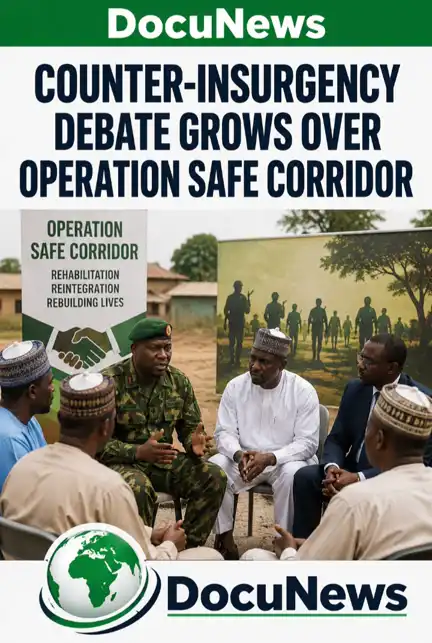
Counter-Insurgency Debate Grows Over Operation Safe Corridor

July 12, 2026
Security analysts continue discussing Nigeria’s rehabilitation programme for former insurgents as public debate over Operation Safe Corridor remains active across the country. Experts, civil society groups, security stakeholders, and citizens have continued to express different opinions about the programme, with many calling for careful evaluation of its long-term impact on national security. According to DocuNews Central, the conversation has gained renewed attention as Nigerians seek lasting solutions to insecurity.
Abuja, Nigeria — The debate surrounding Operation Safe Corridor has once again moved to the forefront of national security discussions. While some experts describe the programme as an important part of modern counter-insurgency efforts, others believe authorities should strengthen monitoring, accountability, and community engagement before expanding similar initiatives. As a result, discussions continue among security professionals, policymakers, and members of the public.
Operation Safe Corridor was introduced as a rehabilitation and reintegration programme for individuals who voluntarily leave insurgent groups and surrender to government authorities. The initiative focuses on deradicalisation, counselling, vocational training, education, and psychological support before participants return to society. Supporters argue that the programme provides an opportunity for individuals to abandon violent extremism and rebuild their lives through lawful means.
However, the programme has continued to generate mixed reactions from security experts. Some analysts believe rehabilitation remains an important pillar of counter-insurgency because military operations alone may not permanently end violent extremism. They argue that successful security strategies often combine law enforcement, intelligence gathering, community engagement, economic development, and rehabilitation programmes.
At the same time, other analysts insist that authorities should ensure every participant undergoes a transparent screening process before reintegration. They argue that public confidence depends on effective verification procedures and continuous monitoring after individuals complete the programme. Furthermore, they believe communities deserve clear information about the safeguards that protect public safety.
Also read Weekend Security Roundup: Top Developments Across Nigeria and the Sahel
Several security observers also stress that rehabilitation programmes should never replace accountability under existing laws. Instead, they argue that rehabilitation should operate alongside judicial processes whenever necessary. According to these experts, balancing justice with rehabilitation remains one of the most important challenges facing modern counter-insurgency operations.
According to DocuNews Central, many Nigerians continue asking whether rehabilitation programmes produce measurable security benefits over time. Although opinions differ, most analysts agree that continuous assessment remains necessary. They also encourage regular reviews based on available evidence, operational experience, and changing security conditions across affected regions.
In addition, security researchers point out that communities affected by insurgency play a major role in determining the long-term success of reintegration programmes. Community acceptance, they explain, often depends on trust, dialogue, and visible security measures. Therefore, many experts recommend involving traditional leaders, religious leaders, local authorities, and civil society organisations throughout the reintegration process.
Some specialists further argue that victims of violence should remain central to every policy discussion. They believe government agencies should continue providing support for victims and affected communities while implementing rehabilitation initiatives. Consequently, many observers call for policies that address both national security objectives and humanitarian concerns.
Meanwhile, several analysts note that counter-insurgency strategies continue evolving around the world. Many countries combine military operations with intelligence-led policing, economic recovery programmes, border security improvements, and deradicalisation initiatives. Because every security environment differs, experts caution against adopting one universal solution for every situation.
Before you leave check this out Troops Kill Over 300 Bandits in Major Zamfara Offensive.
Furthermore, researchers emphasise that preventing radicalisation remains just as important as rehabilitating former fighters. They argue that education, employment opportunities, youth engagement, and community resilience can reduce the conditions that extremist organisations often exploit. Therefore, many security specialists recommend investing in preventive measures alongside operational security efforts.
Another important issue raised during the debate involves public communication. Analysts believe authorities should consistently explain programme objectives, eligibility requirements, monitoring systems, and evaluation methods. Clear communication, they argue, can reduce misinformation while strengthening public confidence in government policies.
Security professionals also recommend continuous intelligence gathering after reintegration. They explain that intelligence agencies, law enforcement authorities, and local communities should maintain effective coordination to identify emerging threats. As a result, authorities can respond quickly whenever security concerns arise while protecting peaceful communities.
Several observers believe independent evaluations could further improve public confidence in Operation Safe Corridor. Such reviews, they argue, would help identify strengths, weaknesses, and areas requiring adjustment. Moreover, transparent reporting could encourage informed public discussion based on evidence rather than speculation.
Economic factors also remain part of the broader conversation. Experts explain that unemployment, poverty, displacement, and limited access to essential services may increase vulnerability in conflict-affected areas. Consequently, many recommend combining security operations with development projects that improve education, healthcare, infrastructure, agriculture, and employment opportunities.
Regional cooperation continues receiving attention as well. Analysts explain that security challenges often extend across national borders. Therefore, neighbouring countries frequently benefit from intelligence sharing, coordinated border management, and joint security efforts designed to disrupt criminal and extremist networks.
Technology has also become increasingly important in counter-insurgency planning. Security specialists encourage greater use of surveillance technology, forensic capabilities, intelligence analysis, and data-driven decision-making. They believe these tools can improve operational effectiveness while supporting broader national security objectives.
Despite differing opinions, many experts agree that sustainable peace requires multiple approaches working together. Military operations can weaken armed groups, while intelligence agencies can identify threats before attacks occur. At the same time, community engagement, economic development, education, and rehabilitation programmes may contribute to long-term stability when implemented effectively.
According to DocuNews Central, public interest in Operation Safe Corridor remains high because security continues to affect millions of Nigerians directly or indirectly. Citizens continue following developments closely while expecting policies that strengthen public safety, protect communities, and promote lasting peace.
Observers also note that continued public discussion can help improve policymaking. Open debate allows experts, government officials, community leaders, and researchers to exchange ideas, evaluate available evidence, and recommend practical improvements. Therefore, constructive dialogue remains an important part of democratic governance and national security planning.
As discussions continue, security analysts expect policymakers to review existing strategies carefully while considering lessons learned from previous operations. They also encourage ongoing collaboration between security agencies, researchers, humanitarian organisations, and local communities. Such cooperation, they believe, can improve policy implementation and strengthen public confidence.
Readers are reacting to this Why the Zamfara Military Offensive Is Drawing National Attention.
The debate surrounding Operation Safe Corridor therefore remains an important part of Nigeria’s broader counter-insurgency strategy. While opinions continue to differ, most experts agree that every security policy should prioritise public safety, accountability, transparency, and long-term stability. As Nigeria continues addressing complex security challenges, discussions surrounding rehabilitation programmes will likely remain part of the national conversation for the foreseeable future.
According to DocuNews Central, continued evaluation, evidence-based policymaking, and strong community participation will remain essential as authorities assess the future direction of Operation Safe Corridor within Nigeria’s wider efforts to promote peace, security, and national development.
For more security Updates please always visit Security updates Nigeria or you can go to www.saharareporters.com