
Israeli-Iran-U.S War
Americans Take Cover After Two Drones Strike US Embassy in Saudi Arabia

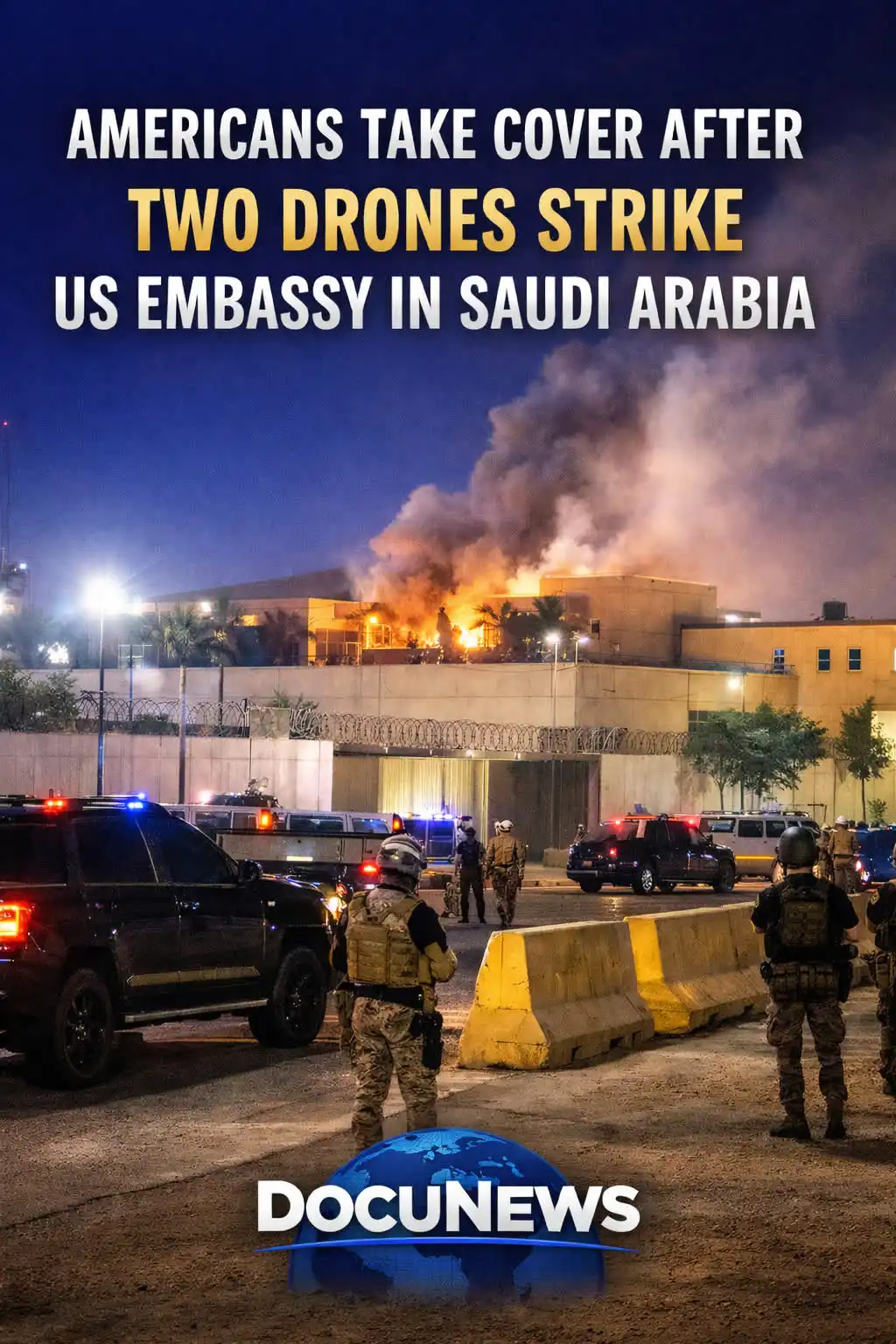
Americans Take Cover After Two Drones Strike US Embassy in Saudi Arabia, this causes fresh instability in the region and deepens the ongoing Middle East Crisis. The reported Drone Strike on the US Embassy in Saudi Arabia forced American personnel into temporary protective shelter while security forces reacted swiftly. The incident immediately triggered diplomatic communication, intensified security operations, and raised serious questions about the safety of foreign missions across the Gulf.
According to DocuNews Central, The attack reportedly occurred on March 3, 2026, in Riyadh, Saudi Arabia. Officials confirmed that two unmanned aerial vehicles targeted the United States Embassy compound located in the diplomatic quarter of the capital. Security units activated emergency protocols without hesitation. Staff members relocated to reinforced safe areas inside the compound while response teams assessed the situation.
No casualties have been officially reported. However, the development has heightened concern among diplomatic communities and foreign residents. Although authorities contained the situation quickly, analysts warn that such incidents reflect evolving security threats in the region.
Sequence of Events Inside the Diplomatic Zone
Residents near the diplomatic quarter reported hearing two distinct explosions within a short interval. Shortly afterward, sirens sounded throughout the embassy grounds. Security officers immediately secured all access points and suspended movement in and out of the facility.
Initial assessments indicate that defense systems intercepted at least one drone before it caused significant structural damage. The second device struck an outer section of the compound. Investigators began collecting fragments and reviewing surveillance footage to determine the drone’s trajectory and launch origin.
Because diplomatic compounds operate under strict contingency planning, personnel responded according to established procedures. Officials guided Americans into fortified spaces designed to withstand external threats. The transition to shelter occurred in an orderly manner, and communication lines remained active throughout the event.
Also Read Iran Accuses US and Israel of Civilian Strike; Rubio Denied It.
Immediate Response from Saudi Authorities
Saudi security forces reacted within minutes. Law enforcement units sealed surrounding roads and redirected traffic away from the diplomatic district. In addition, aerial monitoring teams scanned the skies to prevent additional airborne threats.
Authorities increased patrol presence across central Riyadh as a precautionary measure. Security checkpoints became more visible near government buildings and foreign missions. Although daily life in most parts of the capital continued, the atmosphere reflected heightened alertness.
Saudi officials strongly condemned the attack. They reaffirmed their commitment to protecting diplomatic facilities under international law. The government also pledged full cooperation with American investigators to ensure accountability.
Official Statement from the United States
The U.S. State Department confirmed the Drone Strike on the US Embassy in Saudi Arabia in a brief but firm statement. Officials emphasized that all personnel remained safe and that emergency measures worked as designed.
American lawmakers described the attack as unacceptable. Several members of Congress called for enhanced security funding for overseas diplomatic missions. Others urged intelligence agencies to accelerate efforts aimed at preventing similar incidents.
Although officials avoided speculation about the perpetrators, they confirmed that a joint investigation is underway. Analysts are reviewing radar data, electronic signatures, and surveillance recordings to trace the devices back to their origin.
You may have missed this US Denies Targeting School in Alleged US-Israeli Strike as Iran Claims 168 Killed
Understanding the Broader Middle East Crisis
The incident unfolds against the backdrop of persistent regional tension. Over recent months, various strategic sites across the Middle East have experienced attempted drone intrusions. These developments have reshaped security planning for both civilian and diplomatic infrastructure.
Unmanned aerial vehicles now represent a new category of asymmetric threat. Unlike conventional missiles, drones can operate at lower altitudes and navigate around obstacles. Consequently, traditional radar systems sometimes struggle to detect them early enough.
Furthermore, attackers often select symbolic targets. Diplomatic compounds represent political influence and international partnership. Therefore, strikes against such sites frequently aim to send political messages rather than cause large-scale destruction.
Impact on American Citizens in Saudi Arabia
Following the attack, embassy officials issued updated security guidance for American citizens living and working in Saudi Arabia. The advisory encouraged vigilance, avoidance of unnecessary travel near sensitive areas, and attention to official updates.
American expatriates expressed mixed emotions. Many felt reassured by the swift response of Saudi security forces. Nevertheless, anxiety spread across online community forums as residents sought verified information.
Business operations involving American firms continued without major disruption. However, some companies reviewed internal security protocols and contingency planning as a precaution.
Security Infrastructure and Counter-Drone Systems
Modern diplomatic facilities rely on layered defense systems to address emerging risks. These measures include radar detection, signal interference technology, and rapid interception capabilities. However, technological advancements require continuous adaptation.
Security experts argue that intelligence sharing between allied nations plays a crucial role in preventing such attacks. When agencies collaborate effectively, they can identify suspicious activity before threats escalate.
Governments across the Gulf have invested heavily in air defense modernization. Still, analysts note that smaller unmanned devices remain challenging due to their size and maneuverability.
Regional and Global Reactions
International observers quickly responded to the news. Several allied governments expressed solidarity with the United States and Saudi Arabia. Diplomatic channels remained active as officials exchanged information and evaluated regional implications.
Energy markets reacted cautiously. Although oil prices did not surge dramatically, traders monitored developments closely. Stability in the Gulf remains essential for global energy supply chains.
Security think tanks emphasized the importance of preventing escalation. They warned that retaliatory measures without clear evidence could intensify instability.
Ongoing Investigation and Forensic Analysis
Investigators continue examining debris recovered from the site. Technical experts analyze electronic components to identify manufacturing origin and modification patterns. These details may reveal operational networks.
Authorities are also reviewing communication signals detected near the time of the strike. By mapping signal patterns, analysts may determine whether remote operators controlled the devices from nearby locations.
Officials have urged the public to avoid spreading unverified claims. Transparent communication, they emphasize, reduces panic and maintains public trust.
Diplomatic Law and Protection Obligations
Under international conventions, host nations bear responsibility for protecting diplomatic missions. Saudi Arabia has reiterated its commitment to fulfilling these obligations. The government emphasized that safeguarding foreign embassies remains a national priority.
The United States also maintains internal security teams within its diplomatic compounds. These teams coordinate closely with host nation authorities during emergencies. In this case, coordination appeared effective and timely.
DocuNews Central Opinion
At DocuNews Central, we believe the US Embassy Drone Strike in Saudi Arabia highlights a critical reality. Diplomatic security must evolve faster than emerging threats. Governments cannot rely solely on traditional defense systems. Instead, they must integrate advanced detection tools, predictive intelligence analysis, and stronger cyber monitoring capabilities.
Furthermore, regional stability requires measured responses rather than reactive decisions. Clear communication between Washington and Riyadh demonstrates responsible leadership. Cooperation, not escalation, will protect diplomatic institutions and civilians alike.
For continued updates and detailed analysis on global security matters, visit DocuNews Central. Readers can also consult official updates from the U.S. Department of State at state.gov and regional analysis from the Council on Foreign Relations at cfr.org.
Conclusion
Americans Take Cover After Two Drones Strike US Embassy in Saudi Arabia represents a serious moment within the broader Middle East Crisis. Although no injuries occurred, the incident underscores how rapidly evolving technology can challenge diplomatic security.
Swift coordination between American and Saudi authorities prevented casualties and restored order. Nevertheless, the event serves as a reminder that vigilance remains essential in a region marked by complex geopolitical dynamics.
As investigations continue, global attention remains fixed on Riyadh. Authorities aim to ensure accountability while preserving stability. The coming weeks will likely reveal more details about the individuals or networks behind the strike.
For More Updates on the ongoing war, Visit Israeli-Iran-U.S War