
World
Iran Missile and Drone Attack Hits U.S. Helicopter Base in Kuwait – Full Updates

Author: Jonadab| Publisher: DocuNews| Date: March 15, 2026
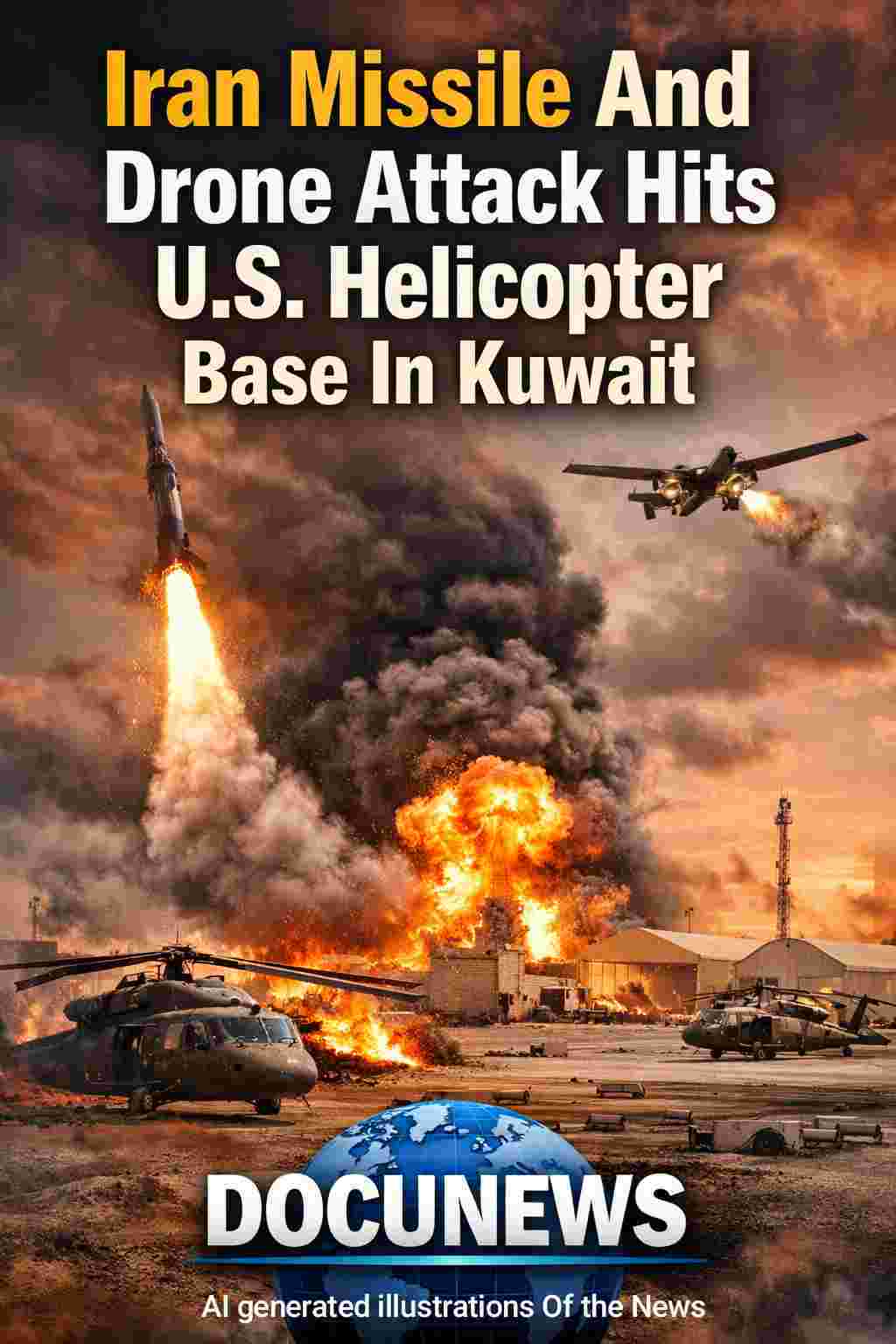
In a major escalation in the ongoing Middle East conflict, reports confirm that an Iran missile and drone attack hit a U.S. helicopter base in Kuwait, targeting critical military infrastructure with precision strikes using ballistic missiles and kamikaze drones. The Iran Missile and Drone Attack Hits U.S. Helicopter Base in Kuwait has sent shockwaves across diplomatic, military, and energy markets worldwide, raising global concerns over regional stability and U.S. military readiness abroad.
The Iran Missile and Drone Attack Hits U.S. Helicopter Base in Kuwait underscores how rapidly tensions have escalated since the conflict began. This marks one of the most significant direct attacks on American assets in the Persian Gulf in recent history. The assault reportedly caused serious damage to fueling areas, maintenance hangars, and support facilities inside the base. Eyewitnesses and satellite imagery show thick plumes of black smoke rising from the compound, visible from miles around, following the strikes. [Source]
Date, Location, and Context of the Attack
According to DocuNews Central, On March 9, 2026 — The Iran Missile and Drone Attack on the U.S. Helicopter Base occurred early Monday morning, when the Islamic Revolutionary Guard Corps (IRGC) announced a combined offensive against American military infrastructure on Kuwaiti soil. According to the IRGC press service, multiple missiles and loitering drones struck the Al‑Udeiri Helicopter Base, also known as Camp Buehring, causing noticeable damage across key operational areas. [Source]
many people are reacting to this Night Attack: Iranian Drone Hits Radar Tower at US Base in Kuwait.
This assault took place amid broader hostilities involving Iran, the United States, and regional actors after a multi‑nation military operation against Iranian targets was launched late February, further widening the conflict beyond Iran‑Israel engagements. The strikes on Kuwaiti bases are part of a series of retaliatory attacks by Iran, which officials describe as defense against what they call “unprovoked aggression.” [Source]
What Happened During the Attack?
The Iran Missile and Drone Attack Hits U.S. Helicopter Base in Kuwait occurred through a coordinated deployment of kamikaze drones and precision-guided cruise missiles launched by the IRGC Navy. In its official statement, the IRGC claimed that the offensive successfully damaged strategic facilities including fuel storage, helicopter ramps, logistics hubs, and command infrastructure — significantly disrupting base operations. [Source]
Eyewitness accounts and the statement also suggested that the strikes triggered alarm and defensive responses inside Camp Buehring, where personnel are reportedly engaged in logistical and tactical preparations related to U.S. operations in the Middle East. Although details on military casualties remain unclear, Kuwait and allied military forces are said to be assessing damage and rescue operations. [Source]
Why This Attack Matters
The Iran Missile and Drone Attack Hits U.S. Helicopter Base in Kuwait is more than a tactical strike — it represents a strategic escalation that directly involves American military assets on foreign soil. This marks a departure from indirect proxy engagements to open confrontation with U.S. forces stationed in a Gulf nation. The implications are far-reaching:
- Regional Security: Gulf states hosting U.S. bases, including Kuwait, Bahrain, and the UAE, may now face increased risk of similar strikes.
- U.S. Military Strategy: Defense analysts warn that American forces abroad could remain vulnerable to evolving drone and missile tactics employed by Iran and allied militias.
- Global Energy Impact: The Persian Gulf is central to oil and gas exports, and any threat to stability can influence global energy prices and supply chains.
For more background on the war dynamics, refer to coverage by Al Jazeera’s conflict timeline.
Background: Rising Tensions in the Gulf
Before the Iran Missile and Drone Attack Hits a U.S. Helicopter Base in Kuwait, the region had been experiencing heightened tensions following a wide range of military engagements:
- Iran’s Response to Military Campaigns: Iran has continued to launch missile and drone offensives against U.S. bases across the Middle East in retaliation for earlier strikes on its installations and leadership targets. [Source]
- Attacks on Civilian Infrastructure: Alongside military sites, Iranian strikes have also hit energy infrastructure and airports in Kuwait and neighboring Gulf states over recent days. [Source]
- Air Defense Interceptions: Kuwaiti and allied air defense systems reported intercepting hundreds of drones and missiles launched toward the country, underscoring the scale of the aerial threat. [Source]
These dynamics provide a backdrop to the latest assault on the U.S. helicopter base, showing a sustained operational campaign rather than an isolated incident.
Damage and Immediate Aftermath
Initial reports suggest that the Iran Missile and Drone Attack Hits U.S. Helicopter Base in Kuwait inflicted significant infrastructure damage, though exact figures remain unconfirmed. Some key developments include visible plumes of smoke rising from burned sections of the base, disruption to helicopter maintenance and fuel supplies, damage to logistical and support buildings critical to U.S. operations, and heightened operational alerts with temporary evacuation of nonessential personnel. [Source]
Also read Hundreds of Iran Missiles and Drones Hit Gulf Targets Full Details
Regional Responses and International Reactions
As the news of the Iran Missile and Drone Attack Hits U.S. Helicopter Base in Kuwait spreads, regional governments and global powers are reacting:
- Kuwait: Has expressed deep concern over the strike and its implications, especially as a host nation for coalition forces.
- United States: Washington is expected to release a statement condemning the attack and reviewing defensive measures for military bases in the Gulf.
- Global Actors: European and Middle Eastern allies have called for de-escalation and robust diplomatic efforts to avoid further violence. [Source]
Disclaimer
This article is based on available reports and sourced updates as of the time of publication. Some details may evolve as official military statements and independent verification continue to emerge. Information provided here aims to inform and does not constitute any official governmental or military briefing.
For more updates visit Israeli-Iran-U.S War
