
World
Hundreds of Iran Missiles and Drones Hit Gulf Targets Full Details

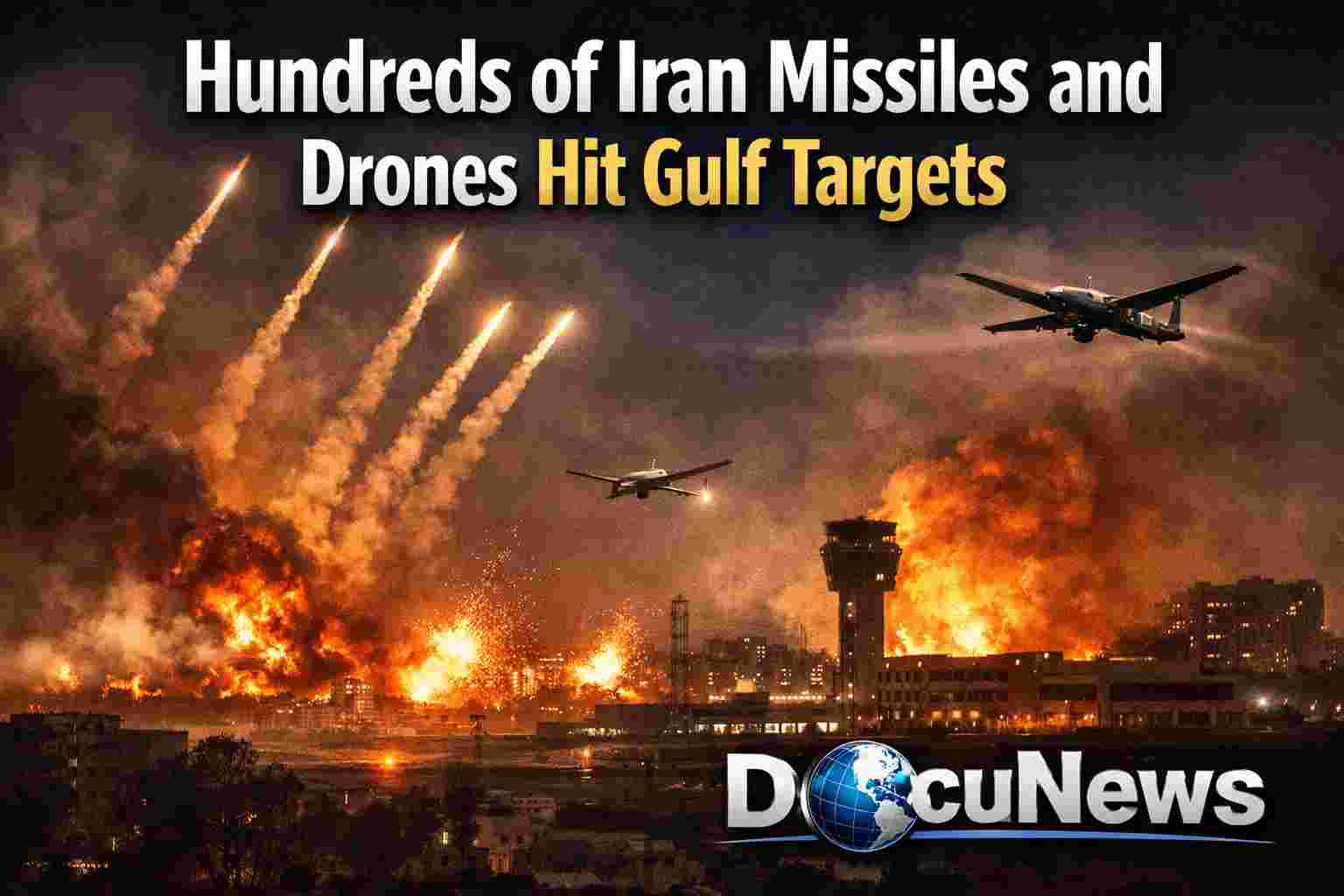
Iran missiles and drones have become a major focus in the rapidly escalating Persian Gulf security crisis. According to recent military assessments, and analysis carried out by DocuNews Central, hundreds of projectiles and unmanned aerial systems have struck strategic locations across the region. The unfolding situation has triggered urgent warnings from defense officials and analysts worldwide. As tensions rise, the headline “Hundreds of Iran Missiles and Drones Hit Gulf Targets” reflects a dangerous turning point in the ongoing Middle East confrontation.
According to DocuNews Central, On March 8, Military authorities monitoring the region confirmed that multiple Iran missile attacks and drone strikes have targeted locations across several Gulf states. Security officials reported damage to infrastructure and rising concern among regional governments. The strikes mark one of the most significant escalations in the Gulf security environment in recent months.
The development has intensified concerns about a wider confrontation across the Middle East. Analysts believe the scale of the attacks indicates a coordinated military campaign. Furthermore, defense experts warn that the use of large numbers of missiles and drones signals a shift in operational strategy by Iranian forces.
Also read Hundreds of Iran Missiles and Drones Hit Gulf Targets Full Details
Scale of the Iran Missile and Drone Attacks
The latest wave of Iran missile attacks and Iran drone strikes has drawn global attention. Security monitoring groups estimate that hundreds of ballistic missiles and thousands of unmanned systems have been deployed during the current escalation. Because of this scale, the Gulf region now faces one of the most intense aerial assault campaigns in recent history.
Defense analysts say the use of both ballistic missiles and one-way attack drones shows a layered strategy. Missiles travel at extreme speed and can hit hardened targets. Meanwhile, drones often approach slowly but overwhelm air defense systems through sheer numbers. Consequently, the combination creates a difficult challenge for military defenses.
Regional authorities have reported strikes near airports, logistics facilities, and energy infrastructure. Although several interception attempts were successful, some projectiles managed to reach their targets. As a result, security agencies have strengthened surveillance and air defense operations across the Gulf.
Why Iran Is Using Missiles and One-Way Attack Drones
The growing use of Iran ballistic missiles and Iran one-way attack drones highlights an evolving military doctrine. Over the past decade, Iran invested heavily in missile and unmanned aircraft technology. Therefore, analysts believe Tehran sees these tools as effective deterrents against stronger conventional militaries.
Missiles offer long-range capability and high impact power. However, drones provide flexibility and lower operational costs. Because of these advantages, military planners often combine both weapons during coordinated attacks. This approach increases the chances of penetrating defensive systems.
Strategic analysts from several international research organizations have noted that Iran’s drone technology has expanded rapidly. According to research from the Center for Strategic and International Studies, Iranian drone development has become a key pillar of its regional military strategy.
Targets Across the Persian Gulf
The recent Iran missile and drone offensive has reportedly targeted several strategic locations across the Gulf. Security sources mention airports, radar installations, and logistics hubs among the impacted areas. In addition, some residential districts experienced disruptions due to nearby strikes.
Air defense systems intercepted many incoming projectiles. Nevertheless, the number of launches created significant pressure on defensive networks. Experts say saturation attacks can force defenses to prioritize certain targets while others slip through.
The impact of these strikes extends beyond physical damage. The attacks also influence public confidence, commercial activity, and regional stability. Because the Gulf hosts major shipping routes and energy infrastructure, any disruption raises international concerns.
International Response to the Escalation
Governments around the world have reacted with increasing alarm to the surge in Iran missile strikes in the Persian Gulf. Several countries called for restraint while urging diplomatic engagement. Meanwhile, military forces stationed in the region have strengthened defensive readiness.
The United States Central Command continues to monitor the situation closely. Officials emphasized that attacks against civilian infrastructure violate international norms and place innocent populations at risk.
European governments have also expressed concern. Many leaders argue that expanding missile and drone attacks could destabilize global energy markets and maritime security. Consequently, calls for urgent dialogue have increased within international forums.
Impact on Civilian Infrastructure
One of the most troubling aspects of the crisis involves strikes near civilian infrastructure. Airports, hotels, and residential districts remain particularly vulnerable during missile and drone campaigns. Because these locations host large numbers of civilians, even minor damage can produce major humanitarian concerns.
Human rights observers warn that operations launched from densely populated areas also endanger local communities. When military equipment operates within civilian neighborhoods, the risk of collateral damage increases significantly.
International humanitarian law requires parties in conflict to protect civilian infrastructure whenever possible. Organizations such as the International Committee of the Red Cross continue to emphasize these obligations during modern warfare.
Also read Night Attack: Iranian Drone Hits Radar Tower at US Base in Kuwait.
Strategic Importance of the Persian Gulf
The Persian Gulf holds enormous economic and geopolitical importance. Nearly one-third of global seaborne oil shipments pass through the region each year. Therefore, any escalation involving Iran missiles and drones immediately attracts worldwide attention.
Major shipping lanes, energy terminals, and financial hubs operate along the Gulf coastline. Because of this concentration of resources, even limited disruptions can influence global markets. As a result, governments monitor the region closely.
Security analysts believe the recent strikes highlight how quickly regional tensions can affect global stability. When military confrontations threaten critical energy routes, international stakeholders quickly become involved.
Air Defense Systems Tested by Drone Swarms
The growing use of drone swarms has placed enormous pressure on modern air defense systems. Traditional defenses often focus on intercepting missiles or aircraft. However, hundreds of small drones approaching simultaneously create a different challenge.
Defense engineers continue developing advanced radar and interception technologies. Yet large swarms still strain existing capabilities. Consequently, military planners now emphasize integrated defense strategies combining radar, electronic warfare, and interceptor missiles.
According to research from the International Institute for Strategic Studies, drone swarms represent one of the fastest-growing threats in modern warfare.
Economic and Energy Market Concerns
Markets reacted cautiously to reports of widespread Iran missile and drone attacks. Oil prices often rise when instability threatens Gulf energy infrastructure. Investors worry that prolonged conflict could disrupt supply chains.
Energy analysts emphasize that the Gulf remains essential for global energy transportation. Therefore, missile strikes near energy facilities attract intense attention from governments and corporations.
Even when physical damage remains limited, the perception of risk can influence shipping insurance, fuel prices, and trade flows.
Regional Security Alliances Respond
Several Gulf nations have strengthened coordination with allied security forces following the latest attacks. Joint monitoring centers track missile launches and drone activity in real time. These collaborations improve early warning capabilities.
Furthermore, regional alliances continue upgrading missile defense systems. Governments also invest heavily in cybersecurity and surveillance technologies. These measures aim to reduce vulnerability during future crises.
However, experts note that technological solutions alone cannot eliminate the underlying geopolitical tensions.
DocuNews Central Opinion
From the perspective of DocuNews Central, the current escalation highlights the urgent need for stronger diplomatic engagement. Military pressure alone rarely produces lasting stability. Instead, long-term security requires dialogue, transparency, and regional cooperation.
The continued expansion of Iran missile and drone operations demonstrates how rapidly modern conflicts evolve. Because drone technology spreads quickly, other actors could adopt similar tactics. Therefore, international institutions must adapt rules governing emerging warfare technologies.
Furthermore, regional governments should prioritize civilian protection and crisis communication. When military tensions escalate near populated areas, accurate information becomes essential for public safety.
Frequently Asked Questions
What happened in the recent Gulf attacks?
According to Docunews Central, Reports indicate that hundreds of Iran missiles and drones were launched toward strategic targets across the Persian Gulf. Several interception attempts occurred while security forces assessed damage and risks.
Why is Iran using drones and missiles?
Iran developed missile and drone capabilities to extend its military reach and strengthen deterrence. These weapons allow attacks from long distances while reducing risk to pilots.
Which locations were targeted?
Security reports mention airports, logistics sites, radar installations, and infrastructure near residential areas. However, details vary as investigations continue.
How does this affect global energy markets?
The Persian Gulf transports a significant portion of the world’s oil supply. Therefore, missile attacks in the region can influence energy prices and shipping security.
Are diplomatic efforts underway?
International leaders have called for restraint and renewed dialogue. Several organizations continue urging peaceful solutions to prevent further escalation.
Conclusion
The unfolding crisis surrounding Hundreds of Iran Missiles and Drones Hit Gulf Targets represents a critical moment in regional security. The scale of the attacks highlights the growing role of missile and drone technology in modern conflicts. At the same time, the strikes underline the fragile balance of stability across the Persian Gulf.
While military defenses continue to intercept incoming threats, the broader challenge involves preventing further escalation. Diplomatic engagement, transparency, and international cooperation will play a decisive role in shaping the region’s future security landscape.
Ultimately, the global community now watches closely as governments respond to the growing risks associated with missile and drone warfare in one of the world’s most strategic regions.
Disclaimer: This report is based on publicly available information, security assessments, and international monitoring sources at the time of publication. Details may evolve as official investigations and government statements continue to emerge. DocuNews Central aims to provide accurate and balanced coverage of global events.
For more Updates please Visit Israeli-Iran-U.S War
