
World
Qatar Shoots Down Iranian Warplanes Minutes Before Strike on U.S. Base

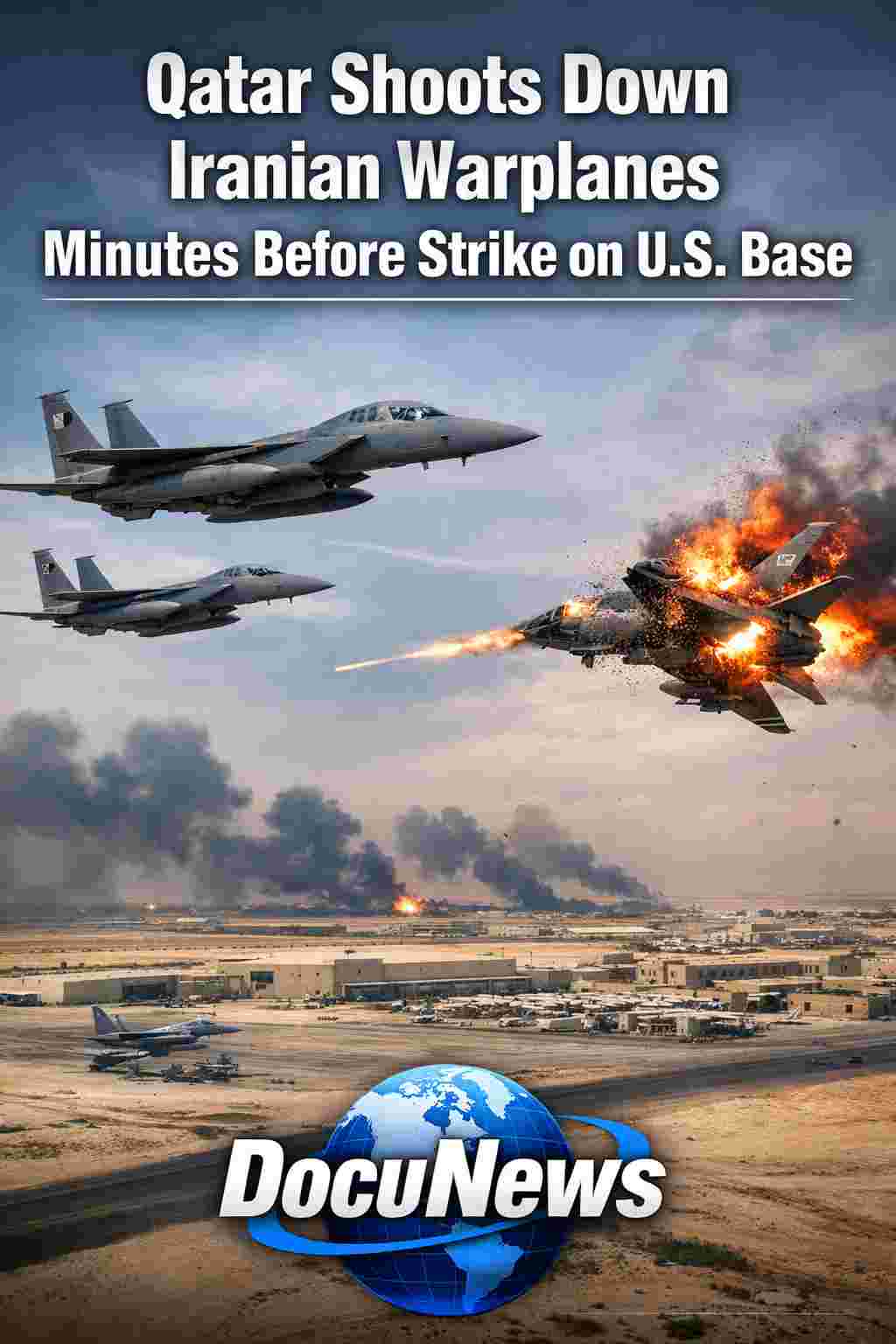
A major escalation in Middle East security unfolded when regional defense systems detected incoming military aircraft near a key international installation, triggering an immediate response that prevented a potential cross-border attack and heightened global attention on Gulf airspace security. In a fast-moving confrontation that captured worldwide headlines, Qatar Shoots Down Iranian Warplanes Minutes Before Strike on U.S. Base, demonstrating rapid air defense coordination, advanced surveillance capability, and strong strategic readiness in one of the most sensitive regions in the world.
According to DocuNews Central, On March 7, 2026, Defense officials confirmed that Qatari fighter jets intercepted aircraft identified as originating from Iran before they reached Al Udeid Air Base, a critical installation that supports operations for the United States in the region. Authorities stated that the interception occurred within minutes of the suspected strike window, and they credited early radar detection with enabling the swift scramble of combat aircraft.
Rapid Escalation and Immediate Air Defense Activation
Regional monitoring systems detected unusual aerial movement over the Gulf, and command centers immediately elevated threat levels. Consequently, air defense units activated intercept protocols while pilots prepared for emergency deployment. Military planners emphasized that speed matters in modern warfare, and therefore they maintained constant surveillance over strategic corridors.
Radar operators tracked the aircraft’s trajectory as it moved closer to protected airspace. Communication teams relayed real-time updates to leadership, and commanders authorized fighter jet deployment without delay. As a result, Qatari pilots launched from their bases and moved toward the approaching threat with full combat readiness.
Also Read Iran Announces Destruction of 14 U.S. Bases.
Strategic Importance of Al Udeid Air Base
Al Udeid Air Base serves as one of the largest military facilities in the Middle East and supports thousands of service members, including air crews, intelligence specialists, and logistics personnel. Moreover, the installation functions as a central hub for regional coordination, reconnaissance missions, and aerial operations across multiple theaters.
Because of its significance, the base remains under enhanced protection. Security teams coordinate with local authorities, and joint monitoring systems strengthen situational awareness. Consequently, any perceived threat toward the facility prompts immediate defensive action.
For official regional command information, visit: https://www.centcom.mil
Details of the Interception Operation
Military sources described the engagement as brief but decisive. First, radar systems identified the approaching aircraft. Then, command authorities verified flight data and confirmed the potential threat. Subsequently, interceptors received authorization to engage.
Qatari fighter jets closed distance quickly and established visual contact. Pilots issued warnings according to standard international aviation procedures. However, the incoming aircraft continued on course. Therefore, intercept teams prepared for defensive engagement.
Shortly afterward, air-to-air missiles launched from the interceptors. Explosions occurred over open water, and debris reportedly fell into the Gulf. Importantly, no ground facilities sustained damage, and no civilian areas faced risk.
Regional Security Context
Tensions across the Gulf region have fluctuated in recent months. Diplomatic disputes, military exercises, and strategic posturing increased alert levels among several governments. Consequently, air defense networks operated continuously to detect unusual movements.
Security analysts emphasize that modern airspace monitoring relies on advanced technology. Satellite tracking, radar arrays, and integrated command systems improve reaction time. Furthermore, cooperation among regional partners enhances overall readiness.
For international security analysis, see: https://www.iiss.org
International Reactions and Diplomatic Channels
Following the interception, diplomatic representatives initiated communication to reduce misunderstandings. Governments rely on established channels to clarify incidents and prevent further escalation. Therefore, dialogue remains essential after military encounters.
Organizations such as the United Nations continue to promote peaceful resolution of disputes. More information is available at: https://www.un.org
DocuNews Central Opinion
DocuNews Central believes this incident demonstrates how close the region stands to broader escalation. First, rapid interception prevented immediate damage. Second, the event highlights the value of advanced air defense partnerships. Finally, sustained diplomatic engagement must accompany military readiness to preserve long-term stability.
Our editorial team urges continued transparency from all involved parties. Additionally, we encourage readers to follow verified updates and avoid unconfirmed claims circulating online. Responsible reporting strengthens public understanding during fast-developing security events.
Conclusion
The interception near Al Udeid Air Base marked a significant moment in regional security dynamics. Qatar’s rapid deployment of fighter jets stopped approaching aircraft before they reached their target. Therefore, the operation prevented potential damage and avoided immediate escalation.
As tensions evolve across the Middle East, governments must balance defense preparedness with diplomatic engagement. Strong monitoring systems, professional training, and international cooperation will remain essential. Ultimately, stability depends on responsible leadership, transparent communication, and continued commitment to peace.
Disclaimer
This article presents information based on available reports and developing accounts at the time of publication. Details may change as official investigations continue and authorities release verified statements. Readers should consult credible news organizations and government sources for the most current updates regarding this evolving situation.
For more updates visit Israeli-Iran-U.S War
