
Israeli-Iran-U.S War
Iran Announces Destruction of 14 U.S. Bases.

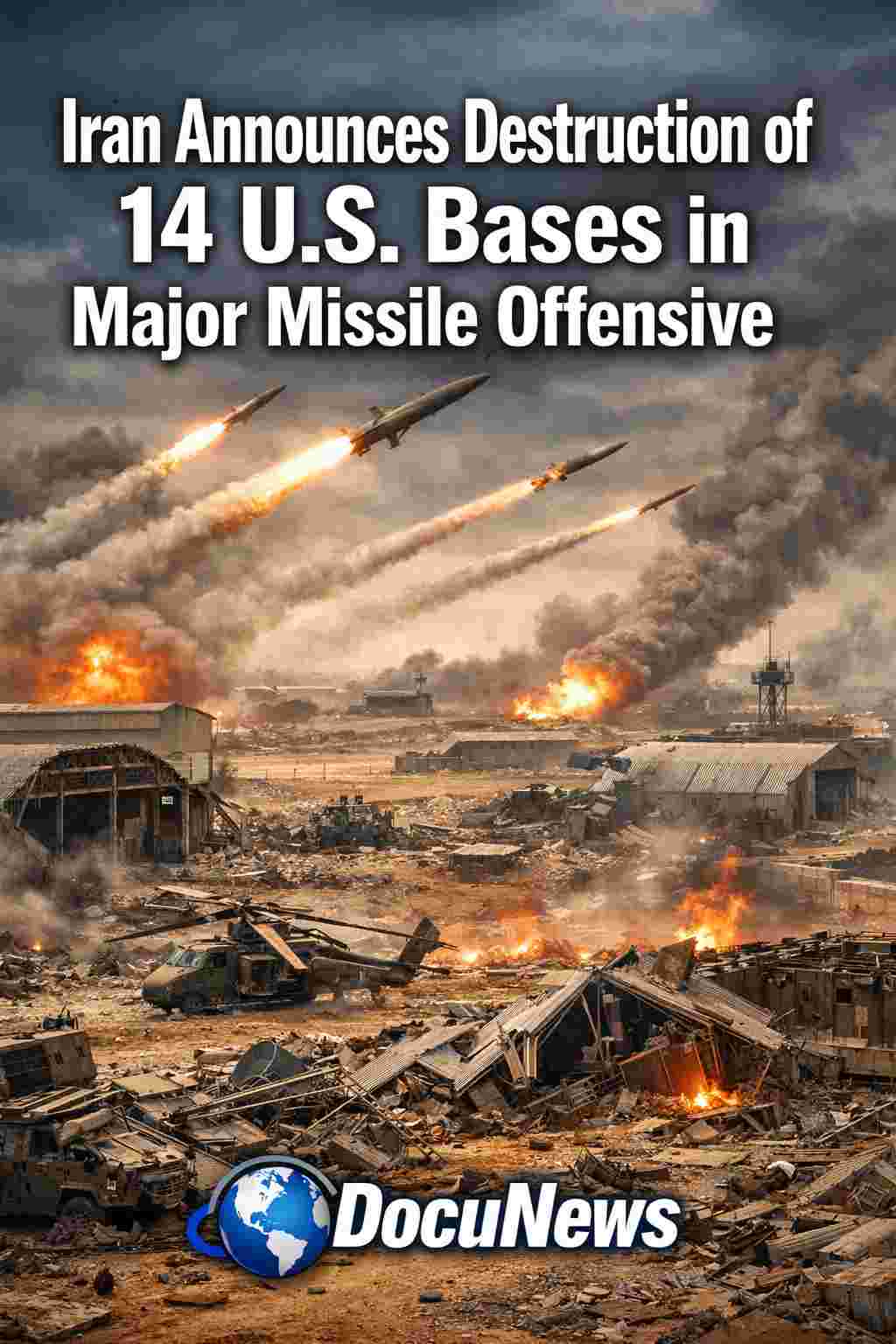
Iran Announces Destruction of 14 U.S. Bases in Major Missile Offensive has now become one of the most searched global security stories. According to DocuNews Central, the report claims that a large-scale missile campaign targeted multiple U.S. military bases across the region. According to statements from Tehran, the strikes caused widespread destruction and forced military officials to assess long-term reconstruction. Analysts say the headline Iran Announces Destruction of 14 U.S. Bases in Major Missile Offensive signals a dangerous escalation in the growing Middle East conflict and could reshape military calculations across the region.
According to DocuNews Central, On March 7, 2026, Iranian officials released statements through state media early Saturday claiming their forces launched coordinated missile strikes on several U.S. installations located in the Gulf region. Authorities in Tehran described the operation as a direct response to recent military tensions and air operations carried out near Iranian territory.
However, the situation remains fluid. While Iranian media outlets reported widespread destruction, independent verification remains limited. Meanwhile, security experts and defense analysts are reviewing satellite images and intelligence updates to determine the scale of damage to U.S. military bases reportedly targeted in the strike.
Iran Claims Coordinated Missile Campaign
Iranian officials stated that their military executed a carefully planned missile offensive targeting strategic American installations across the Middle East. According to the reports, several types of ballistic missiles were launched in waves. The operation allegedly focused on facilities used for logistics, air operations, and regional command centers.
Furthermore, Iranian commanders said the strikes formed part of what they described as a “deterrence operation.” They argued that the action aimed to show Iran’s ability to strike military infrastructure across long distances. State television repeatedly emphasized the scale of the operation while claiming the targeted U.S. bases suffered severe structural damage.
Nevertheless, outside analysts remain cautious. Defense specialists note that governments involved in military confrontations often release conflicting narratives. Therefore, independent confirmation will determine whether the claims match the actual situation on the ground.
Also Read Iran Vows Stronger Strikes Against U.S.
Strategic Importance of U.S. Military Bases in the Middle East
The United States maintains several strategic military bases throughout the Middle East. These installations support air operations, surveillance missions, and regional security partnerships. In addition, they allow American forces to respond quickly to emerging threats.
Because of their importance, any confirmed damage to these facilities could influence military planning in the region. Bases located in the Gulf often support operations that monitor shipping routes, protect allied countries, and counter extremist groups.
According to defense research from the U.S. Department of Defense, forward military bases help maintain rapid response capabilities. They also support humanitarian missions and intelligence gathering across large geographic areas.
Regional Tensions Continue to Rise
The alleged missile offensive arrives during one of the most tense periods in the Middle East in recent years. Diplomatic disagreements, proxy conflicts, and military operations have steadily increased pressure across the region.
Several countries have already raised concerns about the potential consequences of direct confrontations between major military powers. Consequently, international observers fear the escalation could spread beyond the immediate conflict zones.
Meanwhile, global energy markets remain sensitive to developments in the region. Because major oil shipping routes pass through nearby waters, any security crisis can influence economic stability worldwide.
People are reacting to this Iran Launches Missile Strike Near Riyadh U.S. Base.
Military Analysts Assess Possible Damage
Military experts across the world have started examining available information about the reported strikes. Satellite monitoring services and defense intelligence units often review missile trajectories, impact zones, and infrastructure changes following major attacks.
However, analysts caution against early conclusions. Large-scale military damage usually requires detailed imagery analysis and official confirmation before reliable assessments emerge.
Organizations such as the International Institute for Strategic Studies frequently analyze military conflicts and provide independent insights into developing security situations.
Possible Reconstruction Timeline
Iranian reports claim that rebuilding the allegedly damaged bases could require several years. They argue that infrastructure such as airstrips, command centers, and storage facilities may need extensive repairs if the strikes caused the level of destruction described.
Nevertheless, defense engineers say reconstruction timelines depend on many factors. For example, the severity of damage, available resources, and security conditions all influence rebuilding efforts.
Historically, modern military bases can recover quickly if damage remains limited. However, large-scale structural destruction could extend repair operations for months or even years.
Global Reactions Begin to Surface
Governments around the world have started reacting to the reports of the alleged missile offensive. Several international leaders called for restraint while urging all parties to avoid further escalation.
Diplomatic channels often become extremely active during such moments. Officials frequently hold emergency consultations to prevent misunderstandings that could trigger wider confrontations.
Meanwhile, organizations including the United Nations regularly encourage peaceful dialogue during military crises. Global institutions emphasize diplomacy as the primary method for preventing regional wars.
Impact on International Security
The claims surrounding the destruction of multiple U.S. bases highlight the fragile nature of security in the Middle East. Military confrontations in this region often influence international relations far beyond the immediate conflict zones.
Additionally, the presence of numerous foreign forces increases the risk of misunderstandings or rapid escalation. Any direct confrontation involving major military powers could trigger wider geopolitical consequences.
Security specialists therefore stress the importance of communication between nations. Diplomatic engagement often reduces the risk of unintended escalation during tense military standoffs.
Economic and Energy Market Concerns
The Middle East remains one of the most important regions for global energy production. Therefore, reports of missile strikes or military clashes frequently affect oil markets.
Energy analysts closely monitor developments because instability near major shipping routes could disrupt supply chains. Even rumors of conflict sometimes cause fluctuations in global oil prices.
Market observers regularly follow updates from institutions such as the International Energy Agency, which analyzes how geopolitical tensions influence energy supply and demand.
Information Verification Challenges
Conflicts often generate competing narratives. Governments release statements that support their strategic positions, while independent journalists work to verify facts from multiple sources.
Because of this reality, international audiences must approach early reports carefully. Reliable confirmation usually emerges after analysts review satellite imagery, eyewitness accounts, and official briefings.
Therefore, experts recommend waiting for comprehensive assessments before drawing final conclusions about the extent of the alleged destruction.
Role of Media in Conflict Reporting
Global media organizations play an important role during developing military situations. News outlets gather information, analyze official statements, and provide updates to the public.
However, responsible journalism also requires careful verification. Accurate reporting helps prevent misinformation and ensures readers understand complex international events.
Readers can follow ongoing updates through credible international outlets as well as regional publications that specialize in geopolitical reporting.
DocuNews Central Coverage and Analysis
As the situation continues to develop, DocuNews Central is closely monitoring reports, official statements, and independent analysis related to the alleged missile offensive. The platform regularly reviews security developments across the Middle East while providing context for readers seeking reliable global news coverage.
Our editorial team continues to gather information from defense experts, diplomatic sources, and international institutions. In addition, updates will appear as credible details become available.
DocuNews Central Opinion
The reported missile offensive highlights how fragile the security environment has become across the Middle East. Military confrontations between powerful nations always create risks that extend far beyond the battlefield.
Diplomacy therefore remains essential. Dialogue between governments can reduce tension and prevent situations from escalating into larger regional wars.
Furthermore, transparent communication between nations helps the global community understand events without relying on conflicting narratives. Responsible leadership and careful diplomacy often determine whether crises escalate or gradually stabilize.
Conclusion
The claim that Iran destroyed multiple U.S. military bases in a massive missile offensive has captured global attention. Although Iranian officials describe widespread destruction, independent verification continues as analysts review available evidence.
Meanwhile, international leaders urge caution and encourage diplomatic engagement to prevent further escalation. The coming days will likely reveal more details as governments release updated information and experts complete technical assessments.
For now, the developing story illustrates how quickly tensions in the Middle East can transform into major global security concerns.
Disclaimer: This report is based on publicly available information, statements from officials, and ongoing media coverage. Some claims mentioned in the article have not yet received full independent verification. Readers should follow updates from credible international sources as additional details emerge.