
World
The Iran Missile Strike on a U.S. Military Base Raised Fears of a Wider Regional War

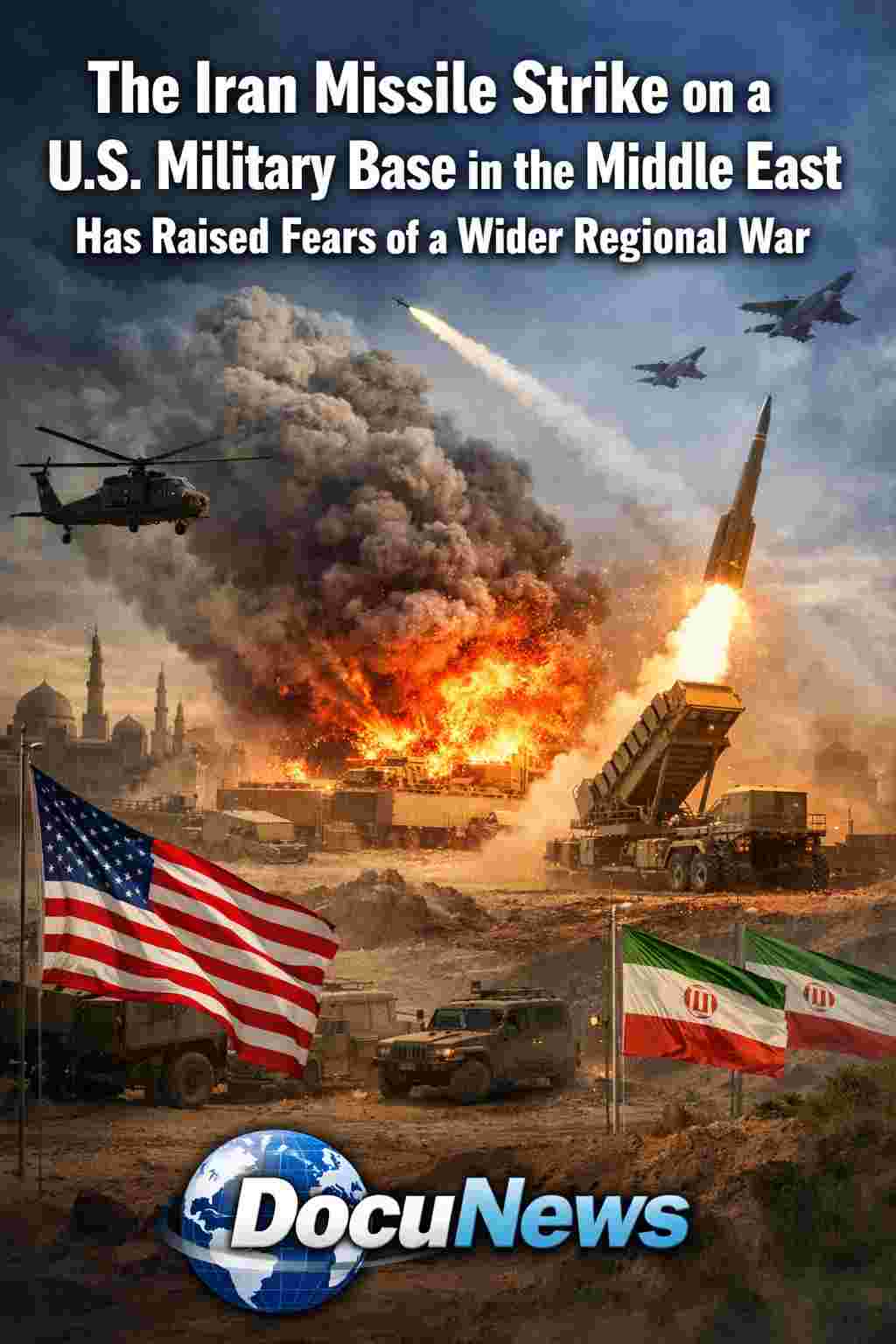
The Iran missile strike on a U.S. military base in the Middle East has raised fears of a wider regional war and triggered urgent security concerns across global capitals. Military analysts warn that the Iran missile strike on a U.S. military base in the Middle East has raised fears of a wider regional war because the attack signals a dangerous shift in the balance of power in the region. Tensions had already been rising. However, this latest escalation has intensified fears of retaliation, broader confrontation, and a potential military chain reaction involving several countries.
According to DocuNews Central, On March 7, 2026, Regional security officials confirmed that Iranian missiles targeted a United States military installation in the Middle East late Friday night. Although early reports remain fragmented, defense observers say the strike marks one of the most direct confrontations between Iran and the United States in recent years. Governments across Europe, Asia, and the Gulf immediately began emergency consultations.
Meanwhile, international diplomats urged restraint. Several governments fear that a cycle of retaliation could ignite a prolonged regional war. Financial markets also reacted quickly. Oil prices moved upward within hours of the reported attack. Security agencies increased surveillance across strategic locations throughout the region.
Rising Tensions Before the Missile Strike
Tensions between Iran and the United States have been simmering for months. Military activity increased around key strategic waterways and regional bases. Intelligence reports repeatedly warned of possible confrontations. Therefore, security officials had already placed forces on higher alert.
Several incidents preceded the latest escalation. Drone interceptions occurred near sensitive facilities. Naval patrols intensified near shipping routes. At the same time, regional militia groups issued warnings about possible retaliation against Western forces.
However, the missile strike marked a turning point. Unlike previous proxy confrontations, the attack directly targeted a U.S. military installation. That distinction immediately raised alarm among defense strategists.
Strategic Importance of U.S. Military Bases in the Region
United States military bases across the Middle East play a crucial role in regional security operations. These installations support counterterrorism missions, intelligence gathering, and maritime protection. They also provide logistical support for allied forces operating throughout the region.
Furthermore, these bases help secure international shipping routes that carry a large share of the world’s oil supply. Because of that responsibility, any attack against them sends shockwaves through global security systems.
Military planners understand the stakes. Therefore, defense forces maintain layered missile defense systems around most major bases. Radar networks monitor airspace continuously. Fighter jets remain ready for rapid response missions.
Also Read Iran Announces Destruction of 14 U.S. Bases.
Immediate International Reactions
World leaders responded quickly after news of the strike emerged. Diplomatic channels became active within minutes. Governments issued statements calling for calm while urging both sides to avoid further escalation.
The United Nations requested emergency consultations among member states. Officials warned that additional military action could destabilize an already fragile region. Consequently, diplomats began working behind the scenes to reduce tensions.
European allies also expressed concern. Leaders across NATO countries emphasized the importance of diplomatic solutions. At the same time, they reaffirmed support for regional stability and international law.
Several Gulf nations increased their defensive readiness as well. Air defense units heightened monitoring operations. Security agencies expanded surveillance near critical infrastructure sites.
Economic Impact of the Escalation
Financial markets reacted swiftly to the rising tensions. Energy traders closely monitor developments in the Middle East because the region supplies a significant portion of global oil production. Therefore, even small disruptions can affect prices worldwide.
Oil futures climbed sharply after early reports of the missile strike. Investors fear that prolonged conflict could disrupt shipping lanes and energy exports. Insurance premiums for tankers operating in the region also increased.
Meanwhile, global stock markets experienced brief volatility. Investors moved funds toward safer assets. Gold prices also rose as uncertainty spread across financial sectors.
For additional background on global energy markets during geopolitical crises, readers can explore analysis from the International Energy Agency https://www.iea.org/.
Military Analysts Assess the Situation
Defense experts now study satellite images and intelligence updates to understand the scale of the strike. Early assessments suggest that the missiles targeted infrastructure areas inside the base rather than residential compounds.
However, analysts caution that full damage assessments require time. Military investigators continue reviewing surveillance footage and radar records. These materials will help determine how the missiles traveled and whether defense systems intercepted some of them.
Strategic experts also examine the broader implications. Direct confrontation between two major military powers could reshape regional security calculations.
Security research institutions such as the Center for Strategic and International Studies provide deeper analysis on military developments and geopolitical conflicts https://www.csis.org/.
Risk of Regional Spillover
The Middle East contains many interconnected political and military alliances. Because of that complexity, a conflict between two countries can quickly involve others. Regional militias, allied governments, and international partners could be drawn into the confrontation.
For example, several countries host U.S. military facilities that support coalition operations. If tensions escalate further, these bases could become potential targets. Consequently, governments have strengthened security measures around strategic installations.
Additionally, naval routes across the Persian Gulf and surrounding waters remain vital to global commerce. Any disruption could impact international trade and energy supplies.
Diplomatic Efforts to Prevent Wider War
Despite the rising tensions, diplomats continue working to prevent a full-scale war. Quiet negotiations often occur behind closed doors during such crises. Communication channels between rival governments help reduce misunderstandings.
International organizations also play a key role. Mediation efforts frequently involve neutral states that maintain relationships with both sides. These diplomatic bridges allow sensitive discussions to take place.
The United Nations frequently facilitates dialogue during international crises. Information about peacekeeping and conflict prevention initiatives can be found here https://www.un.org/.
Impact on Regional Security Alliances
Alliances across the Middle East will likely adjust their strategies following the missile strike. Military planners constantly evaluate threats and update defense postures. Therefore, regional governments may strengthen cooperation agreements.
Joint military exercises could increase in frequency. Intelligence sharing may also expand among partner countries. These actions aim to deter further attacks and protect critical infrastructure.
However, some governments prefer diplomatic engagement rather than military escalation. Consequently, policymakers must balance security preparations with efforts to maintain stability.
Information Warfare and Media Narratives
Modern conflicts extend beyond traditional battlefields. Governments and political groups often compete to control the narrative surrounding military events. Therefore, media coverage plays an important role during crises.
Official statements from different governments sometimes present contrasting interpretations of the same event. As a result, journalists and analysts carefully examine evidence from multiple sources.
Credible reporting remains essential during periods of heightened tension. Accurate information helps prevent panic while allowing citizens to understand developments responsibly.
Readers seeking reliable international reporting can consult organizations such as Reuters https://www.reuters.com/.
Security Measures Around the Region
Security authorities across several Middle Eastern countries have increased defensive readiness. Air defense systems now operate under enhanced monitoring protocols. Surveillance aircraft patrol strategic airspace corridors.
Military bases also strengthened internal security measures. Access controls tightened around sensitive facilities. Command centers increased operational staffing levels to ensure rapid response capability.
Meanwhile, governments issued travel advisories in certain areas. These measures aim to protect civilians while authorities evaluate the evolving situation.
Global Political Implications
The geopolitical consequences of the missile strike could extend far beyond the Middle East. Major world powers often maintain strategic interests in the region. Therefore, diplomatic reactions from global capitals will influence future developments.
International negotiations over nuclear programs, sanctions, and security cooperation may also be affected. Leaders must carefully consider their responses to avoid triggering unintended escalation.
At the same time, humanitarian organizations remain concerned about the potential impact on civilians. Armed conflict often disrupts communities, supply chains, and public services.
DocuNews Central Opinion
At DocuNews Central, analysts believe that the current situation represents a dangerous moment in global security. The missile strike demonstrates how quickly geopolitical tensions can escalate when diplomatic channels weaken.
However, history also shows that strong diplomacy can prevent wider wars. International cooperation, open dialogue, and responsible leadership remain essential during crises like this one.
Therefore, governments should prioritize communication and negotiation while maintaining defensive readiness. Balanced responses often prevent conflicts from spiraling beyond control.
Conclusion
The Iran missile strike on a U.S. military base in the Middle East has raised fears of a wider regional war and triggered urgent diplomatic and military responses worldwide. Governments, analysts, and international organizations now watch developments closely. The coming days will determine whether tensions escalate further or whether diplomacy succeeds in restoring stability.
Although uncertainty remains high, global leaders understand the risks of broader confrontation. Continued communication, responsible reporting, and measured decision-making will play vital roles in shaping the outcome of this crisis.
Disclaimer
This report is based on currently available international security information, open-source intelligence, and global media coverage. Details surrounding military incidents may change as new verified information emerges. Readers are encouraged to consult official government statements and reputable international news organizations for ongoing updates.
For more details Visit Israeli-Iran-U.S War
