
World
U.S. Tomahawk Strikes Destroy Iranian Warships.

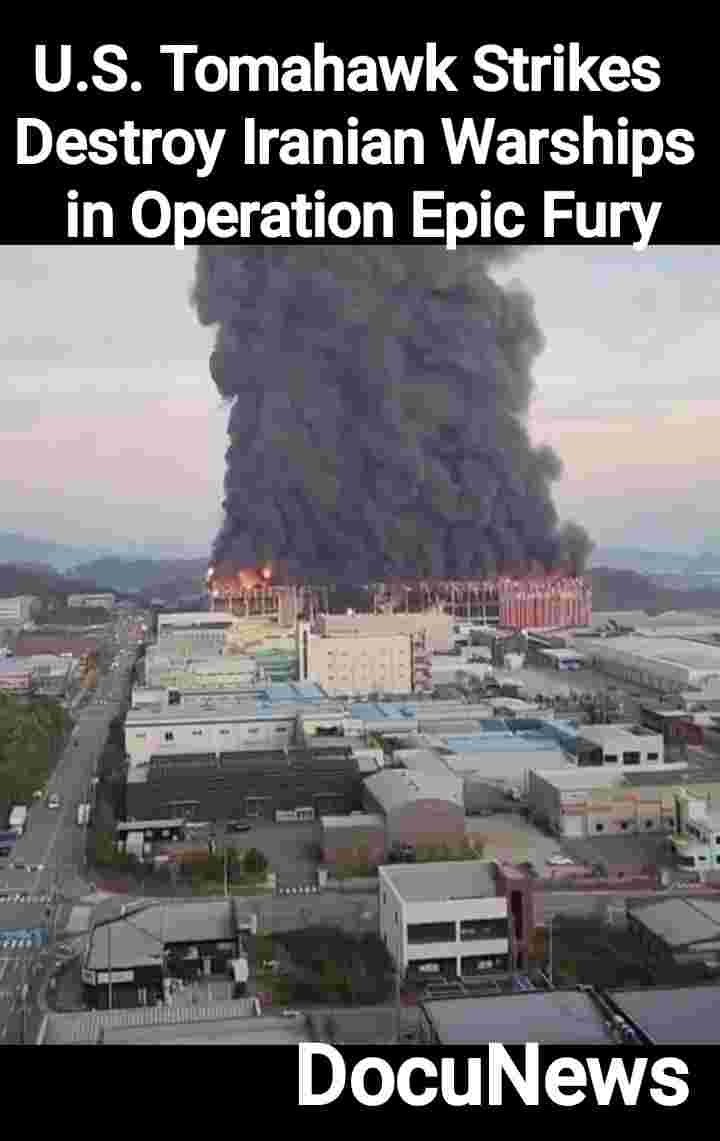
The headline U.S. Tomahawk Strikes Destroy Iranian Warships in Operation Epic Fury has ignited intense global attention as reports describe it as a large-scale precision strike campaign in the Persian Gulf. Defense analysts immediately focused on the scale, coordination, and technological sophistication behind the alleged operation. At the center of the discussion stands the deployment of U.S. Tomahawk missile systems, naval strike groups, and integrated air support in one of the most strategically sensitive waterways in the world.
According to DocuNews Central, the Persian Gulf remains a critical maritime corridor connecting global energy markets to international consumers. Consequently, any report involving destroyed Iranian warships, naval infrastructure, or missile systems carries serious geopolitical and economic implications. The strategic weight of this development extends beyond regional rivalry, influencing diplomatic alignments, security calculations, and global trade expectations.
Date and Location
According to the scenario context, the strikes unfolded in early March 2026 within the Persian Gulf, with operational concentration near Bandar Abbas naval facilities. This coastal zone functions as a key military and maritime hub due to its proximity to the Strait of Hormuz. Because this narrow passage supports a major share of international oil shipments, stability in this region remains essential for global energy continuity.
Also read Israel Launches Strike on Iran’s Underground Nuclear Facility in Eastern Tehran
Understanding U.S. Tomahawk Strikes
Tomahawk Land Attack Missiles represent one of the most reliable long-range strike systems within U.S. naval doctrine. These cruise missiles launch from destroyers and submarines, travel at low altitude, and rely on advanced navigation systems to reach precise targets. Their stand-off capability allows naval forces to engage strategic objectives while maintaining distance from hostile coastal defenses.
In modern warfare planning, precision reduces prolonged confrontation. Military strategists increasingly favor rapid, coordinated actions designed to neutralize command infrastructure and limit escalation. If reports of destroyed Iranian warships prove accurate, the operational objective likely centered on reducing maritime capability while avoiding wider engagement.
Strategic Importance of the Strait of Hormuz
The Strait of Hormuz stands among the world’s most important energy chokepoints. A disruption in this corridor can influence oil prices within hours. Tanker movement, insurance premiums, and shipping logistics depend heavily on predictable security conditions in this narrow waterway. Therefore, any naval confrontation near Bandar Abbas triggers immediate market attention.
Energy analysts closely monitor such developments because sustained instability can affect global inflation, supply chains, and investor confidence. Financial markets often respond faster than diplomatic channels, underscoring the economic gravity of maritime security in this region.
Check this out Iran Confirms 787 Deaths as US-Israeli Airstrikes Devastate Cities
Regional Security Implications
If multiple Iranian warships were disabled or destroyed, regional naval balance would shift significantly. Fleet readiness depends on operational vessels, trained crews, supply chains, and command networks. Sudden maritime losses require reassessment of patrol coverage, deterrence posture, and coastal defense arrangements.
Neighboring states would likely increase surveillance activity and maritime monitoring. International coalitions might review security protocols to safeguard commercial shipping routes. Consequently, even a short-term confrontation could influence long-term strategic deployments across the Gulf.
Diplomatic and International Reaction
Military escalation often prompts diplomatic engagement aimed at limiting expansion. Regional governments typically open communication channels to prevent miscalculation. Global institutions encourage restraint and emphasize maritime law compliance in international waters.
While military strength shapes immediate outcomes, diplomatic engagement determines lasting stability. Therefore, ongoing negotiations and international consultations remain central to preventing broader confrontation.
Economic Consequences
Reports involving U.S. Tomahawk strikes and destroyed Iranian warships have potential to impact oil futures, currency stability, and shipping contracts. Insurance providers may reassess risk exposure for tankers navigating the Gulf. Energy-importing nations would monitor supply security, while exporting states evaluate pricing leverage.
Because the global economy remains interconnected, developments in one maritime corridor can generate ripple effects across multiple continents. Investors respond quickly to perceived supply threats, reinforcing the strategic relevance of Gulf stability.
DocuNews Central Analysis
DocuNews Central continues to emphasize clarity, context, and verified information when examining developments tied to Operation Epic Fury and U.S. Tomahawk missile operations. Precision military narratives require careful scrutiny, especially in high-tension environments where misinformation can circulate rapidly.
Balanced coverage ensures that audiences understand not only the reported tactical developments but also the broader geopolitical, economic, and diplomatic dimensions involved.
Frequently Asked Questions
What is Operation Epic Fury?
Operation Epic Fury refers to a reported coordinated U.S. naval and air strike campaign involving Tomahawk missile systems and advanced aircraft targeting maritime assets in the Persian Gulf.
Why is the Strait of Hormuz critical to global markets?
The Strait of Hormuz channels a major share of international oil shipments. Any instability in this corridor directly affects global energy pricing and maritime trade.
How do Tomahawk missiles function?
Tomahawk missiles are long-range cruise missiles launched from naval vessels. They rely on GPS navigation and terrain mapping to strike designated targets with high precision.
Conclusion
The report titled U.S. Tomahawk Strikes Destroy Iranian Warships in Operation Epic Fury reflects a high-stakes security scenario centered on precision strike capability, maritime strategy, and geopolitical balance in the Persian Gulf. The intersection of naval power, energy security, and international diplomacy underscores the global significance of any development in this region.
Editorial Notice
This publication provides analytical coverage based on the headline and contextual scenario presented. It does not independently verify operational claims. Readers are encouraged to consult official government briefings, recognized international institutions, and established global news agencies for confirmed updates. Ongoing security situations may evolve, and information should be reviewed alongside credible authoritative sources.
For more verified news Visit Israeli-Iran-U.S War and legit.ng
