
Politics
10 Facts Proving Instant Transmission of Election Results Possible in Nigeria with BEVAS

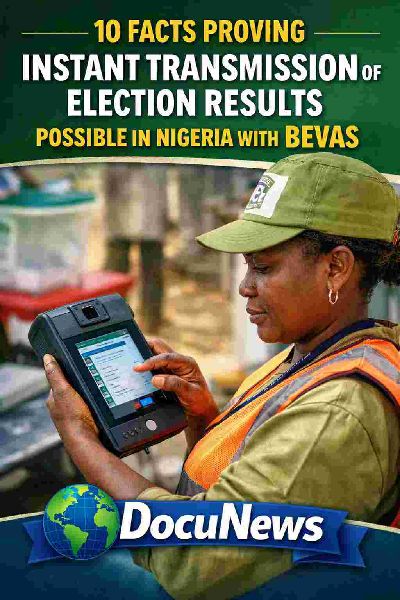
This has been a great controversial matter right now in Nigeria. It has divided the House of Assembly And the Senate. But can Instant transmission of election results work perfectly in Nigeria? Let’s discuss 10 Facts Proving Instant Transmission of Election Results Possible in Nigeria with BEVAS. This is a topic at the center of discussions among Nigerian election stakeholders, technology experts, and citizens concerned about transparency and credibility in elections. In many past elections, delays in result collation, human errors in manual counting, and disputes over result accuracy have undermined public trust. Today, with advances in technology, it is possible to achieve instant transmission of election results, ensuring timely, accurate, and secure reporting.
BEVAS (Biometric and Electronic Voting and Result Transmission System) has emerged as a secure, scalable, and practical platform for real-time election result transmission. By leveraging modern digital infrastructure, encryption, and multi-channel connectivity, BEVAS demonstrates that Nigeria can adopt instant transmission without compromising security or accuracy. Evidence from international implementations further reinforces that such a system can be effective even in countries with large populations and complex electoral logistics.
According to DocuNews Central, This discussion gained further prominence on February 18, 2026, in Abuja, where policymakers, civil society representatives, and election officials examined the feasibility of digital transmission. Some politicians have claimed that network limitations, rural connectivity issues, and logistical challenges make instant transmission impossible. However, technical assessments, pilot programs, and global case studies show that these concerns are addressable through innovative approaches. Now lets talk about the 10 Facts.
You can read also El-Rufai Still in EFCC Custody as Surety Backs Out.
1. Nigeria’s Mobile Network Infrastructure is Robust and Expanding
Nigeria has experienced significant growth in mobile network coverage and quality over the past decade. Leading telecom providers such as MTN, Airtel, Globacom, and 9mobile now provide extensive 4G LTE coverage across urban and many rural areas. The continuous rollout of 5G trials in major cities further strengthens the potential for high-speed data transfer during elections.
BEVAS is designed to leverage these networks efficiently. The system uses advanced data compression algorithms, offline storage, and automatic batch transmission. Polling units with intermittent connectivity can store results locally, and the system will automatically transmit data once network access is restored. Multi-path transmission options, including satellite, Wi-Fi hubs, and mobile broadband, further ensure that no polling unit is left disconnected.
Experiences from countries such as India, Brazil, and the Philippines indicate that network infrastructure, when paired with smart offline-first systems, is sufficient to achieve real-time result transmission even in remote areas. These models show that connectivity concerns, though valid, are solvable through technology and proper planning.
2. Digital Encryption Ensures Security and Integrity
Security and integrity are crucial for any election system. BEVAS uses advanced encryption protocols to safeguard data. This includes a combination of public-key encryption for secure transmission and symmetric encryption for local storage. Data transmitted from polling units is encrypted, ensuring that only authorized servers can access the results. Any attempt to intercept the transmission results in unreadable data, protecting against tampering.
Additionally, blockchain-based verification is incorporated to create a tamper-proof record of all transmitted results. This technology guarantees that each result is traceable and immutable, from the polling unit to the central result server. With these measures, the risk of manipulation or fraud, which often occurs during manual collation or physical transport of result sheets, is virtually eliminated.
For further reading on election security, visit CISA Election Security, which outlines best practices for digital safeguarding of election data.
You may have missed this Tinubu Summoned at Abuja Summit To Release Nnamdi Kanu
3. Real-Time Error Detection Minimizes Disputes
Manual election processes are highly susceptible to human error, including miscounting votes or entering incorrect numbers. BEVAS addresses this by providing real-time error detection. The system cross-checks submitted results against registered voter lists and expected turnout thresholds. If the number of votes exceeds registered voters in any polling unit, the system automatically flags it for verification.
Digital audit logs allow election observers and authorized stakeholders to monitor the results in real-time. These logs capture every submission, modification, and verification step, ensuring that the process is fully transparent. This proactive approach reduces post-election disputes, litigation, and mistrust, which have historically plagued Nigerian elections.
4. Proven Technology Models Can Be Adapted
BEVAS draws on international best practices. India has successfully implemented electronic result transmission for national and state elections. Brazil and South Korea have also demonstrated effective digital vote capture and instant result reporting. These models show that a large, diverse electorate can be served securely through technology, even in areas with limited connectivity.
Adapting these models to Nigeria involves customizing the software to handle local election regulations, demographic variations, and logistical realities. BEVAS incorporates biometric verification to authenticate results at the polling unit level and integrates with mobile network infrastructure to guarantee transmission efficiency. By learning from proven international systems, Nigeria can reduce implementation risks while enhancing transparency and reliability.
5. Automatic Result Capture Reduces Human Error
Manual collation and transcription of votes are major sources of errors and delays. BEVAS automates this process through electronic vote capture devices that directly record votes. These results are then transmitted immediately to central servers without human intervention, reducing errors due to misreading, fatigue, or deliberate manipulation.
This automation frees election officials to focus on operational efficiency rather than tedious counting tasks. It also allows observers to verify results in real-time, ensuring transparency. The combination of automation and real-time monitoring enhances both speed and credibility in the election process.
6. Long-Term Cost Savings and Efficiency
While initial deployment of BEVAS requires investment in devices, software, training, and network support, the system reduces long-term costs. Fewer personnel are needed for result collation, and the logistics of transporting physical result sheets are minimized. Legal disputes arising from delays or errors are also reduced, saving government resources and time.
Over several election cycles, these savings can be substantial. Resources that would have been spent on manual processes can instead be redirected to voter education, infrastructure development, and cybersecurity measures, enhancing the overall quality of the electoral process.
7. Stakeholders Gain Instant Access and Transparency
BEVAS allows political parties, election observers, civil society organizations, and media outlets to monitor results in real-time through secure logins. This reduces misinformation, speculation, and rumors that often spread during delayed manual counting. Stakeholders can witness results as they are transmitted, increasing public confidence and reducing potential tensions.
Transparency is crucial for voter trust. With BEVAS, election results are verifiable, traceable, and available to authorized parties immediately, fostering a culture of accountability and reliability.
8. Deters Electoral Malpractice
Electronic transmission makes alteration or manipulation of results extremely difficult. Once results leave a polling unit, they are encrypted and stored in tamper-proof systems. This reduces opportunities for ballot stuffing, falsification of results, or manipulation during transport.
The transparent and traceable nature of digital systems serves as a strong deterrent against electoral malpractice. BEVAS thus strengthens the credibility of the process, discouraging unethical behavior and ensuring that election outcomes reflect the true will of the people.
9. Seamless Integration with INEC’s Existing Infrastructure
BEVAS is designed to work with devices and procedures currently used by the Independent National Electoral Commission (INEC). It does not require a complete overhaul of the electoral system, allowing for phased deployment and pilot programs. Election officials can be trained on the system without disrupting established workflows, ensuring operational reliability and smooth adoption nationwide.
Integration also allows for compatibility with existing voter databases, biometric verification tools, and result collation processes. By building on existing infrastructure, the transition to digital result transmission becomes practical and cost-effective.
10. Strengthens Voter Confidence and Democratic Participation
Timely, accurate, and transparent election results increase public trust in the democratic process. With BEVAS, citizens can be assured that election outcomes are legitimate, reducing post-election conflicts and disputes. Higher confidence in the system encourages greater voter participation and engagement, strengthening democracy and civic responsibility.
By demonstrating commitment to fairness and transparency, the adoption of instant transmission systems can also improve Nigeria’s international standing and set a precedent for credible electoral practices in Africa.
DocuNews Central Opinion
DocuNews Central emphasizes that implementing systems like BEVAS is both feasible and necessary for Nigeria. Network limitations can be mitigated using offline storage, multi-path transmission, and secure encrypted channels. Coupled with digital literacy programs and phased deployment, BEVAS can maximize transparency, efficiency, and public trust.
Conclusion
Instant transmission of election results in Nigeria is achievable, secure, and beneficial. BEVAS addresses network challenges, reduces human error, deters electoral malpractice, and enhances transparency. Careful implementation, proper training of staff, and collaboration among stakeholders will allow Nigeria to establish a modern, credible electoral process. For additional insights, refer to the International Foundation for Electoral Systems (IFES) and the ACE Electoral Knowledge Network.
For security Updates In Nigeria Visit Security updates Nigeria
