
Security
US Airstrike in Sokoto Forces Terrorists to Flee

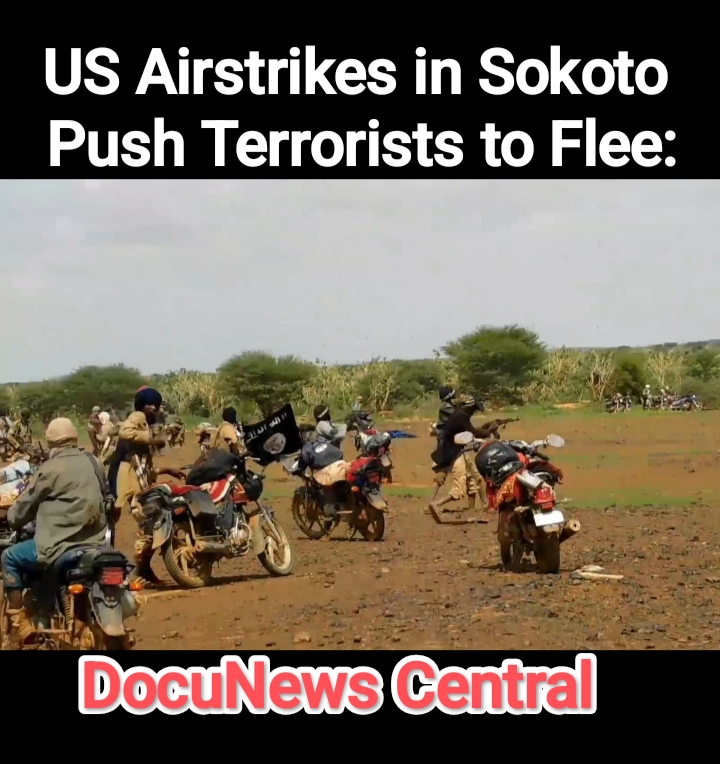
US Airstrikes in Sokoto Push Terrorists to Flee: A Deep Dive into the Latest Counter‑Terror Operation
US Airstrike in Sokoto Forces Terrorists to Flee — A suspected terrorist enclave in Sokoto State was thrown into disarray after a US-led airstrike struck targeted locations, forcing armed fighters to flee the area to avoid further bombardment. The precision strike, carried out in the early hours, reportedly hit known hideouts used by the group, disrupting their movement and weakening their operational presence in the region, according to security sources familiar with the development.. Read also “We Hit Them Hard”: Trump Confirms Lethal Military Strike Against Islamic State in Nigeria
What Happened in Sokoto?
On 25 December 2025, the United States military conducted airstrikes in Sokoto State, northwest Nigeria, targeting suspected militant positions. The operation was publicly confirmed by U.S. President Donald Trump and acknowledged by Nigerian authorities as a coordinated counter‑terrorism effort designed to weaken extremist fighters that have increasingly destabilized the region. (Reuters)
According to reports, the strikes hit several militant encampments and resulted in multiple militants being killed. President Trump framed the operation as a response to extremist violence, while Nigerian officials described it as part of ongoing cooperation to counter armed groups that threaten national security. (Reuters)
The strikes were significant enough that local residents in communities like Jabo in Tambuwal Local Government Area reported loud explosions and panic, suggesting the reach and intensity of the strikes on the ground. (Economic Times)
Who Are the Lakurawa and Other Armed Groups?
Lakurawa
The term Lakurawa refers to an armed group that has emerged in northwest Nigeria in recent years. Though not a historically central terror network, it has grown more visible and violent, especially in remote areas of Sokoto State. Nigerian police and security sources previously reported that Lakurawa operates across multiple local government areas, such as Gudu, Tangaza, Binji, Illela, and Silame. (TheCable)
Originally, some factions of Lakurawa were invited into northern Nigerian communities to help ward off bandits. Over time, however, the group became radicalized and engaged in harsh enforcement of ideology, attacks on civilians, and clashes with state authorities. (WSLS)
ISIS-linked Factions and Regional Terrorists
The U.S. airstrikes also appear to have been aimed at Islamic State-linked groups such as Islamic State – Sahel Province (ISSP) and Islamic State – West Africa Province (ISWAP), both of which are known to operate in or around Sokoto’s border areas. (Wikipedia)
This overlapping web of bandits, Islamist militants, and mixed insurgent alliances complicates the security situation and explains why both Nigerian and foreign forces see the need for precision strikes backed by intelligence. (WSLS)
Impact of the Airstrikes: Militant Retreat and Civilian Reaction
Terrorists Fleeing Their Strongholds
Immediate reports indicate that suspected Lakurawa fighters and other armed bad actors fled Sokoto State, abandoning encampments and retreating into more remote or neighboring areas. This is consistent with a key objective of the operation: to disrupt militant command centers and reduce their operational freedom. (Reuters)
Residents Speak Out
Eyewitness accounts from Sokoto residents detail scenes of shock and alarm as explosions lit up the skies. One witness said the blast “shook the whole town,” causing panic among villagers unsure of what was happening. (Economic Times)
Although no confirmed civilian casualties were immediately reported from these specific strikes, there have been calls for greater transparency and safety assurances from military authorities so that residents are not unintentionally harmed. (AP News)
International Cooperation: Nigeria and the U.S. Partnership
The airstrikes did not happen in isolation. Nigerian officials confirmed that they were carried out with intelligence sharing and cooperation between the U.S. Africa Command (AFRICOM) and Nigerian security forces. (Reuters)
This suggests a growing collaboration against terrorism, including:
- Shared surveillance and reconnaissance intelligence
- Precision targeting strategies
- Operational coordination to reduce risks to civilians
Experts have noted that long-term security in Nigeria will require both military support and local strengthening of governance and law enforcement. (Legit.ng)
Expert Commentary: Complexity of the Threat
Security analysts stress that attacks like these highlight the complex web of insecurity in Nigeria:
- Groups like Lakurawa are not homogeneous terrorist cells, but often have mixed roots in banditry, local defense, Islamist ideology, and cross-border insurgency. (WSLS)
- Narratives around who is targeted and why differ, with some arguing the focus on specific religious narratives oversimplifies a multifaceted conflict. (Legit.ng)
- The porous border with Niger and Mali facilitates movement of armed militants, complicating localized responses. (WSLS)
Context: Sokoto’s Security Challenges
Sokoto State’s insecurity did not begin with this airstrike. Over the years, the region has seen:
- Persistent attacks by bandit groups, especially in rural communities
- Rise of militant offshoots crossing national borders
- Local vigilante forces and rival armed groups competing for influence
Understanding this helps explain why foreign intervention was considered and why militants might flee when faced with overwhelming force. (TheCable)
Key Takeaways
- Purpose of the Airstrikes: The strikes aimed to neutralize militant capabilities, disrupt planned attacks, and pressure terrorists into retreating from their strongholds. (Reuters)
- Tactical Results: Reports suggest suspected militants, including Lakurawa elements, have fled the targeted areas, likely seeking shelter in more remote regions to evade detection. (Reuters)
- Civilian Impact: While no immediate casualties were reported, local fear and anxiety were widespread following the explosions. (Economic Times)
- Strategic Implications: The operation highlights increased U.S.–Nigeria security cooperation, but also points to the limits of military action without sustained governance and development efforts. (Legit.ng)
Useful Internal & External Resources
- Police: New terrorist group ‘Lakurawa’ operating in five Sokoto LGAs – TheCable
- US Airstrikes in Sokoto Target Bandits, Not ISIS – Legit.ng
- LIVE: Nigeria confirms joint US strikes on ISIL targets in its northwest – Al Jazeera
- What the US airstrikes reveal about militant violence in Nigeria – Mathrubhumi
- US says it struck Islamic State militants in northwest Nigeria – Reuters
Final Thoughts: Peace Beyond Bombs
While the airstrikes in Sokoto have dealt a tactical blow to extremist groups in the short term, long‑lasting peace and security will depend on inclusive governance, economic development, community resilience, and coordinated regional strategies.
Military action can disrupt militant networks—but without addressing underlying grievances and empowering local institutions, militants may eventually regroup and return. Peace requires more than missiles; it demands social healing and sustained commitment from all stakeholders.
