
Security updates Nigeria
Sustained Troop Offensive Pushes 11 Terrorists to Surrender

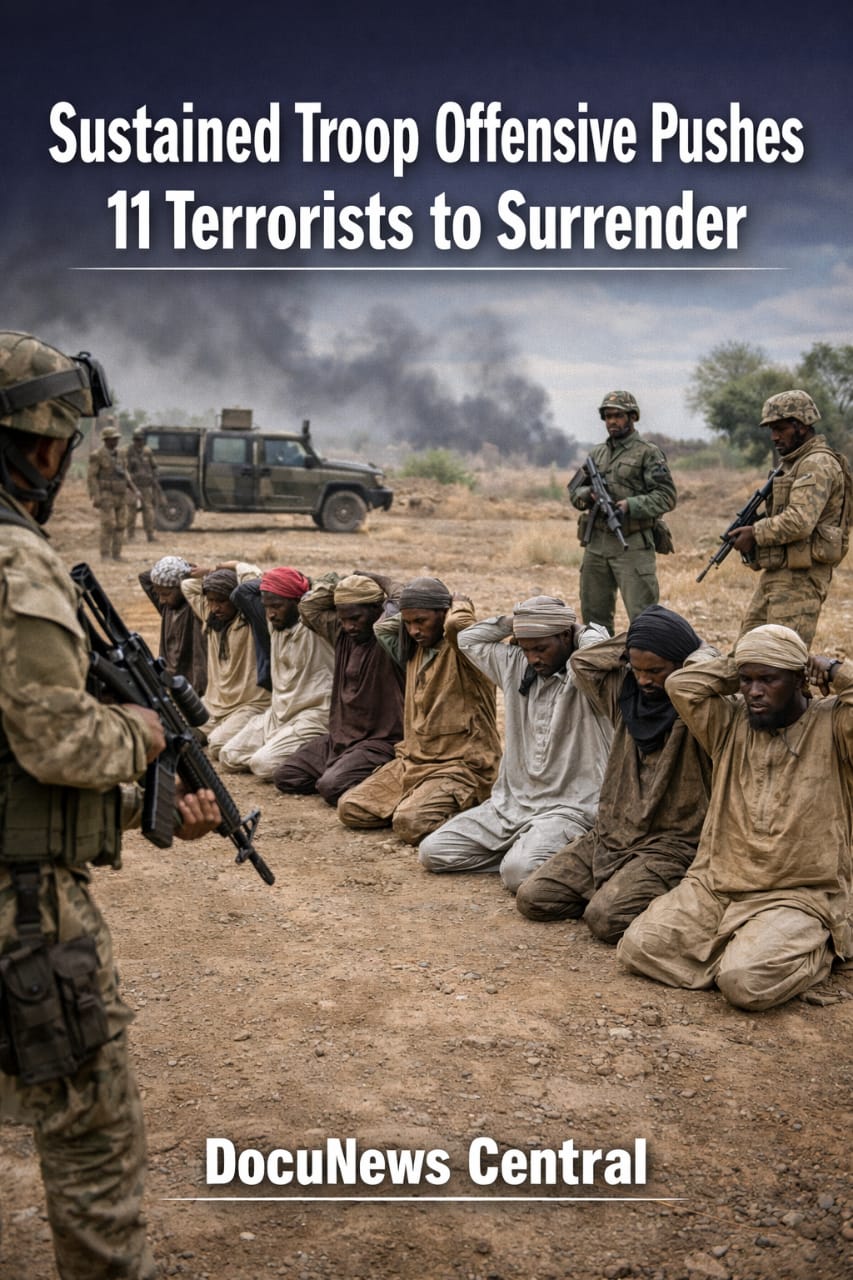
Sustained Troop Offensive Pushes 11 Terrorists to Surrender
Tensions have escalated in northeastern Nigeria over the past few weeks, as military operations against insurgents intensified across Borno State. Communities that had lived under constant fear began to witness significant changes on Wednesday, 14 January 2026, when Nigerian troops recorded a major breakthrough. On that day, in the early hours, 11 terrorists surrendered to the Nigerian Army, marking a milestone in the ongoing counter-insurgency campaign. The operation occurred in areas surrounding Maiduguri, the state capital, where troops had intensified patrols following recent attacks and threats from insurgent groups.
The surrender highlights the effectiveness of a sustained troop offensive, showcasing how persistent military pressure, intelligence gathering, and community cooperation can weaken terrorist networks. Local residents welcomed the development, noting that continuous military presence has restored some sense of security in villages that had long been terrorized by insurgent activities.
This event not only represents a tactical victory but also serves as a warning to insurgents that persistent military pressure can limit their freedom of movement and disrupt their operations. The success in Borno State reinforces the importance of strategic planning, intelligence-led operations, and the active participation of civilians in security initiatives.
Military Pressure Leads to Surrender of Terror Fighters
The Nigerian Army has maintained a sustained offensive across Borno State and neighboring regions, combining ground operations with aerial surveillance to dismantle insurgent networks. The breakthrough on 13 January 2026 was the result of a well-coordinated operation involving multiple military units, community intelligence, and tactical planning.
The 11 insurgents who surrendered had been operating in remote villages, using forests and difficult terrain as hideouts. Reports indicate that these fighters voluntarily gave up after realizing their escape routes were closely monitored and their supply lines cut. Officials confirmed that no resistance was offered during the surrender, reflecting both the effectiveness of the operation and the psychological impact of continuous military pressure.
Local communities near Maiduguri reported that military patrols intensified from 6:00 a.m., with checkpoints established along major routes to monitor movements. Villagers expressed relief as troops reassured them of safety, demonstrating the dual role of the military: combating insurgents and protecting civilians.
The significance of this surrender goes beyond the immediate capture of insurgents. Analysts argue that such voluntary surrender shows insurgents recognize the futility of continuing their attacks under a sustained military offensive. The combination of intelligence operations, aerial monitoring, and community cooperation is gradually shrinking the operational space for insurgents in Borno State.
Related: Learn more about Nigeria’s counter-terrorism strategies
Understanding the Sustained Troop Offensive
The Nigerian military’s approach in northeastern Nigeria has evolved over the years, shifting from reactive responses to proactive, sustained operations designed to pressure insurgents continuously. The offensive that led to the surrender of 11 terrorists combines several strategic elements:
- Intelligence-led Operations: Local informants and surveillance help track insurgent movements, allowing troops to anticipate attacks and locate hideouts. This network is crucial in areas like Maiduguri, where insurgents often operate in small, mobile groups.
- Psychological Pressure: Beyond physical operations, the military uses psychological tactics such as radio announcements, leaflets, and community engagement to inform insurgents of their limited options. This strategy encourages fighters to surrender rather than fight, minimizing casualties on both sides.
- Ground Operations: Troops conduct regular patrols, secure roads, and clear suspected insurgent hideouts. The presence of armored vehicles and helicopters reinforces the pressure and demonstrates the military’s operational capability.
Experts highlight that sustained troop offensives reduce insurgent morale, making them more likely to surrender. This approach also increases civilian trust in security forces, fostering cooperation that strengthens intelligence networks and helps prevent future attacks.
Learn more about Security updates Nigeria
Implications of the Surrender
The surrender of 11 terrorists carries several important implications for security in northeastern Nigeria:
- Operational Success: It shows that continuous pressure and proactive strategies can force insurgents to abandon violent activities without direct confrontation.
- Morale Boost: The military’s success boosts troop confidence and reassures civilians that security forces can maintain control.
- Intelligence Opportunities: Interrogations of surrendered fighters can provide crucial information about insurgent networks, recruitment methods, and planned attacks, improving future operations.
- Community Impact: Residents who have long lived under fear now witness tangible results from collaboration with security forces, reinforcing the importance of civic involvement in security matters.
Community leaders in Maiduguri emphasized that this event highlights the need for ongoing vigilance and cooperation between civilians and the military. It also serves as a strong message to insurgents about the consequences of continuing violent operations.
Challenges That Remain
Despite this success, several challenges remain in fully stabilizing northeastern Nigeria. Analysts note that insurgent groups are adaptive and often regroup in remote areas to continue attacks. To maintain momentum, the military must:
- Sustain Operations: Continuous ground and aerial operations are necessary to prevent regrouping.
- Strengthen Civil-Military Relations: Ensuring community support is vital in maintaining intelligence networks and preventing insurgent recruitment.
- Monitor Borders: Close monitoring prevents the movement of insurgents across state lines and international borders.
Military officials have committed to maintaining pressure while collaborating with regional partners and international allies to ensure insurgent networks are disrupted. Experts argue that persistent operations, combined with local support, can lead to long-term reductions in terrorist activity.
Community Cooperation as a Key Factor
Community cooperation has played a central role in the success of sustained troop offensives. Residents provide information about suspicious movements and locations, which has led to the capture or surrender of insurgents. The Nigerian Army has encouraged civilians to continue reporting potential threats while protecting their identities to avoid retaliation.
Humanitarian measures also support these operations. Activities such as medical outreach, reconstruction of damaged infrastructure, and public safety campaigns enhance trust between communities and the military. When civilians feel secure and supported, they are more willing to participate in security efforts, creating a positive feedback loop that undermines insurgent influence.
See more on 85-Year-Old Woman Killed in Fresh Bandit Attack in Niger Community
Historical Context of Insurgency in Borno
Borno State has faced decades of insurgency, primarily driven by groups such as Boko Haram. Attacks on civilians, schools, and infrastructure created a climate of fear and displacement. Previous military campaigns had limited success due to insurgents’ mobility, knowledge of terrain, and local support networks.
The shift to sustained troop offensives represents a new approach: one that combines intelligence, technology, community engagement, and psychological strategies. The 11-terrorist surrender illustrates the effectiveness of this methodology and provides hope that further operations will yield similar results.
The Broader Regional Impact
The success in Maiduguri has implications for the broader Lake Chad Basin region. Neighboring states and countries face similar insurgent threats. The Nigerian Army’s operations serve as a model, showing that coordinated efforts and persistent pressure can reduce terrorist activity and restore civilian confidence.
- Cross-border Cooperation: Sharing intelligence and coordinating operations with neighboring countries can disrupt insurgent supply chains.
- Policy Implications: The federal government’s support for sustained offensives encourages long-term planning and resource allocation.
- Regional Stability: As insurgent activity declines, trade, education, and community life can gradually return to normal, promoting economic and social recovery.
Expert Opinions
Security analysts emphasize that voluntary surrender, like the one on 13 January 2026, demonstrates the effectiveness of sustained troop offensives. Professor Amina Bello, an expert on Nigerian security studies, stated:
“Persistent pressure, combined with community engagement, creates a situation where insurgents see surrender as the only viable option. This is a clear sign of progress in the fight against terrorism in Borno State.”
Military officials echo this sentiment, noting that intelligence-led operations and psychological pressure are as critical as direct confrontations in achieving long-term success.
Future Outlook
The surrender of 11 terrorists signals that insurgent networks are vulnerable under constant pressure. Experts predict that:
- Further surrenders are likely if operations continue.
- Intelligence from surrendered fighters will aid in dismantling remaining cells.
- Enhanced community support will improve security outcomes.
While challenges remain, including sporadic attacks and recruitment attempts by insurgents, the Nigerian Army’s persistent strategy demonstrates that sustained pressure, planning, and community engagement are effective tools for reducing terrorist activity.
Conclusion
On Wednesday, 14 January 2026, the sustained troop offensive in Borno State led to the surrender of 11 terrorists, marking a significant step in Nigeria’s ongoing fight against insurgency. This event underscores the importance of combining military pressure, intelligence, and community collaboration to achieve meaningful results.
As Nigeria continues to confront terrorist threats, the Maiduguri operation serves as a model for effective strategies. It highlights the potential of coordinated, sustained efforts to restore security, build civilian confidence, and ultimately weaken insurgent networks.
For more updates on security operations and regional developments, visit DocuNews Central