
Breaking news
Troops Arrest 65-Year-Old Woman for Supplying Drugs to Boko Haram in Borno

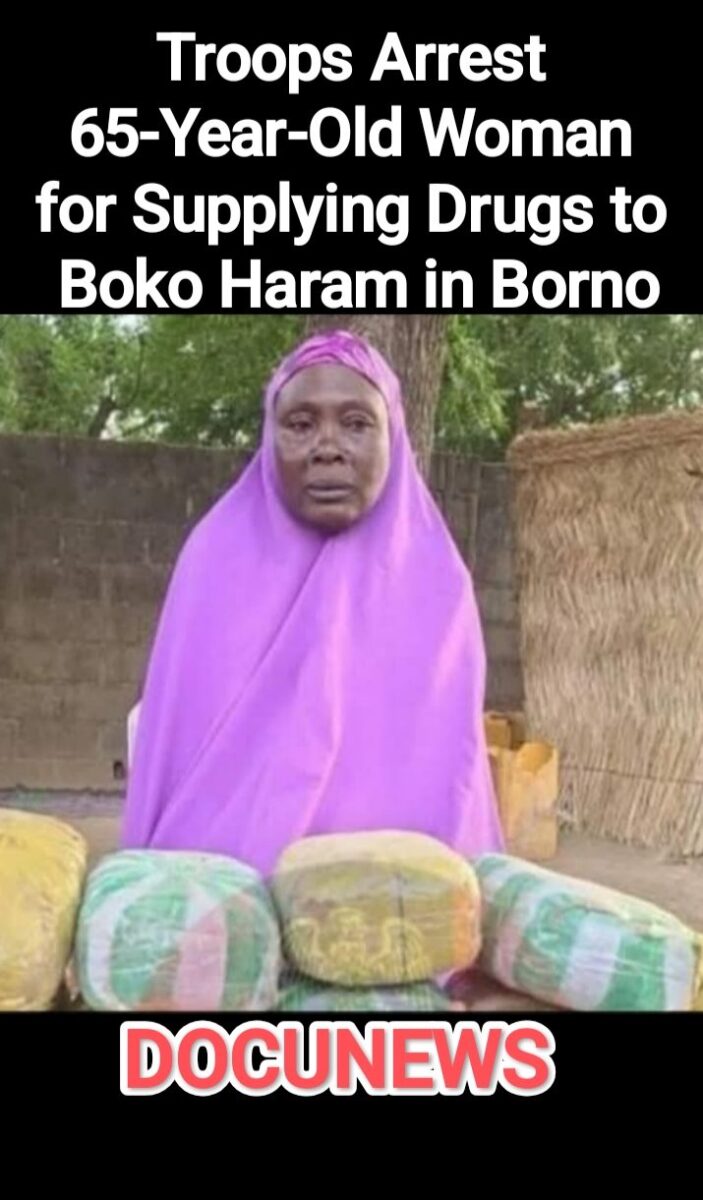
A quiet supply chain can be just as deadly as a gunshot. That reality came sharply into focus after troops arrested a 65-year-old woman accused of supplying illicit drugs to Boko Haram insurgents in Borno State. The suspect, identified as Hauwa Abulazeez, allegedly played a critical role in sustaining terrorist fighters through the supply of cannabis, highlighting how non-combat actors continue to fuel insurgency behind the scenes. The arrest by troops of Operation HADIN KAI marks a decisive move to dismantle Boko Haram’s hidden logistics network.
Security sources say the operation reflects a broader strategy to choke insurgent lifelines. Rather than focusing only on armed fighters, troops are now targeting suppliers, couriers, and facilitators who keep terror groups operational. This arrest, therefore, goes beyond one suspect. It sends a clear warning to anyone aiding terrorism, regardless of age or gender.
On January 23, 2026, in Askira Uba Local Government Area of Borno State, troops of the Joint Task Force (North-East), Operation HADIN KAI, arrested Hauwa Abulazeez following actionable intelligence. The military confirmed that the suspect was intercepted during a coordinated operation aimed at disrupting Boko Haram’s drug supply routes across several communities in southern Borno.
Read also Police Seize Truck Carrying Explosives In Oyo.
How Troops Arrested a 65-Year-Old Woman Linked to Boko Haram
The arrest did not happen by chance. Instead, it followed weeks of intelligence gathering and surveillance. Security officials disclosed that troops tracked the movement of illicit drugs believed to be destined for Boko Haram enclaves. Eventually, intelligence pointed clearly to a single distribution channel.
As a result, troops moved in swiftly. They arrested Hauwa Abulazeez without resistance. During the operation, soldiers recovered 14 compressed blocks of cannabis sativa, weighing approximately 30 kilograms. According to the military, the drugs were meant for insurgents operating in Askira Uba, Rumirgo, Gwahi, Wamdiyo, Uvu, and Gaya.
The Nigerian Army confirmed the arrest under Operation Desert Sanity V, a special phase within Operation HADIN KAI focused on logistics disruption. This phase prioritizes cutting off supplies that sustain insurgents rather than only engaging them in direct combat.
Read more on the operation via Channels Television.
Who Is Hauwa Abulazeez?
Hauwa Abulazeez is a 65-year-old woman whose alleged role shocked many observers. Her age challenges popular assumptions about who supports terrorism. However, security analysts say insurgent groups often rely on individuals who attract minimal suspicion.
According to military sources, Abulazeez allegedly sourced cannabis from Sarti Baruwa in Taraba State. She then coordinated its transportation into Borno using established smuggling routes. From there, the drugs were distributed to Boko Haram fighters and associates.
This pattern fits a wider trend. Insurgent groups increasingly depend on civilian intermediaries to reduce risk. Older individuals, traders, and rural dwellers often serve as couriers because they blend easily into communities.
More details about the arrest were reported by Tribune Online.
You may have missed this Troops Kill 168 Bandits, Arrest 357 Collaborators, Rescue 1,624 Kidnap Victims in Northwest
Troops Arrest 65-Year-Old Woman: Why the Drug Supply Matters
Illicit drugs play a dangerous role in insurgency. They serve multiple purposes. Fighters use them to stay alert. Groups trade them for weapons. Networks also sell them to raise funds.
Therefore, when troops intercept drugs meant for Boko Haram, they do more than stop narcotics trafficking. They weaken morale, disrupt finances, and slow recruitment. Every seized supply creates operational strain.
Security experts argue that logistics disruption is often more effective than battlefield victories. While fighters can regroup, lost supply lines take longer to rebuild.
The United Nations has also documented the link between terrorism and illicit trafficking. You can explore similar findings on conflict financing at UNODC.
Operation HADIN KAI and the Fight Against Boko Haram
Operation HADIN KAI remains Nigeria’s primary counter-insurgency operation in the North-East. Launched in 2015 and restructured over time, the operation combines military action, intelligence gathering, and civil-military cooperation.
Its mandate includes neutralizing Boko Haram and Islamic State West Africa Province (ISWAP), protecting civilians, and restoring normalcy to affected communities.
In recent years, HADIN KAI has shifted tactics. Troops now prioritize intelligence-led raids. They also collaborate more closely with local communities. As a result, arrests like that of Hauwa Abulazeez have become more frequent.
An overview of Operation HADIN KAI is available on Wikipedia.
The Communities Affected by the Supply Network
The alleged drug supply network covered multiple communities in southern Borno. These areas have endured years of insurgent activity. As a result, residents often face difficult choices.
Some civilians cooperate with insurgents out of fear. Others do so for economic survival. However, security officials stress that collaboration prolongs instability.
Community leaders in Askira Uba have repeatedly called for stronger economic support. They argue that poverty and displacement make residents vulnerable to exploitation.
People are reacting to this Nigerian Military Airstrikes on Bandit Camps in Ifelodun and Patigi
Legal Process and Ongoing Investigation
Following her arrest, troops handed Hauwa Abulazeez over to relevant authorities for further investigation. Security agencies are now mapping her contacts and supply routes.
Investigators aim to identify additional collaborators. They are also examining communication records and transport links. If evidence supports prosecution, the case will move to court under Nigeria’s terrorism and narcotics laws.
Under Nigerian law, aiding a terrorist group carries severe penalties. Convictions can result in long prison sentences.
What the Arrest Means for Boko Haram
The arrest represents a tactical setback for Boko Haram. Losing a logistics supplier creates immediate challenges. Fighters must find new sources. Networks must rebuild trust.
More importantly, the arrest sends a psychological message. It shows that security forces are watching. It also demonstrates that civilian collaborators are not beyond reach.
Analysts believe sustained pressure on logistics will gradually erode Boko Haram’s operational capacity.
Broader Security Implications for Nigeria
This case reflects a broader trend in Nigeria’s security approach. Authorities now emphasize disruption over reaction. They target networks before attacks occur.
Such an approach aligns with global counter-terrorism best practices. Countries facing insurgency increasingly focus on supply chains, financing, and recruitment.
If maintained, this strategy could significantly weaken armed groups across the region.
Conclusion: A Strategic Win Beyond the Arrest
The arrest of a 65-year-old woman for supplying drugs to Boko Haram in Borno State marks more than a single enforcement action. It reflects a calculated effort by troops to dismantle the hidden systems that sustain terrorism.
Through intelligence-led operations, Operation HADIN KAI continues to adapt. By targeting suppliers and facilitators, troops are reshaping the battlefield. While challenges remain, each disrupted network brings Nigeria closer to lasting stability.
Ultimately, peace depends not only on defeating fighters but also on denying them support. This arrest stands as a reminder that every link in the chain matters.
For Security Updates In Nigeria Visit Security updates Nigeria