
Israeli-Iran-U.S War
Iranian Leader Ayatollah Ali Khamenei Has Been Confirmed Dead – Full Details

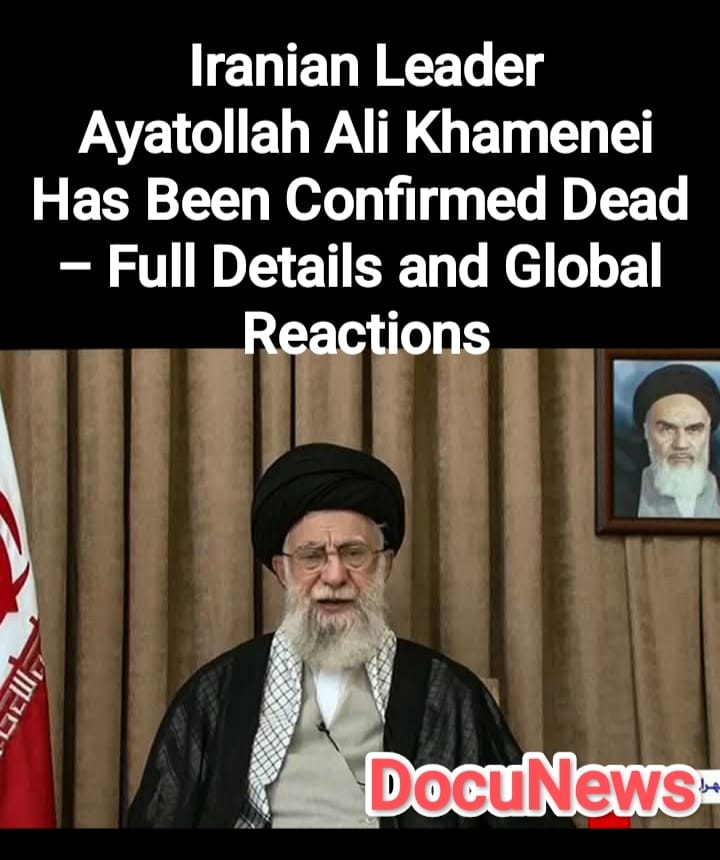
Iranian leader Ayatollah Ali Khamenei has been confirmed dead, marking a historic turning point in the political and religious structure of the Islamic Republic. The news has sent shockwaves across the Middle East and beyond, as global leaders react to the passing of one of the most powerful and controversial figures in modern geopolitics. For decades, Ayatollah Ali Khamenei shaped Iran’s domestic policies, foreign relations, and military posture. Now, attention has shifted toward succession, stability, and the future direction of Tehran.
According Docunews Central, on March 1, 2026. Authorities in Tehran officially announced the death of Ayatollah Ali Khamenei through state-controlled media channels. before this confirmation, Docunews Central has reported about the rumor of his death. read here ( Latest Rumour About the Death of Iranian Leader Ayatollah Ali Khamenei) The confirmation followed hours of speculation and intense social media activity. According to statements released by the Iranian government, the Supreme Leader passed away after a period of undisclosed health complications. The announcement has triggered nationwide mourning, heightened security, and urgent consultations among senior clerics and political figures.
The development has immediate implications for the leadership structure of Iran. As Supreme Leader, Khamenei held ultimate authority over the military, judiciary, and key state institutions. Therefore, his death does not only represent a personal loss to his supporters; it also signals the beginning of a crucial transition phase for the Islamic Republic.
Read also Israel Confirms Strike on Iran — Smoke and Explosions Visible in Tehran. Latest Updates
The Official Announcement and Immediate Reaction
Iran’s state broadcaster released a formal statement confirming the passing of the Supreme Leader. Soon after, senior officials gathered in Tehran to coordinate public messaging and security responses. Crowds assembled outside major mosques and government buildings, while black banners appeared across the capital.
Meanwhile, the Office of the Supreme Leader published a message calling for calm and unity. Authorities urged citizens to respect national mourning protocols. Additionally, security forces were deployed in key cities to prevent unrest.
International media outlets, including Reuters and BBC News, quickly reported the confirmation, citing Iranian officials. Global reactions followed within hours. Leaders across Europe, Asia, and the Middle East issued statements ranging from condolences to cautious diplomatic remarks.
Who Was Ayatollah Ali Khamenei?
Ayatollah Ali Khamenei served as Iran’s Supreme Leader since 1989. He succeeded Ayatollah Ruhollah Khomeini, the founder of the Islamic Republic. For more than three decades, Khamenei guided Iran through wars, sanctions, nuclear negotiations, and domestic protests.
Born in Mashhad in 1939, Khamenei rose through religious ranks during the Iranian Revolution. After the fall of the Shah in 1979, he assumed key roles within the new government. Later, he became President of Iran before taking over as Supreme Leader.
Under his leadership, Iran expanded its regional influence. Tehran strengthened ties with allied groups across the Middle East. At the same time, relations with the United States and Israel remained tense. Sanctions intensified over the years, particularly in connection with Iran’s nuclear program.
What Happens Next? Iran’s Succession Process
Now that Iranian leader Ayatollah Ali Khamenei has been confirmed dead, the focus turns to succession. According to Iran’s constitution, the Assembly of Experts selects the next Supreme Leader. This body consists of senior clerics elected by the public.
However, the selection process carries significant political weight. Several high-ranking clerics and influential figures may emerge as potential successors. Analysts expect intense consultations behind closed doors. Stability remains the priority for the ruling establishment.
The Islamic Revolutionary Guard Corps (IRGC) will likely play a critical role during the transition. The IRGC has remained loyal to the Supreme Leader for decades. Therefore, its position will shape the power balance in the coming weeks.
You may have missed this Latest Updates on US – Iran – Israel War
Regional Impact Across the Middle East
The confirmation of Khamenei’s death immediately affects regional dynamics. Iran holds strategic influence in Iraq, Syria, Lebanon, and Yemen. Consequently, allied groups may reassess their positions as leadership changes in Tehran.
Israel has monitored the situation closely. For years, tensions between Tehran and Tel Aviv dominated regional security discussions. In addition, Gulf nations have approached the development with caution, especially regarding energy markets and diplomatic channels.
Furthermore, oil prices reacted swiftly to the news. Markets experienced volatility as traders evaluated possible instability. Investors now watch Tehran’s next moves with heightened attention.
Global Diplomatic Reactions
World leaders responded in varying tones. Some governments issued formal condolences, acknowledging Khamenei’s decades-long role. Others emphasized the importance of stability and peaceful transition.
The United Nations released a statement urging calm and dialogue. Meanwhile, major powers such as China and Russia called for continuity in diplomatic relations. Western governments, however, focused on nuclear negotiations and regional security implications.
The future of discussions related to Iran’s nuclear program remains uncertain. Observers question whether new leadership will adopt a more flexible approach or maintain the existing posture.
Domestic Implications Inside Iran
Inside Iran, emotions run high. Supporters have gathered in large numbers to mourn. Religious ceremonies continue across provinces. Government institutions observe official mourning periods.
Nevertheless, some political analysts predict internal debates regarding reforms and governance direction. Iran has faced economic challenges, youth dissatisfaction, and international pressure in recent years. Therefore, leadership change could open new discussions.
At the same time, authorities have tightened security. Officials aim to prevent unrest during this sensitive phase. Stability remains the central objective.
Economic Consequences and Sanctions Outlook
Iran’s economy operates under heavy sanctions. Consequently, the passing of the Supreme Leader introduces uncertainty. Investors assess whether new leadership might pursue diplomatic adjustments to ease restrictions.
Energy exports remain a major concern. Global oil markets closely track developments in Tehran. Any sign of instability could influence supply expectations.
However, long-term outcomes depend on political decisions made in the coming weeks. Markets generally react to clarity. Therefore, the speed of succession may reduce volatility.
Security and Military Considerations
The Iranian military structure places the Supreme Leader at the top. He served as commander-in-chief of the armed forces. Now, interim mechanisms will manage strategic decisions.
Regional observers monitor military readiness. Neighboring countries have increased intelligence activities. Nevertheless, no immediate external escalation has been reported.
Strategic analysts emphasize that institutional systems remain intact. Therefore, sudden disruption appears unlikely in the short term.
Public Mourning and National Symbolism
Black flags and portraits of Khamenei dominate public spaces. Religious leaders lead prayers in major cities. State television continues extended coverage of memorial activities.
Authorities have declared multiple days of national mourning. Schools and offices adjust schedules accordingly. The funeral ceremony is expected to draw massive crowds.
International delegations may attend official events. Diplomatic presence will signal ongoing engagement with Tehran despite political differences.
DocuNews Central Opinion
At DocuNews Central, we believe that the confirmation that Iranian leader Ayatollah Ali Khamenei has been confirmed dead marks more than the end of an era. It opens a chapter filled with uncertainty, opportunity, and risk. Leadership transitions in highly centralized systems often define future stability.
Therefore, transparency during succession remains essential. Clear communication can reduce speculation. Additionally, inclusive political dialogue could strengthen public confidence. The coming weeks will test Iran’s institutional resilience and diplomatic strategy.
Conclusion
Iranian leader Ayatollah Ali Khamenei has been confirmed dead, reshaping the political landscape of the Islamic Republic. From domestic governance to regional alliances, every major sector feels the impact. The succession process now commands global attention.
While uncertainty surrounds the transition, institutions remain operational. International actors call for calm. Citizens observe mourning rituals. Ultimately, the direction chosen by Iran’s next Supreme Leader will influence not only national affairs but also broader Middle Eastern stability.
Also visit here for updates on this ongoing war Israeli-Iran War