
Israeli-Iran-U.S War
Israel Bombs Iran Explosives Plant in Isfahan

By Jonadab | March 26, 2026 | DocuNews Central
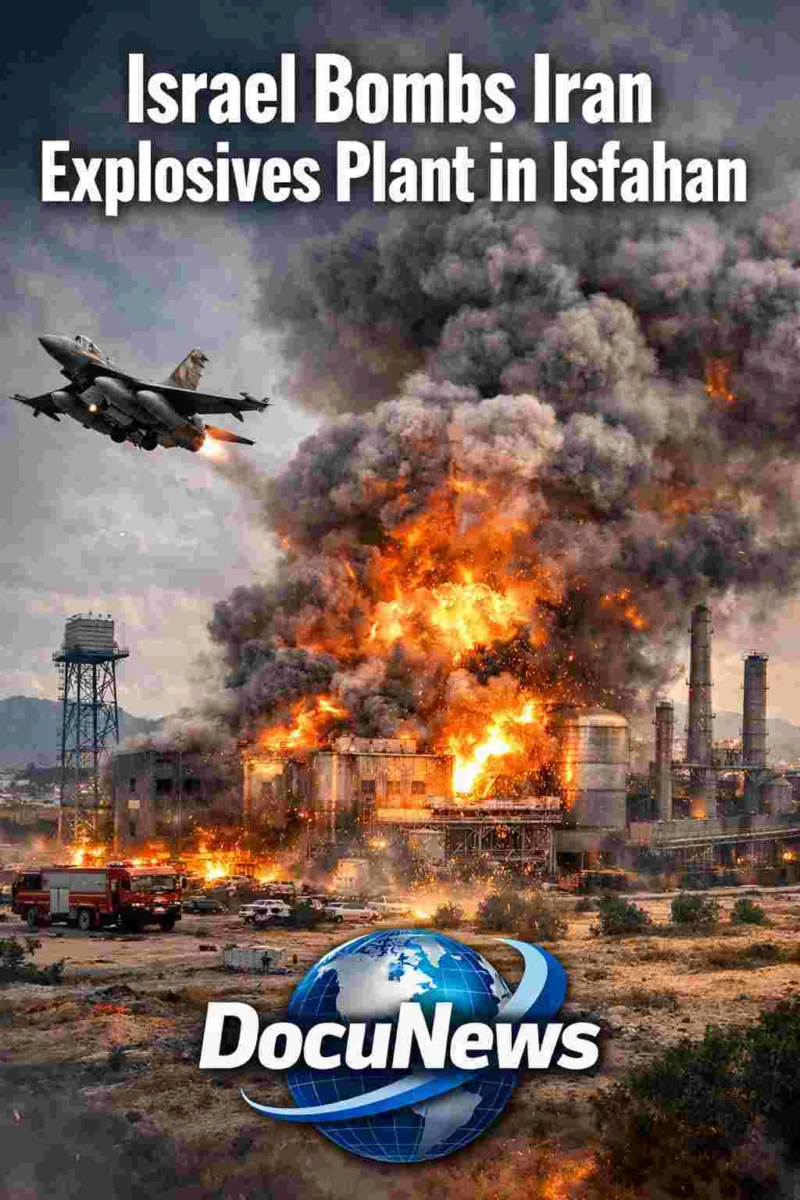
The Israeli Air Force carried out a targeted airstrike on a major explosives production facility in Isfahan earlier today. According to initial reports, the strike focused on a site identified as a key component of Iran’s explosives manufacturing network. Officials have not released full operational details, but early indications suggest the attack targeted strategic infrastructure with precision. As a result, analysts have begun assessing the broader implications for regional security and stability.
This development marks a significant escalation between Israel and Iran. In recent months, both countries have engaged in indirect confrontations through cyber operations, intelligence activities, and regional proxy dynamics. Therefore, today’s strike introduces a more direct phase of engagement. At the same time, official statements remain measured, indicating an effort to manage escalation while maintaining strategic objectives.
Strategic Importance of the Isfahan Facility
The facility targeted in Isfahan reportedly plays a central role in explosives production. Analysts consider such infrastructure essential to both industrial output and defense-related supply chains. Consequently, any disruption at this level could affect production capacity and logistics networks. Early satellite imagery suggests structural damage within the complex, although independent verification remains limited due to restricted access.
In addition, experts note that Isfahan has long served as a critical industrial hub. The region hosts several facilities linked to manufacturing and research. Therefore, the choice of target highlights its strategic value. While officials have not confirmed the extent of the damage, ongoing assessments are expected to provide clearer insight in the coming days.
Immediate Response and Local Impact
Emergency response teams arrived at the site shortly after the strike. Local authorities initiated damage assessments and secured surrounding areas to prevent further risk. However, officials have not confirmed casualty figures at this stage. Meanwhile, access to the affected zone remains restricted, which has limited independent verification of conditions on the ground.
Residents in nearby areas reported hearing explosions, although authorities have not provided detailed accounts of the incident timeline. Public communication has emphasized calm and order. At the same time, officials have increased security presence in the region to manage the situation effectively.
Rising Regional Tensions
Tensions across the Middle East have steadily increased, and this strike has intensified concerns among regional observers. In recent weeks, several incidents involving strategic assets and allied groups have contributed to instability. As a result, analysts warn that the potential for broader confrontation may be rising. Nevertheless, diplomatic channels remain active despite limited visible progress.
Neighboring countries have responded cautiously to the development. Several governments have called for restraint while emphasizing the importance of maintaining regional stability. Meanwhile, defense agencies across the region have increased surveillance and monitoring activities. This coordinated response reflects concern over possible escalation and its wider implications.
International Reaction and Diplomatic Efforts
International reactions have begun to emerge following the reported strike. Global institutions and major governments have called for de-escalation and renewed dialogue. For instance, the United Nations has urged all parties to exercise restraint. Similarly, the U.S. Department of State has emphasized the need for stability in the region.
In addition, diplomatic observers note that such incidents often lead to intensified behind-the-scenes negotiations. While public statements remain cautious, private discussions may influence the direction of future engagement. Therefore, attention is likely to focus on both official messaging and evolving diplomatic efforts.
Military Capabilities and Strategic Messaging
From a military perspective, the strike highlights advanced operational capabilities, including precision targeting and long-range reach. Analysts suggest that such operations form a key part of Israel’s defense strategy. By targeting high-value infrastructure, military planners aim to disrupt critical capabilities while limiting broader damage. As a result, the strike carries both tactical and strategic significance.
However, experts caution that long-term outcomes depend on several factors. These include the resilience of production systems, the speed of repairs, and the broader geopolitical context. Consequently, the full impact of the strike may take time to become clear as more verified information becomes available.
Challenges in Verifying Ground Information
Information from the ground remains limited due to security restrictions and controlled access to the site. Authorities have secured the area, which has constrained independent reporting. Nevertheless, local media sources indicate increased security presence and restricted movement in surrounding zones. These measures suggest a focus on containment and systematic assessment.
At the same time, the lack of independent verification has created uncertainty regarding the scale of the damage. Analysts continue to rely on satellite imagery and indirect sources for updates. As additional information emerges, a clearer picture of the situation is expected to develop.
Also read Iran Rejects US Ceasefire Proposal, Sets Five Conditions for Peace
Broader Security Implications
The strike carries broader implications for regional and global security. As tensions rise, there is concern that further incidents could disrupt economic stability and international relations. Energy markets and trade routes in the region may also face increased uncertainty. Therefore, global stakeholders are closely monitoring developments.
In addition, security analysts note that similar incidents in the past have led to cycles of escalation. While current responses remain measured, the potential for further actions cannot be ruled out. As a result, the situation continues to draw attention from policymakers and defense experts worldwide.
Outlook and Next Developments
Looking ahead, the situation remains fluid as new details continue to emerge. Both Israel and Iran have not yet outlined their next steps publicly. However, analysts expect heightened alert levels and increased monitoring across the region. This cautious approach reflects concerns about possible follow-up actions or retaliatory measures.
Meanwhile, international stakeholders are likely to intensify diplomatic engagement in the coming days. Efforts to prevent further escalation may include coordinated messaging and renewed negotiations. As events unfold, the balance between military action and diplomatic restraint will remain central to the evolving situation.
For continued coverage and verified updates, visit Reuters and Al Jazeera.