
Security
Why Bandits Are Now Attacking Schools and Orphanages

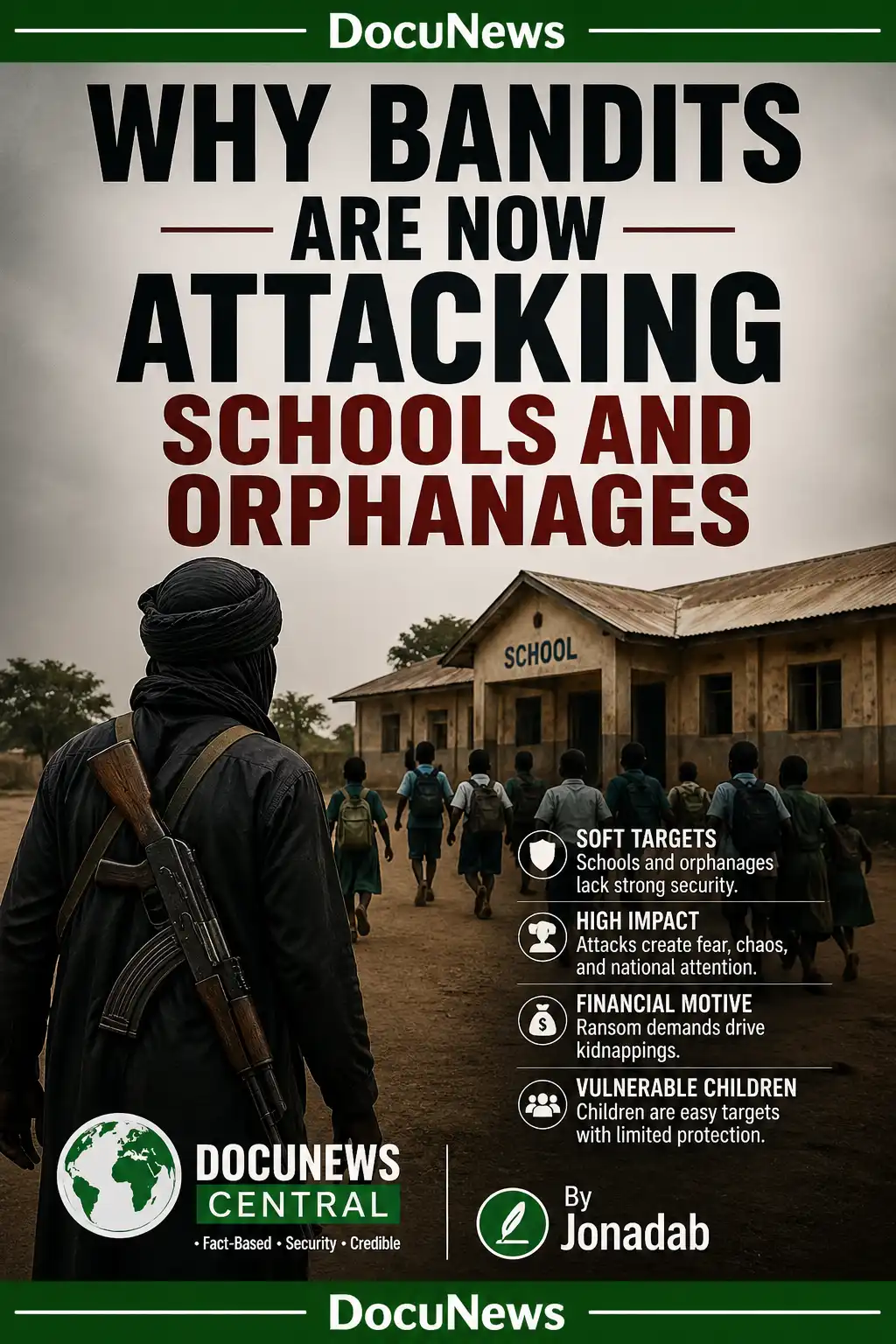
By Jonadab | April 29, 2026 | DocuNews Central
Armed groups across Nigeria have changed tactics in recent months. They now target schools and orphanages more frequently. These locations were once seen as safe zones. However, they are increasingly becoming high-risk environments.
This shift is not random. It reflects a calculated strategy. Vulnerable institutions offer easier access, lower resistance, and higher emotional impact. As a result, security experts say the pattern is spreading across several regions.
On April 27, 2026, reports emerged from northern Nigeria indicating attempted abductions near a rural school community. Local authorities confirmed increased patrols in response. The incident highlights a growing national concern.
What Happened?
Bandits and militant groups have begun focusing on soft targets. Schools and orphanages now fall within that category. These locations often lack strong security presence. Therefore, attackers face minimal resistance.
In several recent cases, armed groups entered communities at night. They targeted dormitories and residential shelters. Victims were then taken quickly before security forces could respond.
Authorities confirmed that ransom demands followed many of these incidents. In other cases, abductions were linked to forced recruitment. These patterns show a clear and deliberate approach.
Also read Boko Haram, ISWAP and Bandits Form Unified Threat Network in Nigeria
Where Did It Happen?
Most incidents have been recorded in northern Nigeria. States affected include Kaduna, Zamfara, and parts of Niger State. Rural communities remain the most vulnerable.
These areas often face limited security coverage. Roads are difficult to access. Communication networks are weak. As a result, response times are slow.
However, reports indicate the trend is spreading. Some southern regions have recorded isolated threats. Security agencies are now monitoring movements across state lines.
Who Is Involved?
Multiple armed groups are linked to these attacks. Bandit networks operate independently in many cases. However, some groups show coordination with militant factions.
Local informants sometimes assist attackers. They provide information about school schedules and security gaps. This insider knowledge increases the success rate of operations.
Victims include students, teachers, and caregivers. Orphanages are especially vulnerable. Many lack funding for proper security infrastructure.
Why Schools and Orphanages Are Targeted
First, these institutions are easy to access. Security measures are often minimal. Fences, guards, and surveillance systems are limited or absent.
Second, the emotional impact is high. Attacks on children generate national attention. This pressure can force quicker ransom payments.
Third, large numbers of victims can be taken at once. Schools provide concentrated populations. This increases bargaining power for attackers.
Additionally, orphanages often house displaced or unprotected children. These facilities are less likely to resist. As a result, they become prime targets.
Security Gaps and Institutional Weakness
Many schools operate without structured security plans. Emergency response systems are weak. Staff often lack training on crisis situations.
Funding challenges also play a role. Private and public institutions struggle to afford guards or surveillance systems. This leaves critical gaps.
Government interventions exist. However, coverage remains inconsistent. Rural areas receive less attention compared to urban centers.
Government and Security Response
Security agencies have increased patrols in affected regions. Military presence has been expanded in some hotspots. Authorities are also working with local vigilante groups.
In addition, early warning systems are being introduced. Communities are encouraged to report suspicious movements. This approach aims to prevent attacks before they occur.
However, challenges remain. Terrain and logistics slow down operations. Coordination between agencies is still improving.
More details on Nigeria’s national security efforts can be found at Nigeria Ministry of Defence.
Impact on Education and Child Welfare
Fear has disrupted learning across affected regions. Many schools have closed temporarily. Parents now hesitate to send children to boarding facilities.
Orphanages face even greater pressure. Some have relocated children to safer areas. Others operate under strict movement restrictions.
The psychological impact is significant. Children exposed to these threats experience long-term trauma. Experts warn of lasting consequences on development.
International organizations continue to monitor the situation. Reports and updates can be accessed via UNICEF.
Changing Nature of Kidnapping Operations
Kidnapping strategies have evolved. Attackers now rely on speed and surprise. They avoid prolonged confrontations with security forces.
Technology also plays a role. Communication tools help coordinate movements. Intelligence gathering has become more sophisticated.
Furthermore, attackers adapt quickly. When security increases in one area, they shift to another. This flexibility makes prevention more difficult.
Community Role in Prevention
Local communities play a critical role. Vigilance has increased in many areas. Residents now organize night watches and alert systems.
Traditional leaders are also involved. They coordinate with security agencies. This collaboration improves response times.
However, risks remain. Communities often lack resources. Without support, their efforts may not be sustainable.
Outlook and Ongoing Monitoring
Security experts warn that the trend may continue. As long as vulnerabilities exist, attackers will exploit them. Therefore, long-term solutions are required.
Investment in school security is essential. Training, infrastructure, and funding must improve. These measures can reduce exposure to threats.
Authorities continue to monitor developments. New strategies are being implemented. The situation remains under close observation.
